

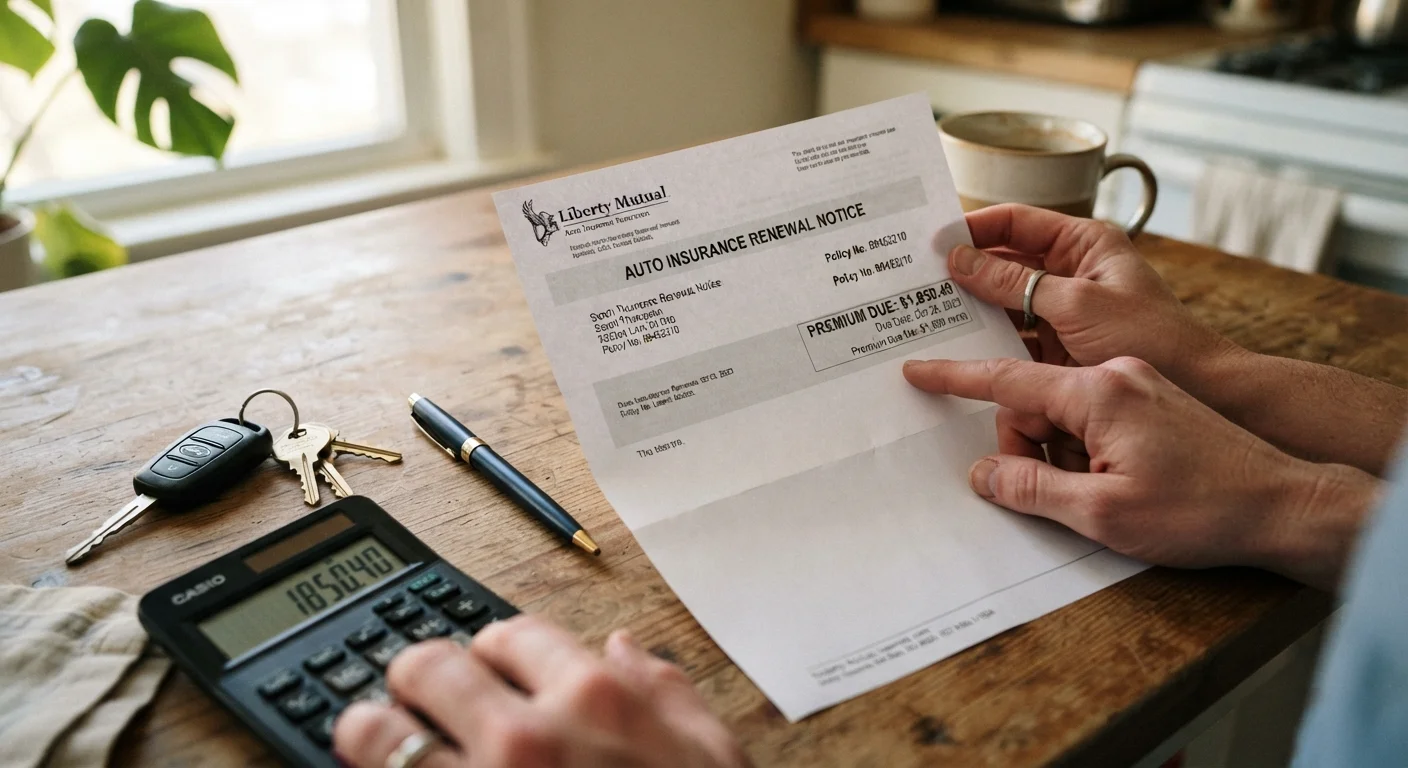
The Rate System Isn't Built Around You Alone
Most drivers assume their car insurance premium is essentially a personal scorecard - pay on time, avoid accidents, and the price stays flat. In reality, insurers treat you as part of a risk pool. They look at the collective claims experience of everyone who shares your characteristics: ZIP code, vehicle type, age bracket, and more.
When that pool becomes more expensive to cover - because repair costs climbed, a major storm hit your region, or fraud increased - everyone in the pool can see a rate adjustment at renewal. This is why your bill might rise even if your own record is impeccable. For a broader look at how pricing variables interact, see Understanding the Factors That Influence Your Auto Insurance Premium.
~72%
Drivers who didn't know why their premium changed
A survey by the Insurance Information Institute found that a large majority of drivers are unaware of the specific reasons behind their premium adjustments.
21%
Average rise in auto insurance costs, 2022-2024
According to the U.S. Bureau of Labor Statistics Consumer Price Index data, motor vehicle insurance costs rose sharply over this period, driven largely by repair and medical cost inflation.
3-5 years
Typical surcharge window after an at-fault claim
Most insurers apply a rating surcharge following an at-fault accident for three to five years, depending on state regulations and the insurer's own underwriting guidelines.
What Actually Moves the Needle on Your Premium
Several distinct categories of factors drive rate changes. Understanding them helps you distinguish what you can influence from what you simply need to anticipate.
Macroeconomic and industry-wide forces
- Repair inflation: The cost of parts, labor, and replacement vehicles has risen significantly in recent years. When the average claim payout increases, premiums follow.
- Medical cost inflation: Bodily injury claims include medical expenses that tend to outpace general inflation.
- Natural catastrophes: A single hurricane season or a cluster of severe hailstorms can push up comprehensive rates across entire states.
Regional and local conditions
- Local accident frequency: Insurers track collision rates by ZIP code. A surge in accidents near your home raises your area's risk profile.
- Vehicle theft trends: If certain models are being stolen at higher rates in your region, comprehensive coverage costs rise accordingly.
Personal-profile changes
- Credit-based insurance score: In most states, a dip in your credit standing can push premiums higher at renewal, even without a single claim.
- Adding a driver: A teen or high-risk driver joining your policy substantially increases the household's risk profile.
- New vehicle: A more expensive or statistically theft-prone car typically costs more to insure.
Set a renewal review reminder
Mark your calendar two to three weeks before your policy renewal date. That window gives you enough time to gather competing quotes without feeling pressured to accept the renewal automatically. Even one alternative quote gives you a useful data point - and sometimes, simply notifying your current insurer that you're shopping can prompt them to apply available discounts.
The Role of Claims - Yours and Everyone Else's
Your own claims history matters, but so does the broader claims environment. If you file a collision claim, many insurers will apply a surcharge at your next renewal - typically for three to five years, depending on your state and policy terms. At-fault accidents generally carry a heavier surcharge than not-at-fault incidents, though some states limit surcharges for the latter.
Beyond your personal claims, insurers use something called loss ratios - the ratio of claims paid to premiums collected - to gauge whether their current pricing is sustainable. When loss ratios worsen across a region or product line, the insurer files for a rate increase with state regulators. If approved, that increase lands on all policyholders in the affected group, regardless of their individual claim history.
This is worth understanding because it reframes the renewal conversation: a higher bill isn't necessarily a judgment about your driving. It may simply reflect that insuring cars has gotten more expensive in your market.
What You Can Do About It
You can't control repair inflation or regional weather, but several levers remain in your hands.
- Shop at every renewal. Rates vary meaningfully between carriers for the same coverage. Getting competing quotes each renewal cycle is one of the most straightforward ways to avoid overpaying.
- Review your coverage levels. As a vehicle ages and its value declines, carrying comprehensive and collision coverage at high limits may no longer make financial sense.
- Ask about discounts you haven't claimed. Bundling home and auto, completing a defensive driving course, or installing a telematics device are common discount categories. Ask your insurer which you qualify for.
- Monitor your credit. In states where credit-based scoring is permitted, improving your credit standing can eventually work in your favor at renewal.
- Notify your insurer of relevant changes. Reduced annual mileage due to working from home, for example, may qualify you for a lower rate class.
If you're unclear on what your current policy actually covers before comparing alternatives, Decoding Your Car Insurance Policy is a useful starting point. And if you're new to how the overall system works, How Auto Insurance Actually Works lays out the fundamentals clearly.
State regulations shape what insurers can do
Insurance regulation is handled at the state level, so the rules around surcharges, credit scoring, and rate increase notifications vary widely. Some states require insurers to notify you in writing well in advance of any rate increase above a certain threshold. Check your state's department of insurance website for rules specific to where you live.
Frequently Asked Questions
Insurers adjust rates based on broad factors like regional claim volume, rising repair costs, and inflation - not just your personal record. If costs in your area increased, your premium can rise even with a clean history.
Most insurers can adjust rates at each policy renewal, typically every six or twelve months. Any increase must be filed with and approved by your state's insurance regulator before it takes effect.
In most states, insurers use a credit-based insurance score as one pricing factor. A lower score often correlates with higher premiums. California, Hawaii, and Massachusetts currently prohibit this practice.
Yes. You can ask your insurer about available discounts, raise your deductible, reduce optional coverages you no longer need, or request quotes from competing carriers. Comparing rates at each renewal is particularly effective.
Yes. Insurers price risk by ZIP code, considering local accident rates, theft statistics, and weather exposure. Moving even a few miles can cause a meaningful rate shift in either direction.
It depends on your insurer and state. A single minor infraction may not trigger an increase, but insurers typically review your driving record at renewal, and multiple violations usually result in a surcharge.
The content on this site is for informational purposes only and is not a substitute for professional advice. Always consult a qualified professional for guidance specific to your situation.