

Why Desk Work Creates a Unique Movement Challenge
For millions of Americans, the workday means six to nine hours in a chair. Research consistently links prolonged uninterrupted sitting with elevated risks for cardiovascular disease, metabolic dysfunction, and musculoskeletal discomfort - independent of whether someone exercises regularly. That last point matters: going to the gym before or after work is genuinely beneficial, but it does not fully neutralize the physiological effects of sitting still for most of the remaining day.
This is sometimes called the "active couch potato" paradox - a person can meet weekly physical activity guidelines and still experience health consequences from excessive sedentary time. Understanding what actually counts as exercise helps clarify why incidental movement throughout the day matters alongside structured workouts.
The good news is that integrating meaningful movement into a desk-based day doesn't require a gym membership, elaborate equipment, or dramatic schedule upheaval. The approaches below are grounded in exercise science and designed to be realistic for people managing real workloads.
Schedule movement breaks like meetings
One of the most evidence-backed strategies for reducing sedentary time is breaking up sitting with brief, frequent movement - even standing or light walking for two to five minutes every 30 to 60 minutes. The challenge is remembering to do it.
Treating these breaks as non-negotiable calendar items - setting a recurring timer or using a smartwatch reminder - shifts them from intentions to commitments. Research suggests that interrupting sitting at regular intervals, rather than taking one long movement break, produces more consistent metabolic benefits throughout the day.
Brief movement every 30-60 minutes produces more consistent benefits than a single long break.
Use walking meetings and active phone calls
Not every meeting requires a screen. One-on-one discussions, brainstorming calls, and check-ins are often well-suited to walking - either outdoors or around a building. The cognitive benefits of walking are also well-documented; light aerobic movement can support creative thinking and focus.
Walking as a form of exercise has real physiological value at any pace, and accumulated walking across a workday adds up meaningfully. Even phone calls taken while pacing a hallway convert otherwise stationary time into light activity.
Walking meetings convert stationary time into genuine activity while often enhancing focus and creativity.
Rethink your workstation setup
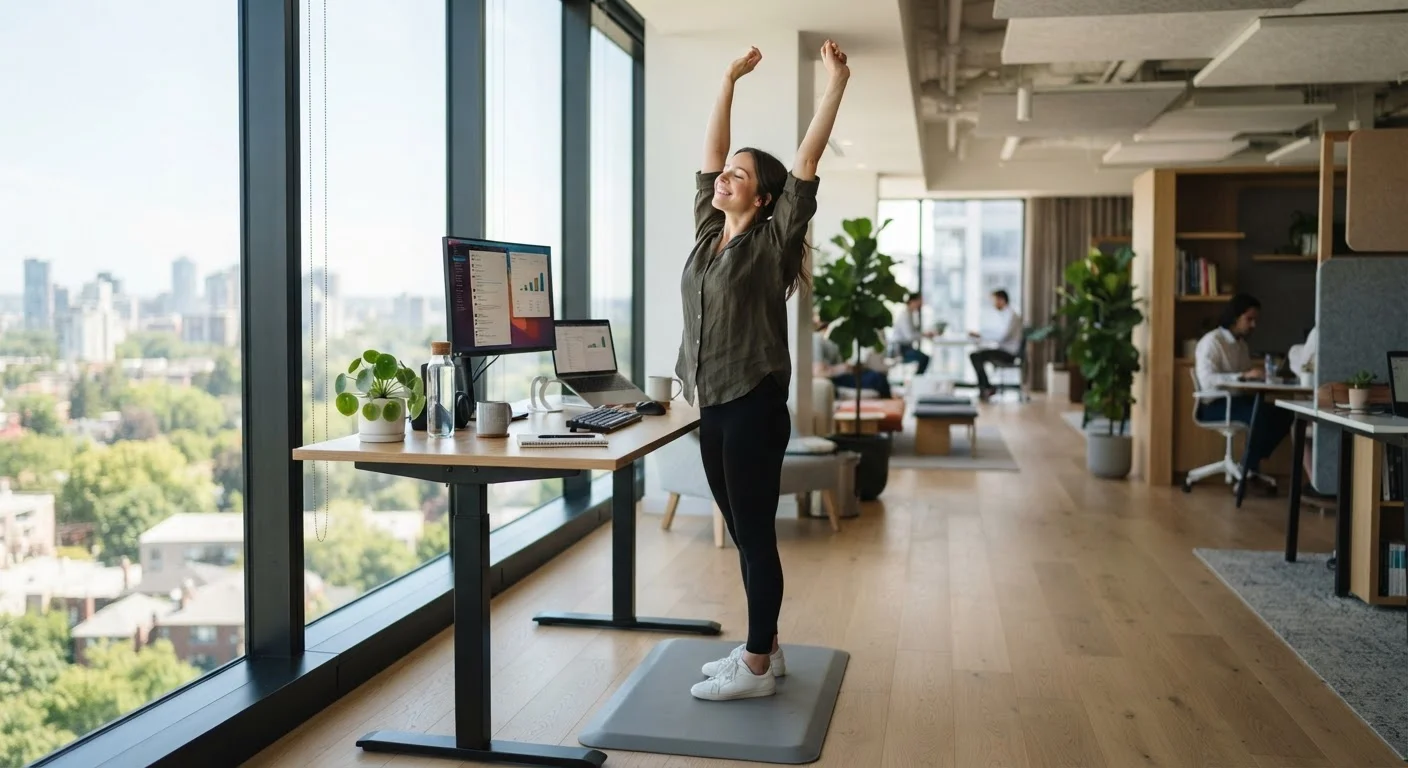
Sit-stand desks allow workers to alternate postures throughout the day without leaving their workstation. While standing is not exercise, alternating between sitting and standing reduces continuous sedentary time and engages postural muscles that are largely inactive during seated work.
Anti-fatigue mats and ergonomic footrests can make standing more comfortable for extended periods. The goal isn't to stand all day - that brings its own discomforts - but to introduce regular postural variation. A common starting point is alternating roughly 20 to 30 minutes of standing per hour, adjusted to individual comfort.
Sit-stand desks reduce continuous sedentary time without requiring you to leave your workstation.
Leverage the commute for incidental movement
For those with some flexibility in how they travel to and from work, the commute offers a natural window for physical activity. Walking or cycling part or all of the way, parking farther away, or getting off public transit a stop early are low-friction ways to accumulate meaningful daily steps.
Non-exercise movement throughout daily life is a legitimate contributor to overall health outcomes. Active commuting - even partial - has been associated with improved cardiovascular markers in population studies, though individual results vary considerably.
Active commuting, even partially, is a low-friction way to meaningfully accumulate daily movement.
Build a short, focused exercise habit outside work hours
Structured exercise before or after work remains an important pillar of physical health for desk workers. The key is making sessions realistic enough to maintain consistently - a 20-minute routine done four times a week typically delivers more benefit than an ambitious hour-long session attempted once.
Resistance training is particularly worth prioritizing for sedentary workers, as prolonged sitting can contribute to muscle imbalances - notably in the hip flexors, glutes, and posterior chain. Even two sessions of basic strength work per week can help address these patterns. Pairing this with cardiovascular activity rounds out a sustainable routine that doesn't require exceptional time commitment.
Consistent shorter sessions outperform occasional long workouts for people building a habit from scratch.
Reduce friction with desk-friendly micro-exercises
Calf raises at a standing desk, seated spinal rotations, shoulder rolls, and standing hip stretches take under two minutes and require no equipment or space. While these don't replace dedicated exercise, they reduce muscular tension accumulated during prolonged sitting and keep the body in better condition throughout the day.
Some workplaces now incorporate brief shared movement breaks - short group stretching at set intervals. If your workplace culture allows it, proposing or joining such initiatives can normalize movement and make it easier to sustain individually. The emphasis here is on consistency over intensity.
Two-minute desk exercises won't replace workouts, but they meaningfully reduce the toll of prolonged sitting.
Making It Stick: Building a Movement-Friendly Routine
Knowing what to do and actually doing it consistently are two different challenges. The most effective strategy tends to be habit stacking - anchoring movement to existing routines like lunch breaks, calls, or calendar transitions, so it requires less decision-making and willpower each time.
Start small and build gradually
If adding movement to a busy workday feels overwhelming, start with one change - a daily lunchtime walk or a single standing meeting. Consistency with a small habit builds the foundation for adding more over time. Research on behavior change suggests that small, repeated wins are more durable than ambitious all-or-nothing approaches.
It's also worth recognizing that movement supports more than physical health. Research on physical activity and everyday mental wellness shows that even light-intensity movement can improve mood, reduce stress, and support cognitive function - useful reminders on high-pressure workdays when movement feels like the first thing to drop.
If you're managing joint discomfort or limited mobility, some of these approaches may need to be adapted. Movement considerations for people with joint pain offers a practical starting point for navigating activity with physical limitations. As always, speak with a qualified healthcare professional about any approach that involves new or significantly increased physical demands.
This article is for general informational and educational purposes only and does not constitute medical advice. Consult a qualified healthcare professional before making significant changes to your physical activity habits, particularly if you have an existing health condition.
The content on this site is for informational purposes only and is not a substitute for professional advice. Always consult a qualified professional for guidance specific to your situation.