

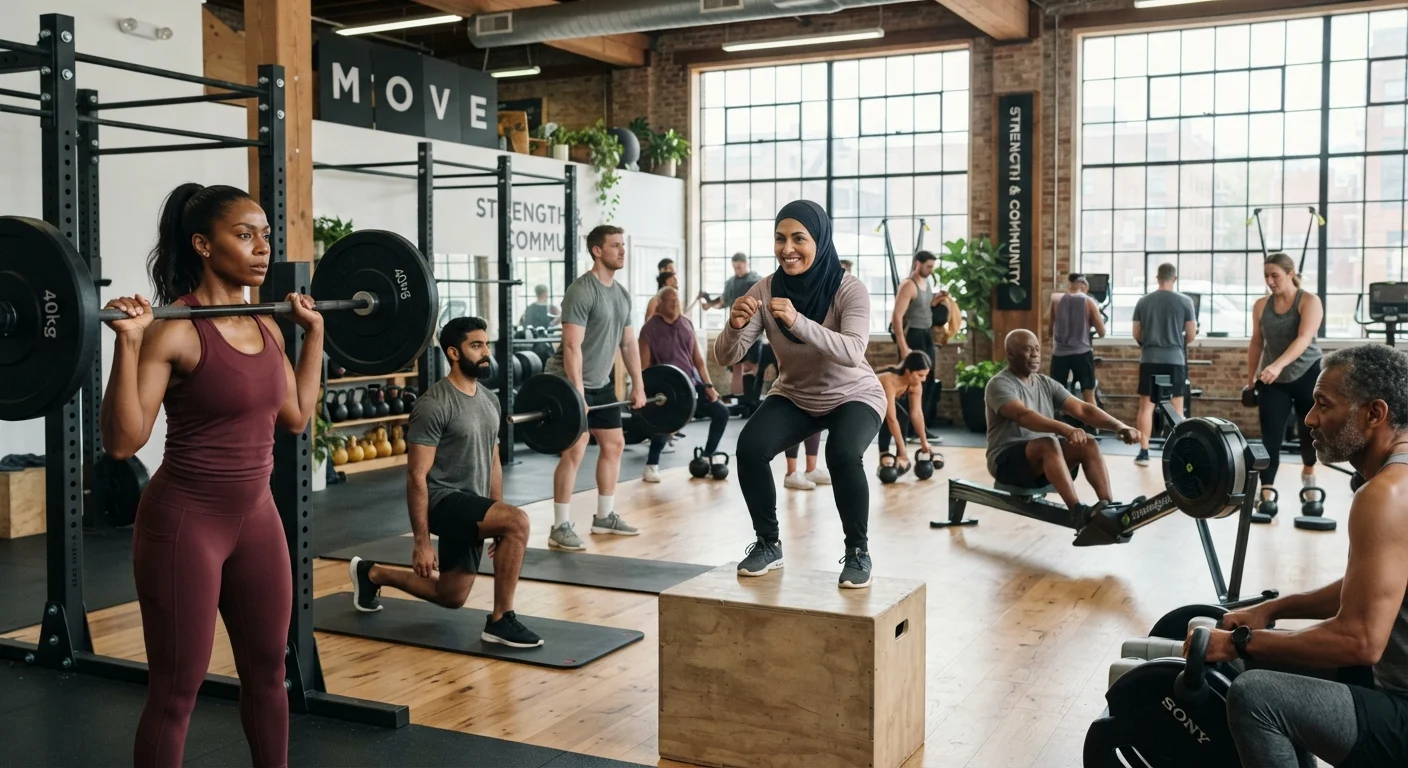
Why Fitness Myths Are So Hard to Shake
Fitness myths spread quickly because they often contain a grain of plausibility, get reinforced by gym culture, and are repeated by well-meaning people. Once a belief takes hold - especially one tied to visible results - it is remarkably resistant to correction, even when solid research contradicts it.
Understanding what the evidence actually shows can make physical activity feel less daunting and more sustainable. If you've ever felt like you weren't working hard enough, or avoided strength training out of fear of unwanted bulk, the corrections below may change how you approach movement entirely. For more on how myths persist in a related field, see our piece on nutrition science myths.
Myth
No pain, no gain - if you're not sore the next day, you didn't work hard enough.
Fact
Delayed onset muscle soreness (DOMS) is not a reliable measure of workout effectiveness or muscle growth.
Soreness occurs when muscles are exposed to unfamiliar stress, particularly eccentric (lengthening) movements. As the body adapts, the same workout produces less soreness - not because it stopped working, but because the muscles became more efficient. Chasing soreness can lead to overtraining and injury rather than better results.
Myth
You can spot-reduce fat by targeting specific body areas with exercise.
Fact
Fat loss occurs systemically throughout the body; exercise cannot selectively remove fat from one region.
Multiple studies, including research published in the Journal of Strength and Conditioning Research, have found no evidence that exercising a specific muscle group preferentially burns fat in that area. The body draws on fat stores according to genetics and overall energy balance, not the location of muscular effort. Abdominal exercises strengthen core muscles but do not specifically reduce belly fat.
Myth
Strength training will make women bulky and masculine-looking.
Fact
Women generally lack the testosterone levels required to develop large muscle mass through typical resistance training.
Testosterone plays a central role in muscle hypertrophy (growth). Women produce significantly less testosterone than men on average, which means that standard strength training typically produces lean muscle definition rather than pronounced bulk. Research consistently shows resistance training improves bone density, metabolic rate, and functional strength in women - benefits that extend well beyond aesthetics.
Myth
If you can't commit to at least 45-60 minutes, a workout isn't worth doing.
Fact
Shorter bouts of exercise - even 10 to 20 minutes - provide measurable cardiovascular, metabolic, and mood benefits.
Physical activity guidelines from major health organizations recognize that exercise benefits accumulate across the day. Studies show that multiple shorter sessions can produce similar cardiovascular improvements to one longer session of equivalent total duration. This makes activity far more accessible for people with busy schedules and reduces the all-or-nothing thinking that often leads to inactivity. Whether you train at home or in a gym matters less than whether you train at all - see our comparison of home workouts vs. gym training for a nuanced look.
Myth
More exercise is always better - the harder and more often, the faster the results.
Fact
Recovery is a physiological requirement; insufficient rest impairs adaptation and increases injury risk.
Muscle tissue repairs and strengthens during rest, not during exercise itself. Overtraining syndrome - characterized by declining performance, persistent fatigue, mood disturbance, and increased susceptibility to illness - is a recognized clinical condition. Progressive overload (gradually increasing training demands) paired with adequate recovery is the evidence-based model for long-term improvement.
Building a Smarter, More Sustainable Approach
Discarding these myths isn't just intellectually satisfying - it has real practical implications. When people believe they must feel pain to make progress, they risk injury and burnout. When they think short sessions don't count, they skip movement entirely on busy days. Both patterns undermine long-term consistency, which exercise science consistently identifies as the most important variable in fitness outcomes.
150 min
Recommended weekly moderate aerobic activity
U.S. Department of Health and Human Services physical activity guidelines recommend at least 150 minutes of moderate-intensity aerobic activity per week for substantial health benefits.
~50%
Adults who meet aerobic activity guidelines
Centers for Disease Control and Prevention data indicate that roughly half of U.S. adults meet federal aerobic activity recommendations, highlighting the gap between guidelines and actual behavior.
2x
Muscle-strengthening sessions recommended weekly
Federal physical activity guidelines recommend muscle-strengthening activities on two or more days per week for all major muscle groups, yet this guideline is met by fewer adults than the aerobic recommendation.
Research in behavioral science suggests that moderate, enjoyable activity maintained over time outperforms intense, irregular effort for most health goals. This aligns with what exercise physiologists call the minimum effective dose - the amount of exercise sufficient to produce meaningful adaptation without unnecessary fatigue or injury risk. For a deeper look at this principle, explore why consistency matters more than intensity.
If you've struggled to maintain a routine, the barriers are often psychological and structural rather than physical. Research on why people quit exercise points to unrealistic expectations - expectations that fitness myths actively reinforce.
Myths Can Create Real Barriers to Movement
Believing that short workouts don't count, that pain equals progress, or that certain exercises are off-limits can cause people to avoid physical activity altogether. The evidence is clear: some movement is substantially better than none, and the bar for meaningful benefit is lower than most fitness myths suggest. If misinformation has kept you from starting or returning to exercise, the research is on your side.
This article is for general informational and educational purposes only and is not a substitute for professional medical or fitness advice. Consult a qualified healthcare provider before starting or significantly changing an exercise program, particularly if you have an existing health condition.
The content on this site is for informational purposes only and is not a substitute for professional advice. Always consult a qualified professional for guidance specific to your situation.