

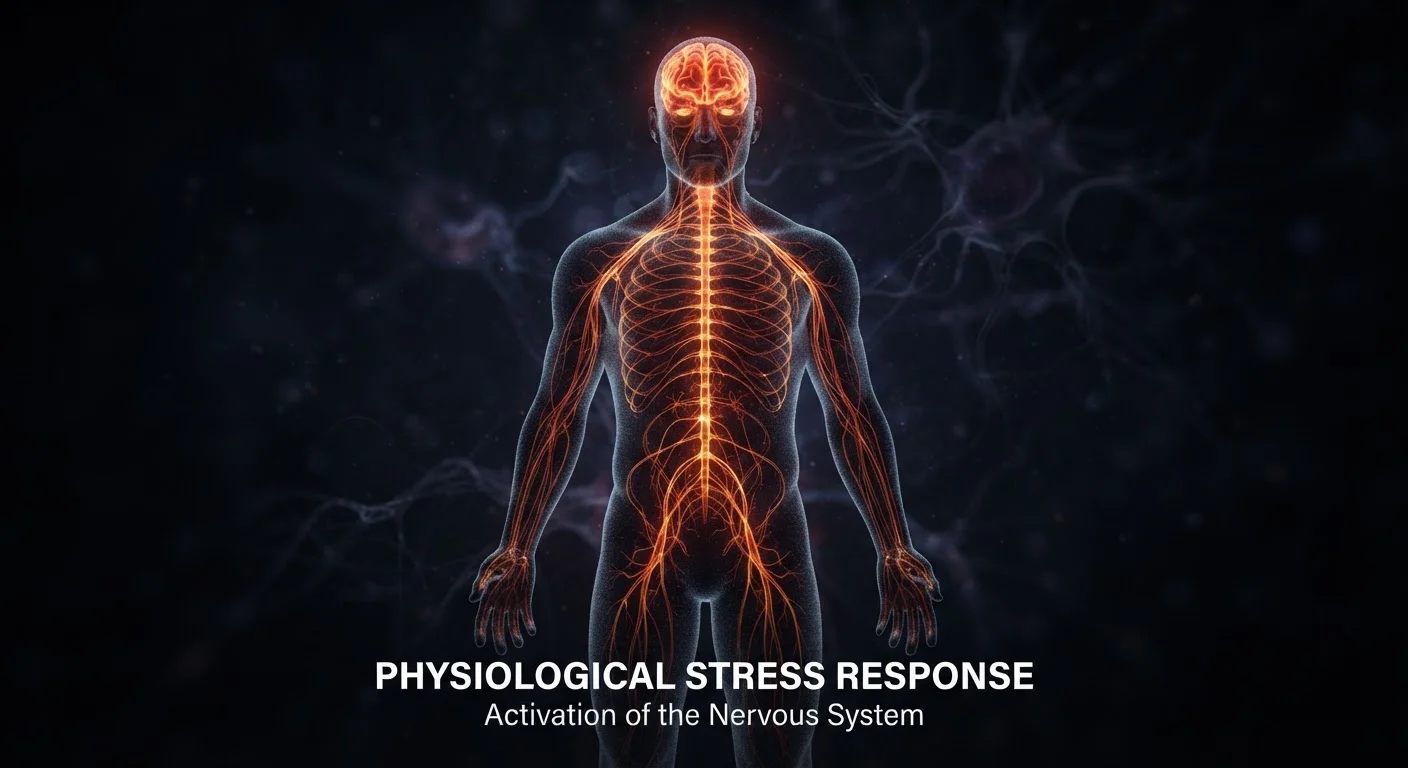
The Stress Response: Built for Sprints, Not Marathons
The human stress response - often called the "fight-or-flight" system - is a finely tuned survival mechanism. When you perceive a threat, the hypothalamus signals the adrenal glands to release adrenaline and cortisol. Heart rate climbs, muscles tense, and attention narrows. This cascade is genuinely useful for short-term challenges.
The problem arises when this system never fully switches off. Modern stressors - financial pressure, relationship conflict, job demands - rarely have a clear endpoint. The body, however, cannot easily distinguish between a brief emergency and a months-long situation. It simply stays on alert.
Over time, that constant activation stops being protective and starts being corrosive. Understanding how and why is key to recognizing when stress has moved from manageable to medically significant. For a deeper look at where that line falls, see our article on warning signs that stress may need attention.
“Stress is not the event itself, but the response of the body and mind to demands that exceed what a person believes they can handle. When that response becomes chronic, it stops being adaptive and starts being damaging.”
— Robert Sapolsky, Neuroendocrinologist and author of 'Why Zebras Don't Get Ulcers'
What Chronic Stress Does to the Brain
Sustained cortisol exposure has a measurable impact on brain structure and function. Research using neuroimaging has shown that prolonged stress is associated with reduced gray matter density in the prefrontal cortex - the region responsible for decision-making, emotional regulation, and impulse control - and the hippocampus, which plays a central role in memory formation and learning.
At the same time, the amygdala - the brain's threat-detection center - can become hyperactivated, creating a feedback loop where the brain becomes increasingly primed to identify danger even in neutral situations. This helps explain why people under chronic stress often describe feeling on edge, emotionally reactive, or unable to think clearly.
~1 in 3
U.S. adults reporting high stress levels
According to the American Psychological Association's Stress in America surveys, a substantial proportion of U.S. adults consistently report stress levels they describe as extreme or very high.
Up to 75-90%
Of doctor visits with stress-related components
The American Institute of Stress has cited estimates suggesting that a large majority of primary care visits involve stress-related presentations, though exact figures vary across studies.
6-8%
Hippocampal volume reduction in high-stress individuals
Neuroimaging research published in peer-reviewed journals has documented measurable reductions in hippocampal gray matter density among individuals with chronic stress or stress-related disorders.
Sleep is another casualty. Chronically elevated cortisol disrupts the body's circadian rhythms, making it harder to fall asleep and stay asleep - further impairing cognitive function and emotional resilience the following day.
The Body-Wide Impact: Beyond Mood
The effects of chronic stress are not confined to mental health. The sustained presence of stress hormones creates a ripple effect across multiple physiological systems.
- Cardiovascular system: Prolonged stress contributes to elevated blood pressure and increased heart rate over time, both of which are associated with greater cardiovascular risk. The mechanisms include direct hormonal effects and stress-related behaviors such as disrupted sleep and poor dietary choices.
- Immune system: Sustained cortisol suppresses immune surveillance while simultaneously promoting low-grade systemic inflammation - a combination that increases vulnerability to infections and may contribute to longer-term health risks.
- Digestive system: The gut and brain are connected via the vagus nerve and the enteric nervous system. Chronic stress can alter gut motility, disrupt the gut microbiome, and worsen conditions such as irritable bowel syndrome (IBS).
- Endocrine system: HPA axis dysregulation can interfere with thyroid function, reproductive hormones, and blood sugar regulation over time.
It's worth noting that isolation and loneliness can compound these effects - our article on what social isolation does over time covers how disconnection adds its own measurable physiological burden.
Recognize Physical Symptoms as Signals
Physical symptoms like persistent fatigue, frequent illness, or digestive discomfort can be early indicators that stress has crossed into territory worth addressing. Treating the physical symptom alone without examining the underlying stress load often brings only partial relief. Noting when these symptoms cluster together or coincide with high-stress periods is a useful first step.
What You Can Do - and When to Ask for Help
The evidence base for stress management is broad, ranging from mindfulness-based practices and structured exercise to cognitive behavioral therapy (CBT). No single approach works for everyone, and the effectiveness of different strategies varies depending on individual circumstances. Our overview of approaches to stress management compared by evidence provides a useful starting point.
It's equally important to examine whether current coping habits are helping or quietly reinforcing stress patterns. Some behaviors that feel relieving in the short term - avoidance, excessive screen time, alcohol use - can erode resilience over time. See signs your stress habits may be working against you for more on this.
Chronic Stress Is Not a Personal Failure
It can be tempting to view prolonged stress as a sign of weakness or poor coping. The research tells a different story: chronic stress involves measurable neurobiological and hormonal changes that genuinely alter how the brain and body function. Seeking support is not only reasonable - it reflects an accurate understanding of what stress does physiologically.
This article is for general informational purposes only and does not constitute medical advice. If you are experiencing persistent or severe stress symptoms, please consult a qualified healthcare professional for personalized evaluation and guidance.
Frequently Asked Questions
Normal stress is short-lived and resolves when the triggering situation passes, allowing the body to recover. Chronic stress persists for extended periods - weeks or months - keeping stress hormones elevated and the body in a prolonged state of activation. This sustained arousal is what causes the cumulative physiological damage associated with chronic stress.
Research suggests that prolonged stress can cause measurable structural changes in the brain, including reduced gray matter density in the prefrontal cortex and hippocampus. Some of these changes may be reversible with effective stress reduction and treatment, though the degree of recovery varies. A healthcare provider or mental health professional can offer personalized guidance.
Common physical manifestations include persistent fatigue, headaches, digestive problems, disrupted sleep, frequent illness, and elevated blood pressure. These symptoms arise because chronic stress dysregulates multiple body systems simultaneously. If you experience persistent symptoms, consult a qualified healthcare professional for evaluation.
Yes. Sustained cortisol elevation suppresses immune function over time, making the body more vulnerable to infections and slowing wound healing. Paradoxically, chronic stress can also drive low-grade systemic inflammation, which is associated with a range of health conditions. The relationship between stress and immunity is well-documented in psychoneuroimmunology research.
If stress is interfering with daily functioning, sleep, relationships, or physical health for more than a few weeks, it warrants professional attention. A primary care physician or licensed mental health professional can assess whether symptoms reflect stress alone or a condition such as anxiety or depression that may need specific treatment.
The content on this site is for informational purposes only and is not a substitute for professional advice. Always consult a qualified professional for guidance specific to your situation.