

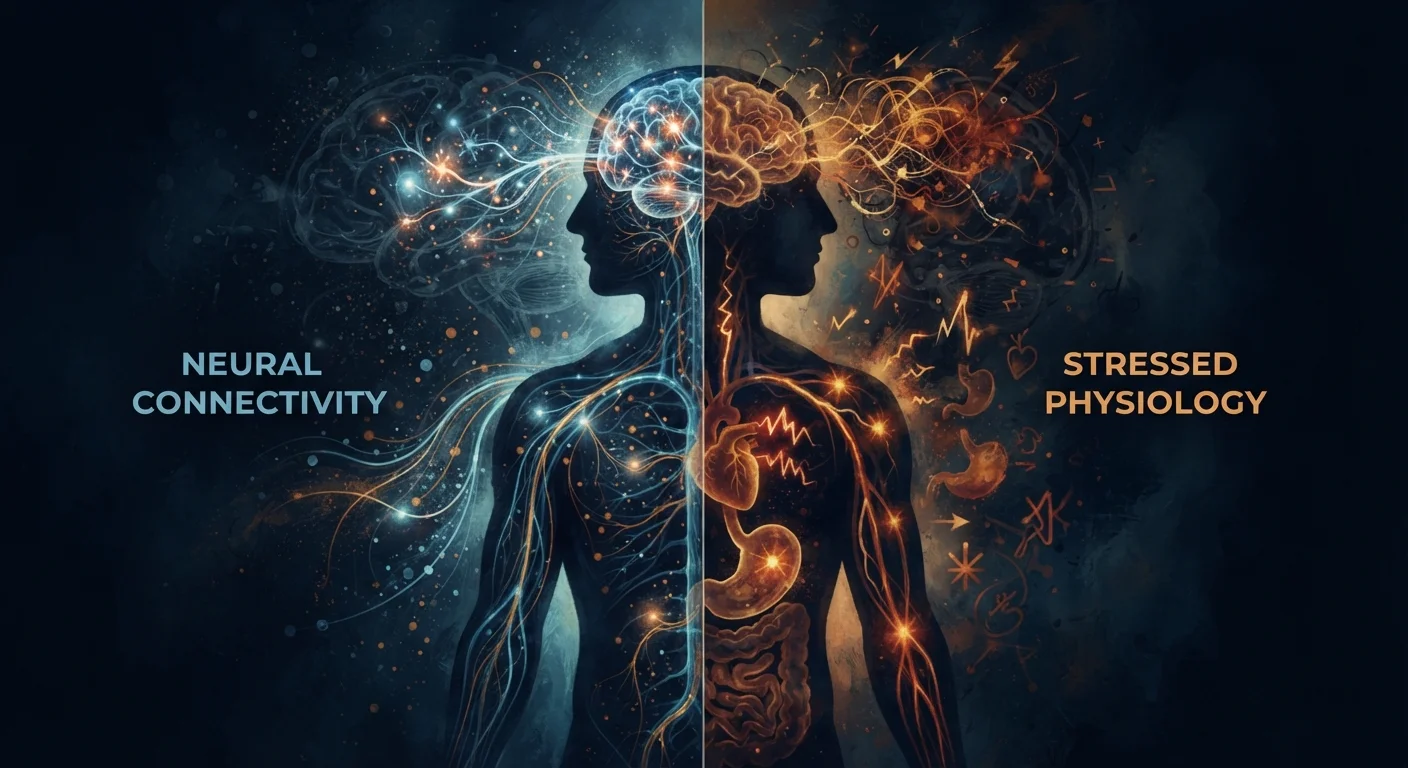
How the Stress Response Gets Stuck On
The human stress response evolved to handle threats that were brief and physical - a predator, a fall, an injury. The body releases adrenaline and cortisol, sharpens focus, speeds the heart, and prepares muscles for action. When the threat ends, the system resets.
Chronic stress disrupts this reset. Modern stressors - financial pressure, relationship conflict, job insecurity, caregiving demands - don't simply resolve. The brain interprets these ongoing pressures much like a physical threat, keeping the hypothalamic-pituitary-adrenal (HPA) axis in a state of sustained activation. The result is a body that rarely fully returns to baseline.
Over time, this persistent activation causes the stress response itself to become dysregulated. Cortisol receptors in the brain become less sensitive, making it harder for the body to recognize that the stress signal should stop - a feedback problem that compounds the original strain.
Stress Versus Anxiety Disorders: An Important Distinction
Chronic stress and anxiety disorders share overlapping symptoms but are distinct conditions. Chronic stress is typically tied to identifiable ongoing pressures and tends to ease when those pressures are resolved. Anxiety disorders involve persistent, often disproportionate worry that may not resolve without targeted treatment. If you're unsure which applies to your experience, a healthcare professional is best positioned to help clarify and guide next steps.
What Happens to Your Brain Under Prolonged Stress
The brain is particularly vulnerable to the effects of sustained cortisol elevation. Research has associated chronic stress with measurable structural changes, especially in regions critical to memory and emotional regulation.
The hippocampus - central to learning and memory consolidation - shows reduced volume in people with histories of chronic stress or stress-related disorders. The prefrontal cortex, which governs planning, judgment, and impulse control, becomes less active under prolonged stress. Meanwhile, the amygdala, which processes fear and threat, can become hyperactive - contributing to heightened anxiety and emotional reactivity.
These changes explain why people experiencing chronic stress often report difficulty concentrating, memory lapses, poor decision-making, and a sense of being emotionally overwhelmed. The brain, in effect, shifts its resources toward immediate survival at the expense of higher-order thinking.
“The brain is the organ that perceives stress and launches the physiological response - but it is also the organ most changed by that response over time.”
— Robert Sapolsky, Neuroendocrinologist and author, Stanford University
Body-Wide Effects: From Heart to Gut to Immune System
Chronic stress doesn't stay in the brain. Through hormonal and inflammatory pathways, it reaches virtually every organ system.
- Cardiovascular system: Sustained stress hormones raise blood pressure and heart rate over time. This prolonged strain on blood vessels and the heart has been linked to increased risk of hypertension and cardiovascular disease.
- Immune function: Short-term stress can briefly boost immunity. Chronic stress does the opposite - suppressing immune responses and increasing systemic inflammation, making the body more vulnerable to infection and slower to heal.
- Digestive system: The gut and brain communicate through the vagus nerve and gut microbiome. Chronic stress disrupts this axis, contributing to symptoms like nausea, altered bowel habits, and conditions such as irritable bowel syndrome.
- Sleep: Elevated cortisol interferes with normal sleep architecture, reducing restorative deep sleep and creating a cycle where poor sleep amplifies stress reactivity the following day.
~33%
Adults reporting extreme stress levels
The American Psychological Association's Stress in America surveys have consistently found that roughly a third of U.S. adults report stress levels they describe as extreme.
Up to 8%
Hippocampal volume reduction linked to chronic stress
Neuroimaging research has documented hippocampal volume reductions associated with sustained cortisol exposure and stress-related disorders, according to studies published in peer-reviewed neuroscience journals.
2-3×
Increased cardiovascular risk associated with high stress
Epidemiological evidence suggests chronically high perceived stress is associated with a two- to three-fold increase in cardiovascular disease risk compared to low-stress populations.
The effects of chronic stress on social behavior and isolation also deserve attention - research on social isolation and mental health shows that withdrawal from connection can further compound the physiological burden.
Why Early Awareness and Evidence-Based Support Matter
Understanding what chronic stress does physiologically isn't meant to alarm - it's meant to inform. Recognizing that persistent stress has measurable body-brain effects helps shift the conversation from "just managing" to actively protecting health.
Early intervention matters because many of the neurological and physiological changes associated with chronic stress are not permanent, particularly when addressed with appropriate support. Practices such as mindfulness-based stress reduction, regular movement, adequate sleep, and structured therapeutic approaches all have research backing their role in reducing stress's physiological burden.
If you're uncertain whether what you're experiencing has moved beyond typical everyday stress, reviewing the warning signs that stress may need professional attention is a useful starting point. For a broader look at what works, comparing evidence-based stress management approaches can help you weigh options.
Small, Consistent Practices Add Up
You don't need a complete lifestyle overhaul to reduce the physiological burden of chronic stress. Evidence supports that even brief, consistent practices - such as daily diaphragmatic breathing, short walks, or regular social contact - can meaningfully dampen stress hormone activity over time. Consistency matters more than intensity when building resilience.
This article is for general informational and educational purposes only and is not a substitute for professional medical advice, diagnosis, or treatment. If you have concerns about stress or its effects on your health, please consult a qualified healthcare professional.
Frequently Asked Questions
Acute stress is a short-term response to a specific challenge - it resolves once the situation passes. Chronic stress is ongoing and persists for extended periods, often without a clear endpoint. The long-duration activation of the stress response is what makes chronic stress harmful to health.
Research consistently links chronic stress to a range of physical health conditions, including cardiovascular disease, weakened immune function, digestive disorders, and sleep disruption. These effects emerge because stress hormones and inflammation pathways interact with nearly every organ system.
Sustained high cortisol levels have been associated with reduced volume in the hippocampus - the brain region involved in memory and learning - and altered activity in the prefrontal cortex, which governs decision-making. These changes can affect cognition, emotional regulation, and risk for mood disorders.
If stress is affecting your sleep, relationships, work performance, or physical health for more than a few weeks, it's worth discussing with a healthcare professional. See our <a href="/health-wellness/mental-well-being/warning-signs-that-stress-has-crossed-into-something-that-needs-attention">guide to recognizing when stress needs attention</a> for more detail.
Yes. Approaches such as mindfulness-based stress reduction, cognitive behavioral therapy, regular physical activity, and social support have documented evidence behind them. The best approach varies by individual - a healthcare professional can help tailor recommendations.
No. Individual responses to chronic stress vary based on genetics, prior experiences, social support, and overall health. Some people develop physical symptoms prominently; others experience primarily emotional or cognitive changes. This variability underscores why personalized professional guidance matters.
The content on this site is for informational purposes only and is not a substitute for professional advice. Always consult a qualified professional for guidance specific to your situation.