

Water's Role Inside the Digestive System
Digestion begins the moment food enters your mouth, and water is involved from the start. Saliva-mostly water-initiates the breakdown of carbohydrates and lubricates food so it can move safely down the esophagus. In the stomach, water mixes with digestive acids and enzymes to form a fluid mixture called chyme, which is gradually released into the small intestine where most nutrient absorption occurs.
Without enough fluid, this process slows. Food may move through the digestive tract less efficiently, increasing the likelihood of constipation and reducing the time available for nutrients to be absorbed. Adequate hydration keeps the mucosal lining of the intestines functioning properly-a critical factor for nutrient uptake.
Water From Food Counts, Too
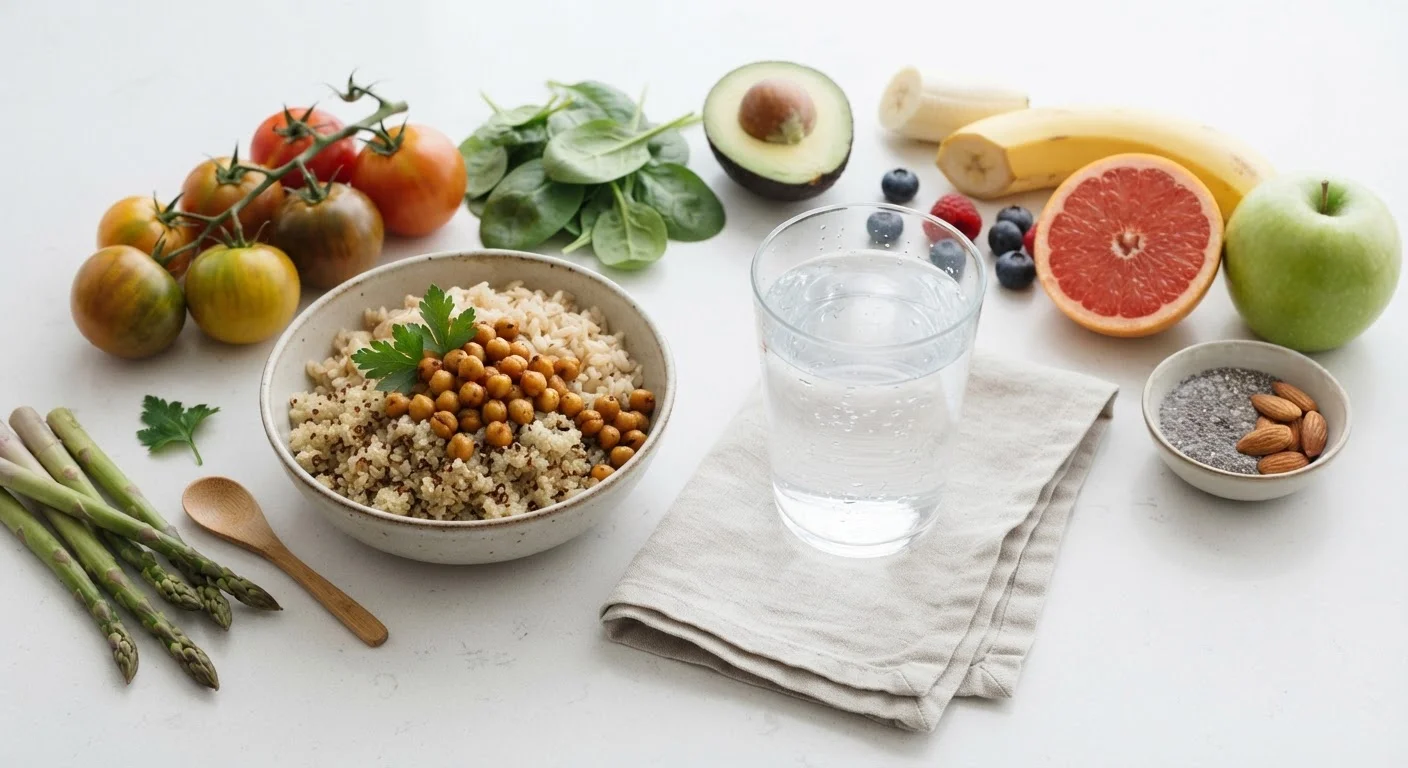
Many people underestimate how much fluid comes from solid food. Fruits and vegetables with high water content-like cucumbers (about 96% water) and watermelon (about 92% water)-contribute meaningfully to daily fluid intake. A diet rich in these foods naturally supports hydration even before a single glass of water is consumed.
How Hydration Affects Nutrient Absorption
Nutrients don't absorb themselves-they need water to get where they're going. Water-soluble vitamins (such as the B vitamins and vitamin C) dissolve in fluid before they can cross the intestinal wall into the bloodstream. Minerals like sodium, potassium, and magnesium rely on water-based transport systems to reach cells throughout the body.
Even fat-soluble vitamins (A, D, E, and K) depend indirectly on hydration: bile, which is produced in the liver and stored in the gallbladder to help digest fats, is a water-based fluid. When you're well-hydrated, these systems operate smoothly. When fluid intake is consistently low, absorption efficiency can decline in ways that are subtle but meaningful over time.
~60%
Percentage of adult body weight that is water
According to established physiology references, water comprises roughly 60% of total body weight in average adults, underscoring its central role in all bodily functions including digestion.
1-2%
Fluid loss linked to cognitive decline
Peer-reviewed research has found that body water loss as small as 1-2% of body weight can measurably impair mood, concentration, and physical performance.
~20%
Daily fluid intake from food
Health authorities estimate that approximately 20% of daily fluid intake comes from food rather than beverages, particularly in diets high in fruits and vegetables.
For readers looking at how these dynamics fit into broader eating strategies, nutrition habits that support steady daily function offer useful context on how food and fluid work together.
Dehydration, Energy, and Appetite Signals
One of the most practical ways hydration intersects with nutrition is through energy and hunger. Research consistently shows that even mild dehydration-often defined as a fluid loss of just 1-2% of body weight-can impair concentration, mood, and physical performance. This matters for nutrition because low energy often drives food choices: fatigue tends to push people toward higher-calorie, quickly digested foods.
There's also evidence that thirst and hunger signals can be misread. The hypothalamus, the brain region that regulates both, can sometimes generate a hunger response when the body actually needs fluid. Drinking water before or with meals may help clarify these signals, though individual responses vary.
Use Urine Color as a Hydration Check
A simple way to gauge your hydration status is to observe urine color. Pale yellow generally indicates adequate hydration, while dark yellow or amber suggests you may need more fluids. This informal check is widely used in clinical and sports nutrition settings as a practical, no-cost tool.
Understanding what research actually supports on nutrient timing can help contextualize when hydration matters most relative to meals and physical activity.
Practical Ways to Support Hydration Through Diet
Meeting fluid needs doesn't require drinking water exclusively. Whole foods-particularly fruits and vegetables-contribute substantially to daily hydration. Cucumbers, celery, strawberries, oranges, and leafy greens are all more than 85% water by weight. Soups, smoothies, herbal teas, and dairy beverages also add to the total.
Rather than fixating on a single daily water target, a more sustainable approach is to build hydrating habits throughout the day: drinking water with meals, choosing water-rich snacks, and paying attention to urine color as a simple feedback tool. Those eating dietary patterns with strong research behind them will often find these patterns naturally support hydration, given their emphasis on vegetables, legumes, and whole foods.
If you find nutrition guidance hard to parse, understanding why nutrition research can seem contradictory may help put hydration claims-and all dietary advice-in clearer perspective.
This article is for general informational and educational purposes only and does not constitute medical or dietary advice. Individual health needs vary. Please consult a qualified healthcare professional before making changes to your diet or fluid intake, especially if you have a medical condition.
Frequently Asked Questions
For most people, drinking water with meals supports digestion by helping dissolve food and move it efficiently through the digestive tract. There is no strong scientific evidence that drinking water during meals meaningfully dilutes digestive enzymes or impairs nutrient absorption in healthy individuals.
Individual fluid needs vary based on body size, activity level, climate, and diet. General guidance from health authorities suggests roughly 9-13 cups of total fluid daily for adults, but this includes water from food and all beverages. A qualified healthcare provider can help you assess your personal needs.
Yes. Water is essential for dissolving water-soluble vitamins and minerals and transporting them across the intestinal lining into the bloodstream. Chronic or even mild dehydration can slow these processes and reduce the efficiency of nutrient uptake.
Absolutely. Many fruits and vegetables-including cucumber, watermelon, oranges, and leafy greens-have high water content and contribute significantly to daily fluid intake. A diet rich in these foods naturally supports hydration alongside plain water.
Thirst is a useful signal, but it can lag behind actual fluid needs-particularly in older adults and during intense physical activity. Urine color is often a more reliable indicator: pale yellow typically suggests adequate hydration, while dark yellow or amber suggests you may need more fluids.
The content on this site is for informational purposes only and is not a substitute for professional advice. Always consult a qualified professional for guidance specific to your situation.