

Why Heating Maintenance Gets Overlooked
Your heating system does its best work invisibly - tucked in a basement, closet, or utility room, humming along without complaint until something goes wrong. That invisibility is exactly why maintenance slips. Most homeowners don't think about their furnace until a cold night reveals a problem, at which point a repair is far more expensive than prevention would have been.
The good news: most heating upkeep is straightforward. A consistent routine - paired with an understanding of which tasks genuinely require a professional - can extend equipment life, lower energy bills, and keep your home comfortable all season. For a broader look at timing your home maintenance tasks, see our seasonal home maintenance guide.
5%-15%
Potential energy savings from a clean filter
The U.S. Department of Energy notes that replacing a clogged filter with a clean one can lower an air conditioner or furnace's energy consumption by roughly 5 to 15 percent.
~40%
Share of home energy use attributed to heating and cooling
According to the U.S. Energy Information Administration, space heating and cooling together account for the largest portion of residential energy consumption - roughly 40 percent in a typical U.S. home.
The Most Common Heating Maintenance Mistakes
The errors below aren't rare - they're the ones technicians encounter in home after home, season after season. Recognizing them is the first step toward breaking the pattern.
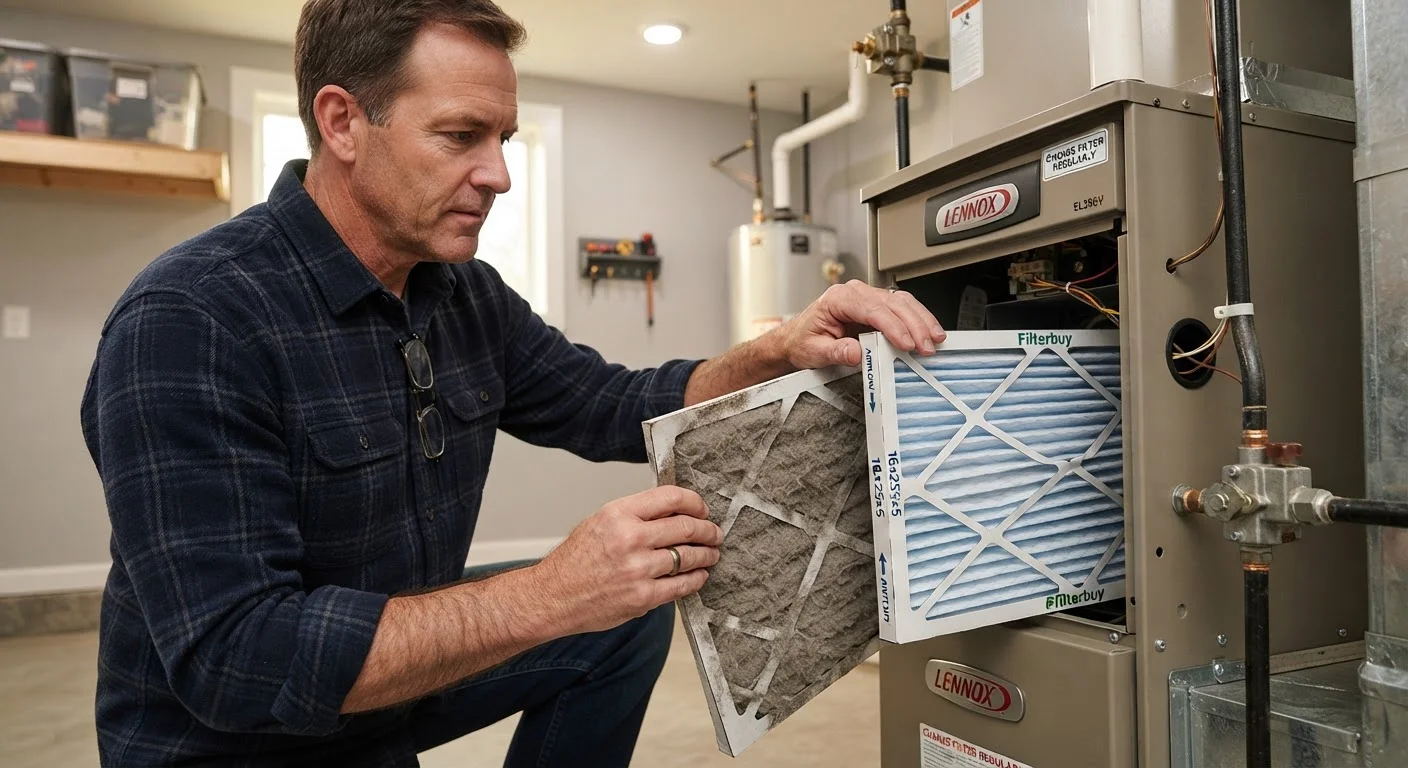
Replacing the HVAC filter only once a year - or never.
Why it happens: Filters are hidden behind a panel and easy to forget. Many homeowners aren't sure how often they actually need changing.
Skipping the annual professional furnace inspection.
Why it happens: If the heat turns on and nothing seems wrong, it's tempting to assume everything is fine and avoid the service call cost.
Blocking or closing supply and return vents to 'save energy' in unused rooms.
Why it happens: It feels logical - less heated space should mean less energy used. In practice, forced-air systems are calibrated for a specific duct pressure balance.
Ignoring unusual smells, sounds, or short cycling at system startup.
Why it happens: Homeowners often assume minor oddities are 'just how it sounds' or will resolve on their own after the system hasn't run all summer.
Leaving flammable items stored near the furnace.
Why it happens: Utility rooms and basements often double as storage areas, and the space around the furnace gradually fills up between service visits.
What Homeowners Can Handle - and What They Shouldn't
There's a clear line between routine upkeep any homeowner can manage and work that carries real risk if done incorrectly.
Safe DIY tasks
- Filter replacement: Check the filter monthly; replace it when visibly clogged or per the manufacturer's schedule.
- Thermostat checks: Test that the thermostat responds accurately and consider upgrading to a programmable model if yours is outdated.
- Vent and register cleaning: Vacuum dust from supply and return vents and make sure furniture hasn't shifted to block airflow.
- Visual inspection: Look for visible rust, water stains near the unit, or unusual soot around the burner compartment - then report findings to a technician.
Leave these to a licensed professional
- Gas line connections, burner cleaning, and heat exchanger inspection
- Electrical component testing and wiring
- Flue and chimney inspection for combustion appliances
- Refrigerant handling on heat pump systems
Gas Appliance Concerns: Call a Professional
If you smell gas near your furnace at any time, do not attempt to inspect or repair the unit yourself. Leave the home, avoid operating electrical switches, and contact your gas utility's emergency line. Gas line work and heat exchanger inspection must always be performed by a licensed HVAC or gas technician. This is not a DIY task.
If you're new to managing a home's systems, the first-year homeowner maintenance guide offers a practical starting framework for building these habits from scratch.
Building a Maintenance Schedule You'll Actually Follow
Consistency matters more than perfection. A simple recurring calendar reminder beats the best intentions. Here's a practical baseline:
- Monthly: Check the filter; replace if dirty.
- Before heating season (early fall): Schedule a professional tune-up, test the thermostat, clear vents of obstructions, and inspect the area around the furnace for clutter or stored flammables.
- Annually: Have a licensed HVAC technician inspect the heat exchanger, burners, flue, and all safety controls.
For a comprehensive task-and-frequency reference across all your home systems, the annual home maintenance reference is a useful lookup resource. And before the first cold snap arrives, run through the pre-winter checklist to make sure nothing has been missed.
The content on this site is for informational purposes only and is not a substitute for professional advice. Always consult a qualified professional for guidance specific to your situation.