

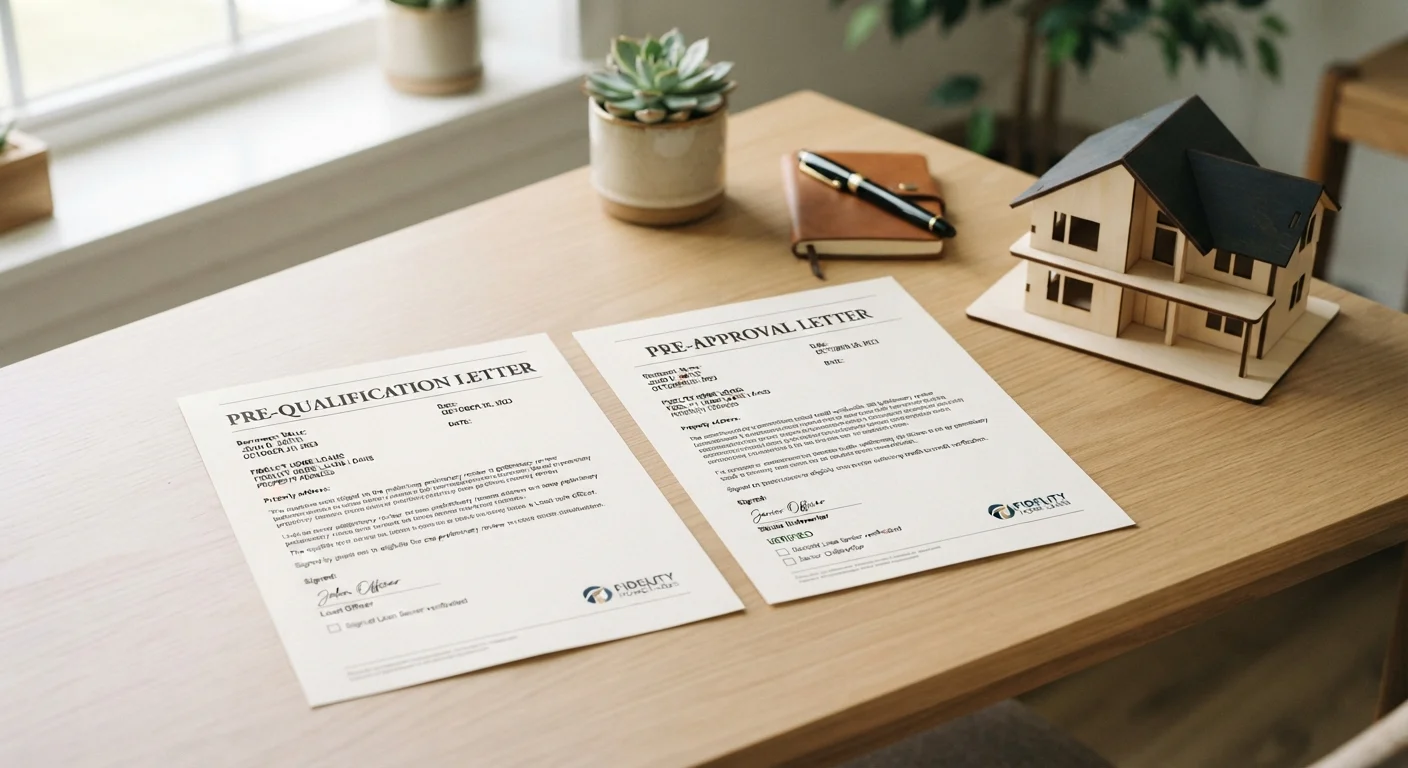
Option A
Pre-Qualification
The quick, informal starting point for mortgage readiness.
Best for: First-time buyers who want an early estimate of borrowing power before actively shopping for a home.
Option B
Pre-Approval
The verified, lender-backed signal that carries real weight.
Best for: Buyers ready to make offers who need credible proof of financing to compete in today's market.
What Each Term Actually Means
Both pre-qualification and pre-approval are steps lenders offer to help buyers understand their mortgage eligibility before purchasing a home. They sound nearly identical, but they differ significantly in rigor, reliability, and how sellers perceive them.
Pre-qualification is an informal estimate. A lender asks you to self-report basic financial details - income, debts, assets - and uses that information to give you a rough borrowing range. There's typically no credit check involved, which means the estimate is only as accurate as the information you provide. It takes minutes and costs nothing, but it comes with no verification.
Pre-approval is a more formal process. The lender collects documentation - pay stubs, W-2s, bank statements, tax returns - and pulls your credit report with a hard inquiry. Based on verified data, the lender issues a conditional commitment letter stating how much they're willing to lend. This process can take a few days and leaves a temporary mark on your credit score, but it tells a much more credible story to sellers.
For a deeper look at what lenders actually assess during pre-approval, see what a mortgage pre-approval actually means.
| Criterion | Pre-Qualification | Pre-Approval |
|---|---|---|
| Data used | Self-reported income and debts | Verified documents and credit report |
| Credit check | None (soft or no inquiry) | Hard credit pull required |
| Time to complete | Minutes to a few hours | 1-3 business days typically |
| Output | Estimated borrowing range | Conditional commitment letter |
| Weight with sellers | Low - easily dismissed | High - expected in competitive markets |
| Validity period | No formal expiration | Typically 60-90 days |
| Guarantees a loan? | No | No - full underwriting still required |
Why the Difference Matters to Sellers
In practice, the distinction becomes critical the moment you start making offers. A seller receiving multiple bids wants confidence that the buyer can actually close. A pre-qualification letter - based on unverified self-reporting - provides little assurance. A pre-approval letter, backed by a lender's review of real documents, signals that a buyer has cleared an important financial hurdle.
74%
Sellers who prefer pre-approved buyers
According to the National Association of Realtors, the vast majority of sellers' agents recommend accepting offers from pre-approved buyers over those with only a pre-qualification.
60-90 days
Typical pre-approval validity window
Most lenders issue pre-approval letters valid for 60 to 90 days, after which buyers may need to reapply if they haven't gone under contract.
In competitive conditions, listing agents will often advise sellers to favor offers accompanied by pre-approval. In some markets, sellers won't accept offers at all without one. Understanding what kind of market you're in helps you gauge how much leverage buyers actually have - and how important that pre-approval letter becomes.
It's also worth noting that neither document is a guarantee. Both are conditional on a full underwriting review that happens after you go under contract. Changes to your financial situation between pre-approval and closing - a new loan, job change, or large purchase - can affect your final approval.
When to Use Each Step in Your Homebuying Journey
Think of pre-qualification as a planning tool and pre-approval as an action tool.
- Use pre-qualification when you're 6-12 months away from buying and want to understand your general price range, identify areas to strengthen (like paying down debt), or simply start the conversation with a lender.
- Get pre-approved once you're actively searching and ready to make offers. Most pre-approval letters are valid for 60-90 days, so timing matters - apply when your search is genuinely underway.
Before you submit any offer, there's more groundwork to do beyond financing. Our buyer's due diligence checklist walks through what to research about a property, neighborhood, and your finances before committing.
Pre-Approval Is Conditional, Not Final
A pre-approval letter does not mean your loan is guaranteed. It means a lender has reviewed your current financial profile and is conditionally willing to lend up to a stated amount. Full underwriting - which happens after you go under contract - is the final approval step. Avoid taking on new debt, changing jobs, or making large financial moves between pre-approval and closing, as these can affect your loan outcome.
This article is for general informational purposes only and does not constitute financial, legal, or mortgage advice. Consult a licensed mortgage professional or financial adviser for guidance specific to your situation.
The content on this site is for informational purposes only and is not a substitute for professional advice. Always consult a qualified professional for guidance specific to your situation.