

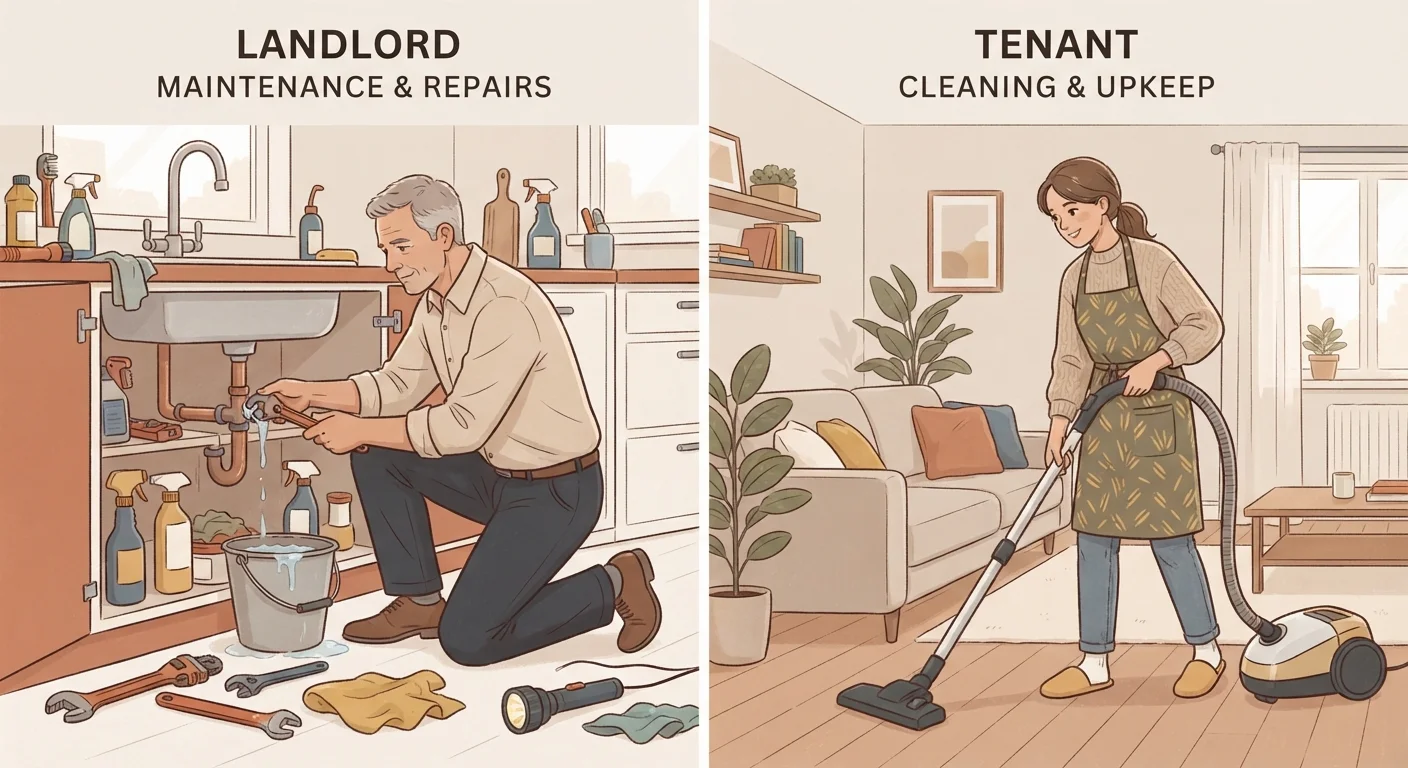
The Legal Foundation: Habitability Is Non-Negotiable
In virtually every U.S. state, landlords are legally required to maintain rental units in a habitable condition - a standard rooted in the implied warranty of habitability. This means the unit must be structurally safe, weather-tight, and equipped with functioning essential systems. Habitability isn't optional, and lease clauses that attempt to waive it are generally unenforceable.
| Legal standard landlords must meet | Implied warranty of habitability (Recognized in nearly all U.S. states) |
| Emergency repair response window | 24-72 hours (typical) (Varies by state law; verify locally) |
| Non-emergency repair window | 14-30 days (common range) (State-specific; check local statutes) |
| Tenant damage responsibility | Damage beyond normal wear and tear (Standard across most U.S. jurisdictions) |
| Wear and tear deductions | Generally not allowed from security deposit (Tenant protection in most states) |
Specifically, landlords are typically responsible for:
- Structural integrity - roofs, walls, floors, and foundations that are safe and intact
- Heating systems - functional heat during cold months (required in most states)
- Plumbing and hot water - working pipes, toilets, and hot water supply
- Electrical systems - safe wiring and functioning outlets
- Pest control - addressing infestations not caused by the tenant
- Common areas - hallways, stairwells, and shared spaces kept safe and clean
When a landlord fails to make necessary repairs after proper written notice, many states allow tenants to pursue remedies such as rent withholding, repair-and-deduct, or lease termination. See the protections most renters overlook to understand how these options typically work.
What Tenants Are Generally Responsible For
Tenant obligations center on ordinary care and cleanliness - keeping the unit reasonably clean, using appliances and fixtures as intended, and promptly reporting problems. Damage caused by misuse, negligence, or accidents within your control is typically your financial responsibility, not your landlord's.
Implied Warranty of Habitability
A legal doctrine in most U.S. states requiring landlords to maintain rental units in a livable condition throughout the tenancy. It applies even if the lease does not explicitly mention it.
Normal Wear and Tear
The gradual, expected deterioration of a rental unit from ordinary use over time - such as faded paint or lightly worn carpet. Landlords generally cannot charge tenants for this.
Repair-and-Deduct
A legal remedy available in many states that allows tenants to hire someone to fix a habitability problem and deduct the cost from rent, when the landlord has failed to act after proper notice.
Security Deposit
A sum paid by the tenant before move-in, held by the landlord to cover unpaid rent or damages beyond normal wear and tear. Most states regulate how and when it must be returned.
Common tenant responsibilities include:
- Replacing light bulbs and batteries in smoke detectors (check your lease - this varies)
- Unclogging drains when the blockage results from tenant use (hair, grease)
- Keeping the unit free of conditions that attract pests (food waste, clutter)
- Minor touch-ups like nail holes from hanging pictures, depending on lease terms
- Damages you, your guests, or your pets cause - broken windows, stained carpet, damaged doors
One area renters often misunderstand: normal wear and tear is the landlord's responsibility, not yours. Gradual carpet fading, small scuffs on walls, and aging paint are expected over time. Landlords cannot legally deduct for these from your security deposit in most states. For a fuller picture of the relationship between landlord duties and tenant obligations, see a breakdown of responsibilities on both sides.
Gray Areas and How to Handle Them
Some repairs fall into genuinely contested territory - appliances provided with the unit, HVAC filter replacement, landscaping in single-family rentals, and minor plumbing issues are common examples. The answer often depends on your specific lease, local law, and who caused the problem.
Always Put Repair Requests in Writing
Verbal requests are difficult to prove and may not start the legal clock on your landlord's repair obligations. Send requests by email or certified letter and keep copies. If repairs are ignored, written documentation is often essential if you later need to pursue a legal remedy. Check your core renter's rights to understand what protections you can assert.
A few practical principles help in gray-area situations:
- Check your lease first. Many agreements explicitly assign responsibility for specific items - air filters, lawn care, pest prevention - to one party. If your lease is silent, local law often fills the gap.
- Report everything in writing. Send maintenance requests via email or a written note you can document. This creates a record and starts the clock on legally required response times in many states.
- Document the condition. Photos and videos taken at move-in and throughout your tenancy protect you from disputed damage claims later.
- Know your state's repair timelines. Most states require landlords to address emergency repairs (no heat, burst pipes) within 24-72 hours, and non-emergency repairs within a reasonable window - often 14-30 days. Exact rules vary, so verify locally.
If you're ever unsure whether a repair falls on you, common landlord myths clarifies several misconceptions renters routinely accept without question. And if you later transition to homeownership, the calculus changes entirely - building a maintenance routine from scratch is a useful starting point.
This article provides general information about landlord and tenant responsibilities in the United States. Laws vary significantly by state and locality. Consult a qualified attorney or local tenant rights organization for guidance specific to your situation.
The content on this site is for informational purposes only and is not a substitute for professional advice. Always consult a qualified professional for guidance specific to your situation.