

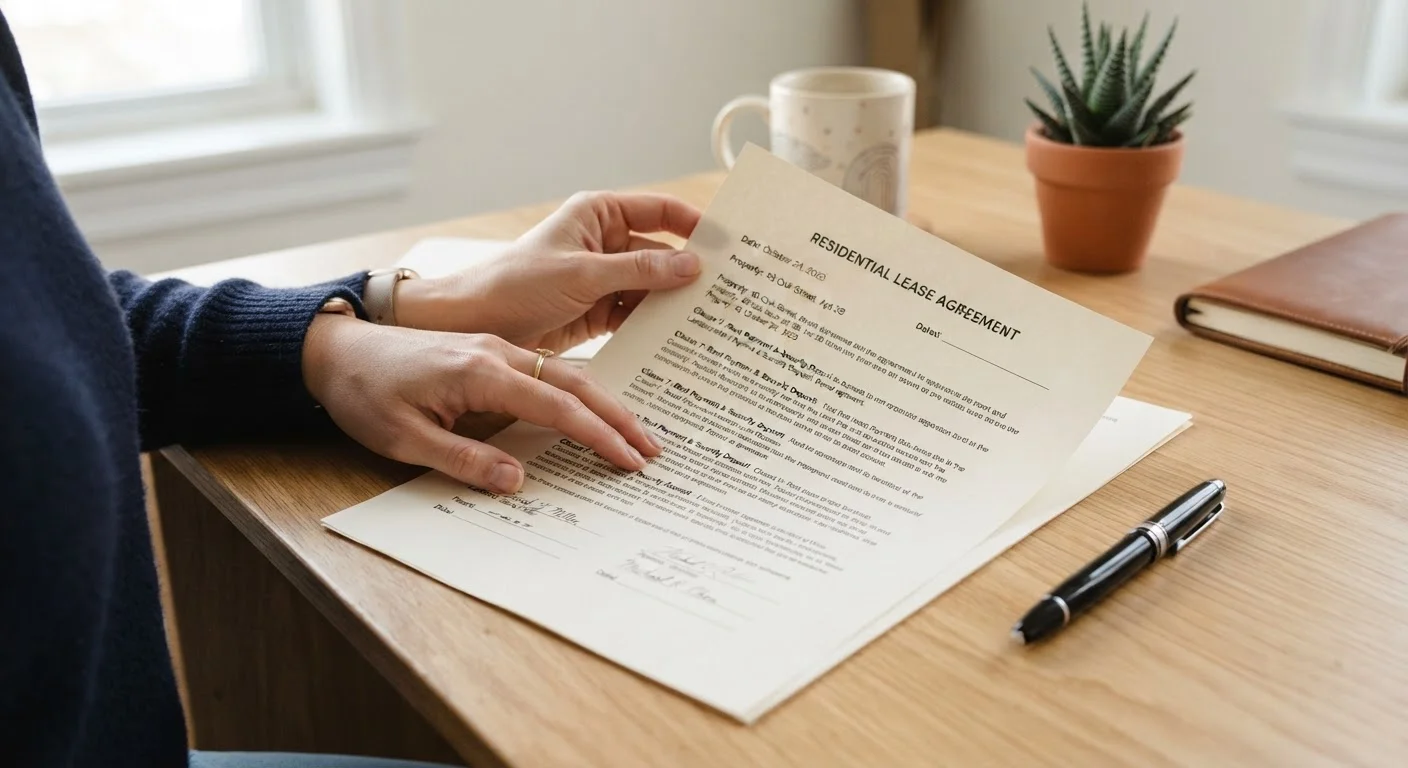
The Rent Clause: More Than Just a Dollar Amount
The rent clause is the first thing most tenants look at - and often the only part they read carefully. But it contains far more than the monthly figure. It specifies the exact due date (commonly the first of the month), any grace period before a late fee kicks in, and how much that late fee will be. Some leases require rent to be paid only by check or electronic transfer; others restrict partial payments.
Skimming past these details can be expensive. If your lease says rent is due on the first with a five-day grace period and a $75 late fee, paying on the sixth means you owe $75 - no negotiation required. For a broader look at rental terminology you'll encounter throughout a lease, see the plain-English glossary for renters.
Ask for a Lease Copy Before Move-In Day
Request the full lease document at least 48 hours before you're expected to sign. This gives you time to read it without pressure, look up unfamiliar terms, and ask questions. Rushing through a lease at the leasing office is one of the most common - and costly - mistakes first-time renters make.
Security Deposit Terms: Know Before You Pay
Your security deposit clause governs one of the most dispute-prone areas of renting. It states how much you owe upfront (typically one to two months' rent, though state law often caps the amount), what conditions justify deductions, and how quickly the landlord must return it after you move out.
Most states require landlords to return deposits - minus documented deductions - within 14 to 30 days of move-out. Failure to comply can entitle tenants to penalties in many states. Document the unit's condition thoroughly with dated photos when you move in and again when you leave. That paper trail is your strongest protection.
42%
Renters who faced a security deposit dispute
A survey by Apartment List found that roughly 4 in 10 renters reported disputes over security deposit deductions with a previous landlord.
14-30 days
Typical state deadline to return a security deposit
Most US states require landlords to return security deposits within this window after move-out; specific timelines vary by state law.
Maintenance, Repairs, and Habitability
Every lease divides repair responsibilities between landlord and tenant. Landlords are legally obligated in all US states to maintain a habitable unit - meaning functioning heat, plumbing, and structural safety. But the lease determines who handles smaller issues like replacing light bulbs, unclogging drains, or maintaining appliances.
Read this section carefully. If the lease assigns you responsibility for pest control, for example, a future infestation becomes your problem to solve and your bill to pay. Conversely, if the landlord is obligated to repair a broken heater within 48 hours, knowing that clause gives you standing to follow up in writing and, if necessary, escalate.
State Law Can Override Lease Clauses
Even if a lease clause says something, it may not be enforceable if it contradicts your state's landlord-tenant laws. For example, a landlord cannot lease away your right to a habitable unit, regardless of what the lease says. Always check your state attorney general's website or a local tenant rights organization for the rules that apply where you live.
Clauses That Catch Renters Off Guard
Several lesser-read sections have an outsized impact on your tenancy:
- Guest and subletting policies: Many leases restrict how long a non-tenant can stay and prohibit subletting without written landlord approval. Violating these terms can be grounds for eviction.
- Pet clauses: Even if you don't have a pet now, understand the rules. Some leases charge a non-refundable pet fee; others prohibit pets entirely.
- Renewal and notice requirements: Most leases require written notice - commonly 30 to 60 days - if you don't plan to renew. Missing this window can automatically convert your lease to month-to-month or obligate you to another full term.
- Early termination: This clause outlines your financial exposure if you need to leave before the lease ends. Some leases allow termination with two months' notice and a fee; others hold you liable for the full remaining rent.
Understanding these clauses before signing - not after a conflict arises - is what separates an informed renter from a reactive one. The principle applies whether you're signing a residential lease or evaluating any long-term financial commitment; for perspective on how lease structures work in a different context, see how leasing vs. buying works with vehicles.
How to Read a Lease Before You Sign
A lease isn't light reading, but a structured approach makes it manageable. Read every section - not just the rent and move-in date. When something is unclear, ask the landlord for clarification in writing. If a clause seems unusual or unusually restrictive, contact a local tenant rights organization; many offer free consultations.
Never rely on a landlord's verbal explanation of what a clause means. What matters in a dispute is what the document says, not what was discussed. And if a landlord promises something not reflected in the lease - a parking spot, a repair, a rent freeze - get it added to the lease or confirmed in writing before you sign.
This article is for general informational and educational purposes only and does not constitute legal advice. Lease terms and landlord-tenant laws vary significantly by state and locality. Consult a licensed attorney or your local tenant rights organization for guidance specific to your situation.
Frequently Asked Questions
Generally, no. Once both parties sign a lease, its terms are locked in for the duration of the lease period. A landlord can propose new terms when your lease is up for renewal, but cannot unilaterally change conditions mid-lease without your written agreement.
Most leases include an early termination clause that outlines your financial liability, which could mean paying rent until a new tenant is found or forfeiting a set number of months' rent. Some states require landlords to make a reasonable effort to re-rent the unit to limit your exposure. Review your specific lease and check your state's landlord-tenant laws.
Not necessarily. A clause that violates state or local law - such as waiving your right to a habitable unit - is generally unenforceable even if you signed it. When in doubt about a specific clause, consult a tenant rights organization or a licensed attorney in your state.
Both are rental contracts, but a fixed-term lease locks in your tenancy for a set period (commonly 12 months), while a month-to-month agreement renews automatically each month and can be ended by either party with proper notice, usually 30 days.
Ask the landlord to put it in writing before you sign. Verbal promises are extremely difficult to enforce, and courts typically rely on the written contract. A short email confirmation from the landlord can serve as documentation if a written lease amendment isn't practical.
The content on this site is for informational purposes only and is not a substitute for professional advice. Always consult a qualified professional for guidance specific to your situation.