

Why Medication Rules Vary So Dramatically by Country
International travel introduces a layer of complexity that many US travellers don't anticipate: the medications in your bathroom cabinet at home may be treated very differently at a foreign border. Drug scheduling, import quantity limits, and documentation requirements are set independently by each country - and they don't necessarily align with US standards.
Some countries classify common US prescriptions, including certain ADHD medications, opioid-based painkillers, and even some sleep aids, as controlled or prohibited substances. Transit countries matter too - if your flight to Europe stops in Dubai, the regulations of that transit country can apply even if you never leave the airport terminal.
For a broader view of protecting your health while abroad, see our guide on staying healthy abroad, which covers vaccinations and when to seek medical care internationally.
This Is General Information, Not Medical Advice
The guidance in this article is educational and intended to help you ask the right questions before you travel. It is not a substitute for advice from your doctor, pharmacist, or a licensed healthcare professional. Always consult your healthcare provider about your specific medications and travel plans.
Regulations Change - Always Verify Officially
Drug importation rules, quantity limits, and controlled substance classifications vary widely by country and are updated periodically. Before travelling, check with the destination country's embassy or official health ministry website, and consult the US Embassy or State Department resources for your specific destination.
Documentation That Actually Makes a Difference
The single most protective step you can take before travelling with medication is building a clear, verifiable paper trail. This means more than simply keeping your prescription bottles - it means assembling documentation that a customs officer, a foreign pharmacist, or an emergency physician could understand.
Research the legal status of each medication in every country you'll visit, including transit countries.
A drug that is freely available over the counter in the US - including some common pain relievers, cold remedies, and stimulants - may be a controlled or outright prohibited substance elsewhere. Being caught with a banned medication, even inadvertently, can result in confiscation, fines, or more serious legal consequences.
Obtain a signed letter from your prescribing physician for every prescription medication you carry.
A physician's letter - on official letterhead, detailing the diagnosis, medication name (including generic name), dosage, and travel duration - gives customs officers context and demonstrates legitimate medical use. It won't guarantee entry in every situation, but it significantly reduces complications.
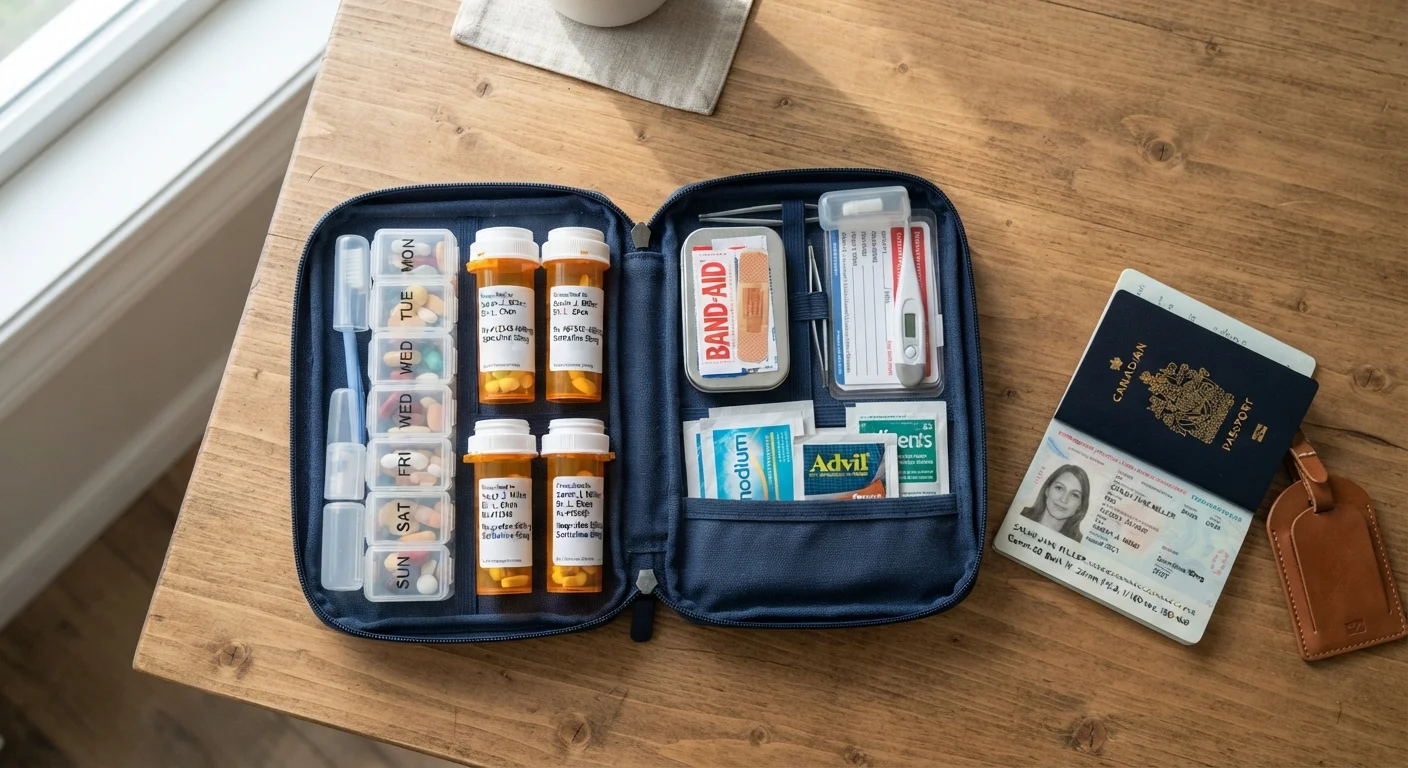
Keep all medications in their original pharmacy-labeled containers throughout your trip.
Pill organizers are convenient but remove the critical identifying information - drug name, dosage, prescribing doctor, and pharmacy - that customs officers and foreign medical professionals may need. Unlabeled pills are far more likely to be seized or to delay you at the border.
Split your supply: carry the majority in your carry-on luggage and a small backup in checked baggage.
Checked luggage is occasionally delayed, lost, or damaged. If your entire medication supply is in a checked bag and it goes missing, accessing an equivalent prescription abroad may be difficult, expensive, or impossible, particularly for medications with no local equivalent.
Plan storage for temperature-sensitive medications, including during transit.
Insulin, some biologics, and certain liquid medications can degrade quickly outside specific temperature ranges. Airplane cargo holds, hotel rooms without climate control, and long layovers in hot climates all pose risks. Insulated travel cases with appropriate cooling packs are an important part of the plan.
Declare medications honestly at customs, especially controlled substances.
Failing to declare a medication - particularly a controlled substance - when required can be treated as smuggling, regardless of intent. Customs declaration forms in many countries specifically ask about medications. When in doubt, declare.
If you're heading on your first international trip and still building out your overall preparation checklist, our practical orientation for new travellers covers customs, documentation, and managing the unexpected from the ground up.
Practical Steps You Can Take Right Now
Preparation doesn't require weeks of effort - several of the most impactful steps take under an hour and can be done before your next appointment or pharmacy visit.
If something does go wrong mid-trip - a medication is confiscated, lost, or you need a refill abroad - having a plan matters. Our article on handling common travel crises walks through practical responses to medical and logistical disruptions.
This Is General Information, Not Medical Advice
The guidance in this article is educational and intended to help you ask the right questions before you travel. It is not a substitute for advice from your doctor, pharmacist, or a licensed healthcare professional. Always consult your healthcare provider about your specific medications and travel plans.
Regulations Change - Always Verify Officially
Drug importation rules, quantity limits, and controlled substance classifications vary widely by country and are updated periodically. Before travelling, check with the destination country's embassy or official health ministry website, and consult the US Embassy or State Department resources for your specific destination.
This article is for general informational purposes only and does not constitute medical or legal advice. Consult your healthcare provider and pharmacist about your specific medications and travel destinations before you travel.
The content on this site is for informational purposes only and is not a substitute for professional advice. Always consult a qualified professional for guidance specific to your situation.