

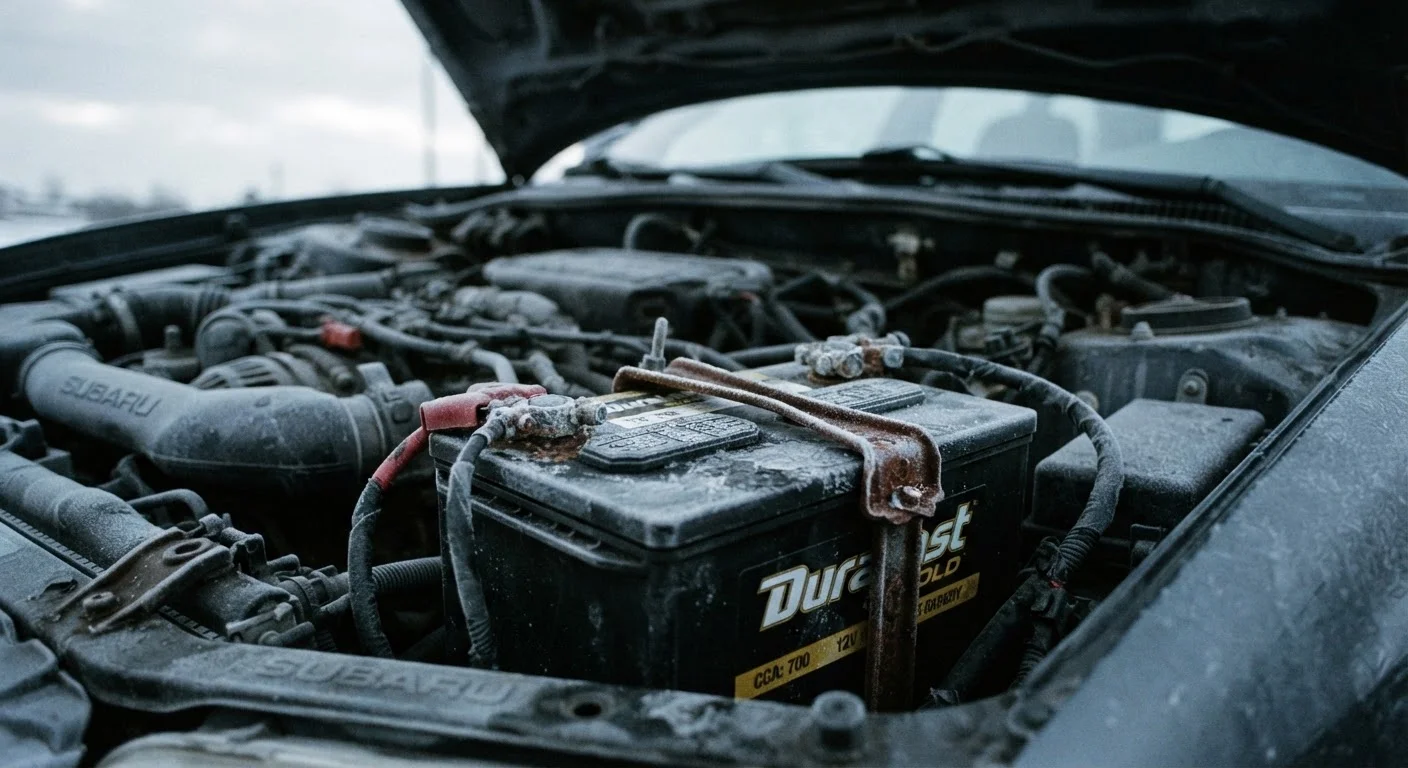
What Actually Happens Inside a Battery When It Gets Cold
A standard car battery generates electricity through a chemical reaction between lead plates and a liquid electrolyte solution. That reaction is temperature-sensitive. When temperatures fall below freezing, the chemical process slows down significantly - the battery produces less current at exactly the moment the engine needs more of it to turn over in the cold.
Think of it like syrup thickening in a refrigerator. The ingredients are still there, but the flow is sluggish. A fully healthy battery has enough reserve to compensate. A battery that's already lost capacity due to age or previous heat exposure does not.
3-5 years
Typical car battery lifespan
According to AAA, most conventional lead-acid batteries last between three and five years depending on climate and driving habits.
~35%
Battery power loss at 32°F
Battery Council International notes that a battery can lose roughly 35% of its power output when the temperature drops to freezing.
60%
Power loss at -22°F
In extreme cold, a battery may deliver less than half its rated capacity, according to industry data from battery manufacturers.
Why Summer Is Actually the Real Enemy
Most people blame winter for battery failures, but the decline usually starts months earlier. Heat is the primary driver of battery degradation. Sustained high temperatures accelerate corrosion on internal components, cause the electrolyte fluid to evaporate, and speed up a process called sulfation - where lead sulfate crystals build up on the plates and reduce the battery's ability to hold a charge.
By the time autumn arrives, a battery that sat through a hot summer may have lost a meaningful portion of its capacity. It might still start the car fine on mild days, but the first serious cold snap can push it over the edge. This is why battery failures spike in winter even though the damage was done months before.
“Heat is the number-one killer of car batteries. The damage accumulates invisibly over a hot summer, and drivers only notice when the cold weather arrives and the battery can no longer meet the demand placed on it.”
— AAA Automotive Research, Automotive consumer research and roadside assistance organization
Driving Habits That Wear Batteries Down Faster
Temperature isn't the only factor. How you drive matters too. Short trips are one of the most overlooked causes of battery wear. Every time you start your car, the battery delivers a large burst of current. The alternator - which charges the battery while the engine runs - needs roughly 20 to 30 minutes of driving to replenish that charge. Drivers who mostly make five-minute trips to the grocery store or school drop-off are repeatedly drawing from the battery without fully restoring it.
Extended periods of inactivity cause a similar problem. A parked car still draws a small amount of power from the battery - for the clock, alarm system, and other electronics. Over several weeks, this "parasitic drain" can deplete a battery enough to cause permanent capacity loss.
Offset Short-Trip Drain Once a Week
If most of your driving involves short errands, try to take one longer drive of 30 minutes or more each week. This gives the alternator adequate time to restore the charge the battery lost during repeated cold starts. It's a simple habit that can meaningfully extend battery life.
For more on how these patterns affect battery lifespan, see our guide to how car batteries work and when to replace them.
How to Stay Ahead of a Winter Failure
The most practical step any driver can take is to have the battery tested before winter - particularly if it's three or more years old. Many auto parts stores and service shops offer free or low-cost battery tests. Ask specifically for a load test or cold cranking amps (CCA) test rather than a simple voltage check, which can miss capacity losses that only show up under real-world demand.
Beyond testing, a few habits help extend battery life year-round: take longer drives occasionally to give the alternator time to recharge, avoid leaving accessories running when the engine is off, and if you store a vehicle for an extended period, use a battery maintainer (sometimes called a trickle charger) to keep it from discharging completely.
For a broader look at getting your car ready as temperatures drop, the seasonal car care checklist covers the full range of checks worth doing. You can also find in-depth guidance on cold- and heat-related vehicle maintenance in our seasonal maintenance overview for extreme temperatures.
Frequently Asked Questions
Cold temperatures slow the chemical reactions inside a battery, reducing the power it can deliver. At the same time, a cold engine requires more current to start. If the battery is already weakened by age or heat damage, this combination often pushes it past its limit.
Most conventional lead-acid car batteries last between 3 and 5 years, though this varies with climate, driving habits, and maintenance. Batteries in hot climates often wear out faster because heat accelerates internal corrosion.
Yes. Standard battery tests are sometimes performed at room temperature, which can mask reduced cold-cranking capacity. Ask for a load test or a cold cranking amps test to get a more realistic picture of how the battery will perform in low temperatures.
It can. Short trips don't give the alternator enough time to fully recharge the battery after startup. Over time, repeated partial discharges can shorten battery life significantly.
If your battery is three or more years old, having it professionally tested before winter is worthwhile. A test can reveal reduced capacity that isn't obvious during normal warm-weather driving.
The content on this site is for informational purposes only and is not a substitute for professional advice. Always consult a qualified professional for guidance specific to your situation.