

What a Car Battery Actually Does
Your car battery has one primary job: deliver a strong burst of electricity to crank the starter motor and fire the engine. That burst lasts only a few seconds, but it requires significant power - far more than running your headlights for an hour.
Once the engine is running, the alternator takes over. It generates electricity to power the car's systems and simultaneously recharges the battery. Think of the battery as a sprinter and the alternator as the steady long-distance runner that keeps everything else going.
Beyond starting the engine, the battery also acts as a buffer. It smooths out voltage fluctuations and supplies power when electrical demand briefly spikes - like when you turn on the rear defroster and the blower fan at the same time.
Lead-Acid vs. AGM Batteries
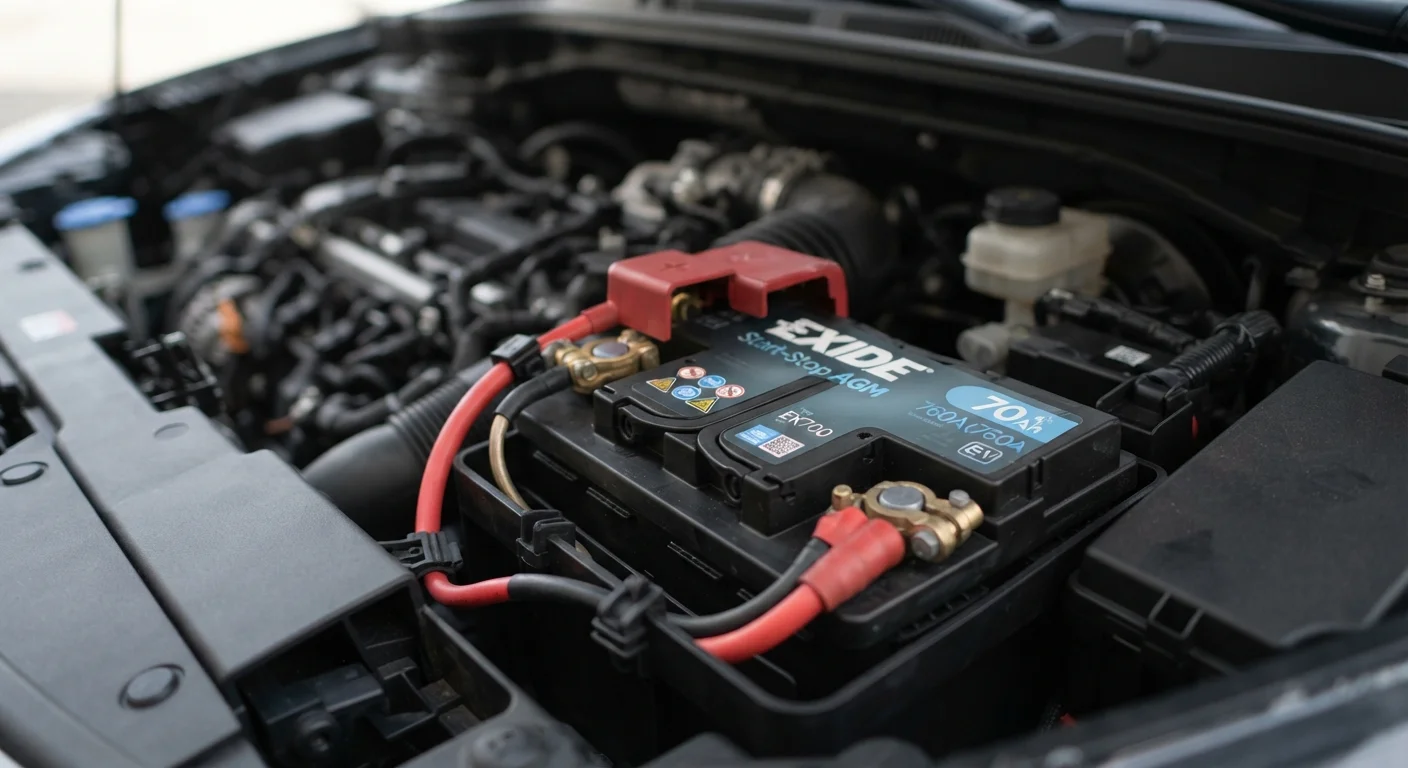
Many newer vehicles use an absorbent glass mat (AGM) battery rather than a traditional flooded lead-acid design. AGM batteries handle repeated partial discharges better and are required by some start-stop engine systems. If your vehicle came with an AGM battery, replacing it with a standard lead-acid unit can cause charging system problems - always verify your vehicle's battery type before purchasing a replacement.
What Drains a Battery Faster Than You'd Expect
The biggest culprit most drivers overlook is short-trip driving. Every time you start the engine, the battery gives up a significant charge. If your commute is only five or ten minutes, the alternator may never fully replenish what was used. Do that repeatedly and the battery slowly runs deeper into deficit.
Extreme temperatures compound the problem. Heat causes the liquid electrolyte inside a lead-acid battery to evaporate and speeds up internal corrosion. Cold weather doesn't damage batteries the same way, but it dramatically reduces their ability to deliver power - which is why a battery that seemed fine in October can leave you stranded in January. The relationship between cold weather and battery performance is worth understanding before winter arrives.
Parasitic drain is another factor. Even when your car is parked and locked, small amounts of power flow to keep the clock, alarm, and system memory active. A malfunctioning module or a door left slightly ajar can push that drain to a level that discharges the battery overnight.
3-5 years
Typical car battery lifespan
AAA reports that most conventional lead-acid batteries require replacement within three to five years, depending on climate and driving patterns.
~40%
Reduction in battery capacity in freezing temperatures
Battery Council International notes that a fully charged lead-acid battery can lose approximately 35-40% of its power output when temperatures drop to 0°F (−18°C).
1 in 4
Roadside breakdowns attributed to battery failure
AAA roadside assistance data consistently identifies battery-related issues as one of the top four causes of service calls across all US regions.
Signs Your Battery Is Nearing the End
A battery rarely fails with zero warning. Here are the signals worth taking seriously:
- Slow or labored engine cranking - the engine turns over sluggishly before starting, especially on cold mornings.
- Dashboard battery or check-engine light - can indicate a charging system problem, not always the battery itself, but worth diagnosing.
- Electrical gremlins - dimming headlights, erratic power windows, or infotainment systems resetting can point to inconsistent voltage.
- Visible corrosion - a white or bluish crust around the battery terminals indicates leaking gas and degraded connections.
- Age - if your battery is approaching or past the four-year mark, proactive testing makes sense even if nothing feels wrong yet.
For a broader look at how small maintenance oversights compound over time, see our guide on habits that quietly shorten a car's life.
Get a Free Battery Test Annually
Many auto shops and dealership service departments will load-test your battery at no charge, especially if you bring the vehicle in for an oil change or tire rotation. Doing this once a year after the battery passes the three-year mark gives you early warning before a failure catches you off guard.
How to Know for Certain - and What to Do About It
A simple voltage check with a multimeter tells you whether the battery is holding a surface charge, but it doesn't reveal how the battery performs under load. A load test - which most auto shops and many service departments perform free of charge - applies a realistic electrical draw and measures how the battery responds. That's the most reliable way to know whether a battery is genuinely healthy or just barely holding on.
If a test reveals the battery is weak but the vehicle is otherwise in good shape, a replacement is straightforward. Make sure the replacement battery matches the specifications in your owner's manual - particularly the cold cranking amps (CCA) rating, which reflects starting performance in cold conditions.
Temperature management matters too. Parking in a garage during extreme weather reduces stress on the battery year-round. Our article on seasonal car maintenance covers the full picture of how heat and cold affect the major systems in your vehicle. Battery care also fits into the broader discipline of long-term vehicle maintenance - small, consistent attention prevents the expensive surprises.
Frequently Asked Questions
Most car batteries last between three and five years. Driving habits, climate, and how many electronics your vehicle runs can all push that range in either direction.
Modern vehicles have a small constant draw called parasitic drain - it powers clocks, alarm systems, and memory modules. A faulty component or an interior light left on can push this drain high enough to discharge the battery overnight.
Yes, though it's more common for warning signs to appear first. A battery can pass a basic voltage check but still fail under the load of starting the engine, which is why a professional load test is more reliable than voltage alone.
Yes - the alternator recharges the battery while the engine runs. However, very short trips don't give the alternator enough time to fully replenish the charge used to start the car, which gradually weakens the battery over time.
Yes. A swollen battery case or visible corrosion around terminals signals internal damage and should be inspected by a mechanic promptly. Do not attempt to handle a leaking battery without proper protective gear.
Cold weather significantly reduces a battery's ability to deliver power, which is why failures spike in winter. But the underlying decline often begins months earlier - heat in summer actually causes more long-term internal damage.
The content on this site is for informational purposes only and is not a substitute for professional advice. Always consult a qualified professional for guidance specific to your situation.