

Our Verdict
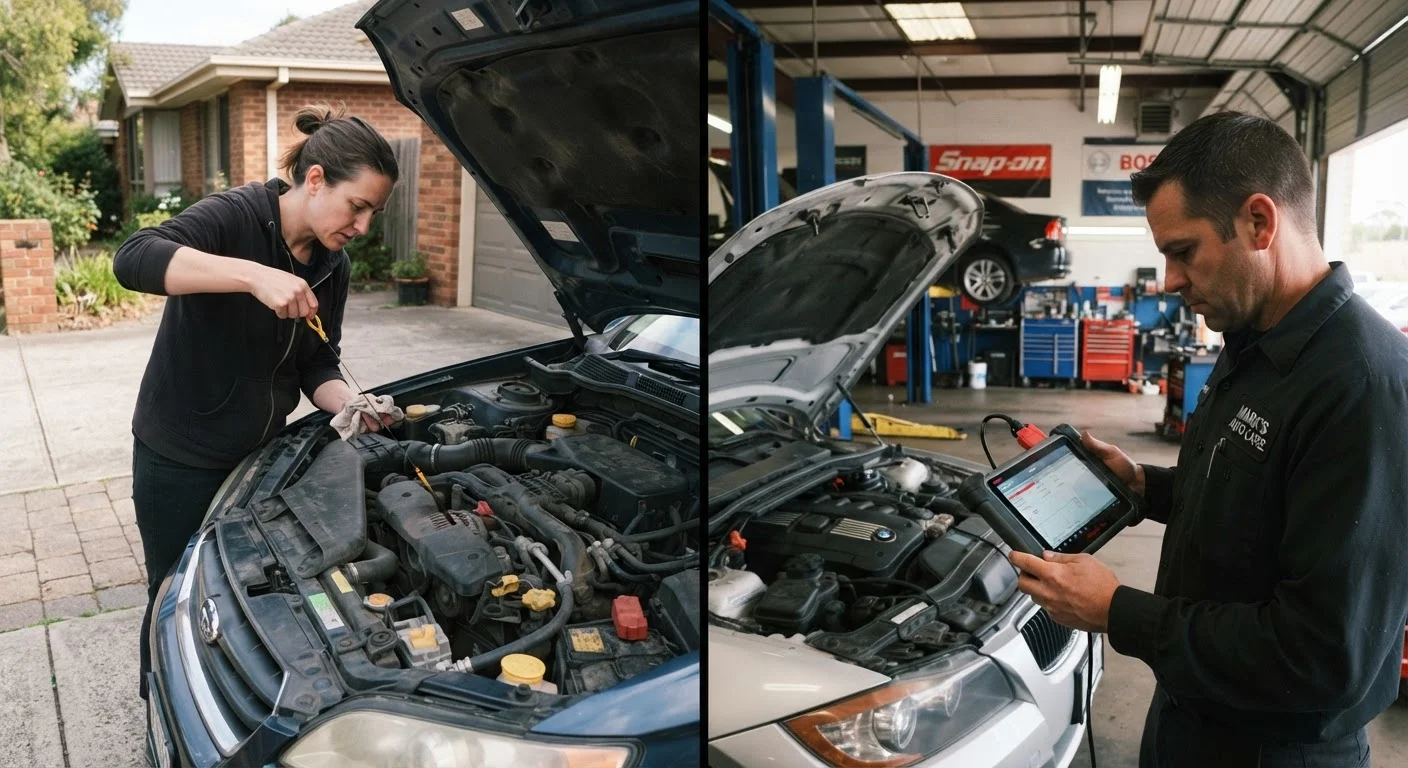
Most drivers can safely handle a handful of routine tasks at home with basic tools and a little preparation. For anything that affects braking, steering, or major systems, a qualified mechanic is the right call. The smartest approach is knowing clearly where your own limit falls - and not pushing past it.
| Best for | Recommended |
|---|---|
| Drivers comfortable with basic tools who want to handle routine upkeep | DIY Maintenance |
| Complex repairs, safety-critical systems, or vehicles under warranty | Professional Garage |
| Owners of hybrids, EVs, or newer vehicles with advanced electronics | Professional Garage |
Why the DIY vs. Garage Question Matters
Car ownership comes with an ongoing stream of maintenance decisions - and for most drivers, cost is a real factor. Labor charges at a garage can add up fast, which makes the idea of handling things yourself genuinely appealing. But not every job is created equal. Some tasks are straightforward and low-risk; others look simple on the surface but have serious consequences if done wrong.
Understanding where the line falls isn't about mechanical confidence alone - it's about safety, the tools available to you, and the complexity of modern vehicles. This breakdown aims to give you a clearer picture of what's realistic to do at home and what's worth paying a professional for. For a related look at maintenance decisions on older vehicles, see the upkeep trade-offs of owning a high-mileage car.
Tasks Most Drivers Can Handle at Home
A handful of routine jobs genuinely don't require specialized training or professional equipment. Done carefully and with the right information, these are reasonable DIY territory:
- Checking and topping up fluids - engine oil, coolant, windshield washer fluid, and brake fluid levels can typically be checked visually. Our guide on fluid checks every driver can do at home walks through each one clearly.
- Replacing wiper blades - most wiper blade replacements require no tools and take under ten minutes.
- Swapping out an air filter - engine air filters on many vehicles are accessible without lifting the car and require only basic tools.
- Changing a cabin air filter - typically located behind the glove box; the process is usually covered in the owner's manual.
- Replacing a dead battery - straightforward on most conventional vehicles, though some newer models may require a dealer reset after replacement.
Always Start With the Owner's Manual
Your vehicle's owner's manual is the most reliable source for maintenance intervals, fluid specifications, and task-specific warnings. Generic online tutorials may not account for your exact model year or drivetrain configuration. When in doubt, the manual takes precedence.
Always consult your vehicle's owner's manual before starting any maintenance task. It specifies the correct fluid grades, filter part numbers, and any vehicle-specific warnings that generic online guides may miss.
When the Garage Is the Right Call
Certain repairs carry safety implications serious enough that the risk of a DIY mistake outweighs any potential savings. A garage with trained technicians and proper diagnostic equipment is the appropriate choice for:
- Brake system work - including pad and rotor replacement, brake line inspection, and caliper servicing. Brake failure has direct consequences for road safety.
- Suspension and steering components - incorrect reassembly can cause handling problems that aren't immediately obvious but can be dangerous at speed.
- Timing belt or chain replacement - an error here can cause catastrophic engine damage.
- Electrical fault diagnosis - modern vehicles rely on complex interconnected systems; accurate diagnosis usually requires professional scan tools.
- Exhaust system repairs - improperly sealed exhaust joints can allow carbon monoxide to enter the cabin.
Uncertainty Is a Valid Reason to Stop
If a job turns out to be more complex than expected, stopping and taking the vehicle to a mechanic is always a reasonable choice. Partially completed repairs - especially on braking or steering systems - can be more dangerous than the original problem. Never continue work you're not confident completing safely.
If you're unsure whether a task is within your ability, err on the side of caution. A mishandled repair can void a warranty, fail a state safety inspection, or create a hazard that costs far more to correct.
Comparing DIY and Professional Maintenance Side by Side
The trade-offs between doing it yourself and taking your car to a qualified mechanic depend heavily on the specific job, your tools, and your experience. The table below summarizes the key differences across common considerations.
| DIY Maintenance | Professional Garage | |
|---|---|---|
| Typical cost | Parts cost only | Parts plus labor charges |
| Safety-critical repairs | Not recommended | Appropriate and accountable |
| Tools required | Basic hand tools for simple tasks | Specialized diagnostic and lift equipment |
| Time investment | Variable; longer without experience | Usually faster with trained technicians |
| Warranty implications | Possible risk if done incorrectly | Generally preserved when documented |
| Hybrid and EV suitability | Very limited; high-voltage risk | Appropriate with trained EV technicians |
| Error consequences | Potentially costly to fix | Professional liability applies |
It's also worth being aware that some widely repeated assumptions about maintenance - like needing an oil change every 3,000 miles - don't hold up for modern vehicles. The car maintenance myths that cost drivers money article examines several of these in detail. For a broader overview of what responsible vehicle ownership involves, the vehicle ownership hub is a useful starting point.
The content on this site is for informational purposes only and is not a substitute for professional advice. Always consult a qualified professional for guidance specific to your situation.