

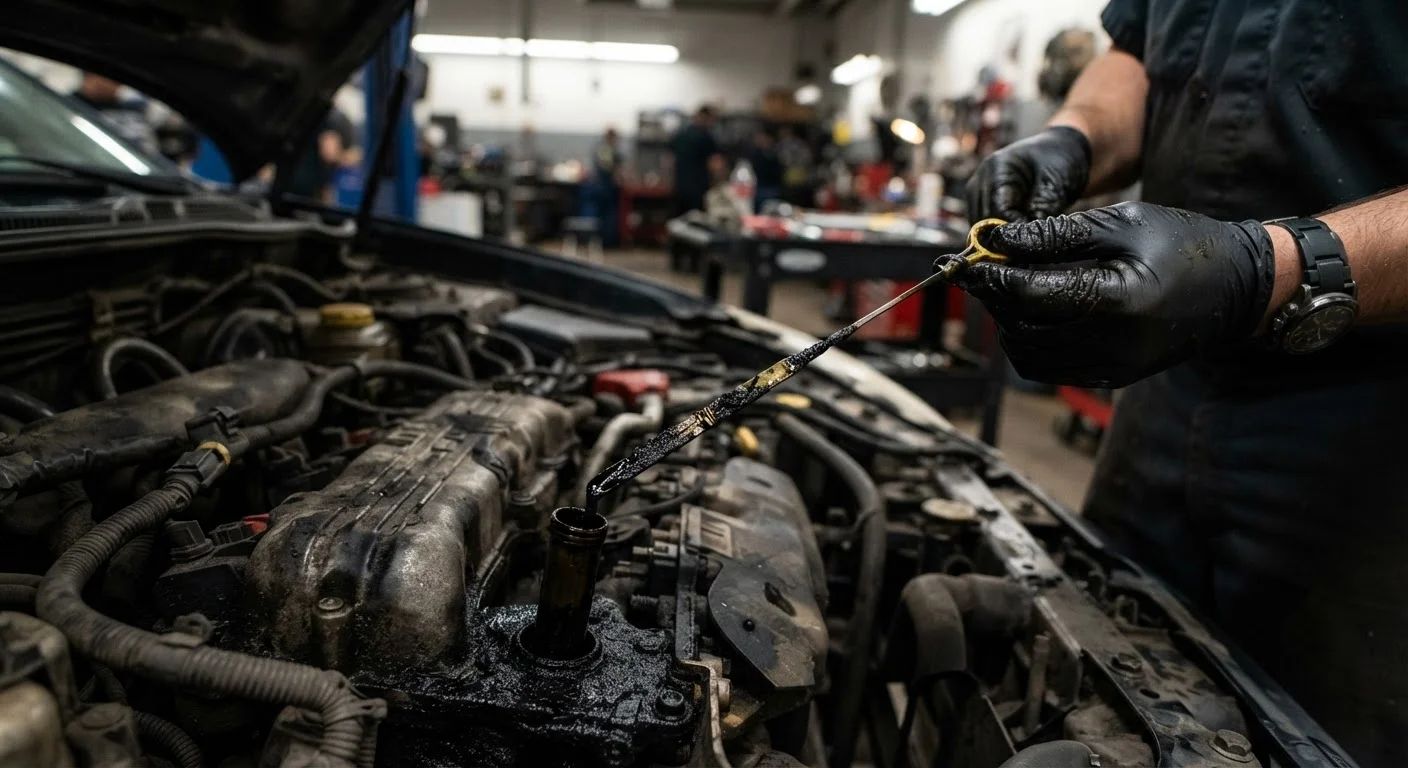
The Chain Reaction That Starts With Old Oil
Motor oil does several jobs at once: it lubricates moving parts, carries heat away from the combustion zone, and suspends tiny metal particles and combustion byproducts so they can be filtered out. When oil is left in the engine too long, its additive package breaks down. The oil thickens, oxidizes, and stops suspending contaminants effectively - those particles begin to bond together into a tar-like deposit called sludge.
Sludge is not just a cosmetic problem. It restricts oil flow through narrow passages, starving components like the variable valve timing (VVT) actuators and the turbocharger bearing (if your engine has one) of adequate lubrication. Metal surfaces that should be separated by a thin oil film begin contacting each other directly. That friction creates heat, which degrades oil faster still - a self-reinforcing cycle that quietly shortens engine life with every mile.
For a full breakdown of what each service interval is actually protecting, see our Car Maintenance Schedule guide.
Stretching oil change intervals well beyond the manufacturer's recommendation.
Why it happens: Modern oils and engines are durable, so drivers assume a few extra thousand miles won't matter - or they rely on outdated rules of thumb rather than checking their owner's manual.
Ignoring coolant flush intervals and topping up with plain water instead.
Why it happens: Coolant looks fine visually even when its corrosion inhibitors are exhausted, so the problem is invisible until rust or scale appears inside the system.
Skipping transmission fluid and differential fluid changes.
Why it happens: These fluids are often marketed as 'lifetime fill,' leading drivers to believe they never need attention - but 'lifetime' typically means the life of the fluid, not the vehicle.
Neglecting air and cabin filter replacements.
Why it happens: Filters are cheap and easy to overlook because their decline is gradual - there's no single moment when a dirty filter obviously fails.
Delaying timing belt replacement past the specified interval.
Why it happens: The timing belt is hidden and appears intact until the moment it fails - drivers underestimate the risk because there are no warning signs before failure.
Why Drivers Skip Services - and What It Costs
The most common reason people defer routine maintenance is that nothing feels wrong. Engines are designed to mask early wear; by the time a noise or warning light appears, damage is often already well advanced. Cost and inconvenience are also real factors - a service appointment takes time, and the bill can feel significant when the car seems to be running fine.
~$4,000+
Typical cost of engine sludge-related repairs
Repair costs for sludge-related engine damage - such as oil pickup blockage or bearing failure - commonly reach several thousand dollars, far exceeding years of routine service costs.
30%
Estimated fuel efficiency loss from a clogged air filter
A severely restricted engine air filter can reduce fuel economy by up to roughly 10-30% under certain conditions, according to general automotive engineering data.
What drivers often underestimate is the compounding cost of deferred maintenance. A missed oil change might cost nothing obvious in the short term. But the sludge it leaves behind can eventually block an oil pickup screen, causing a catastrophic loss of oil pressure - a repair that can run into thousands of dollars or require a full engine replacement. The economics strongly favor keeping up with the schedule.
Deferred maintenance also affects more than just oil. Ignored coolant flushes allow corrosion inhibitors to deplete, letting rust form inside the cooling system and eventually damaging the water pump or radiator. Clogged air filters force the engine to work harder, reducing fuel efficiency and stressing the mass airflow sensor. These problems don't announce themselves loudly - they develop over thousands of miles. Our article on maintenance habits that shorten a car's life covers several of these gradual wear patterns in detail.
Dashboard Warning Lights Are a Last Resort
By the time your oil pressure or temperature warning light activates, internal engine damage may already be occurring. Warning systems are designed to alert you to an emergency in progress, not to serve as a maintenance reminder. Do not use the absence of warning lights as confirmation that your engine is in good health.
Understanding the bigger picture of long-term care - from record-keeping to early fault detection - is covered in our guide to keeping a reliable vehicle long-term.
The content on this site is for informational purposes only and is not a substitute for professional advice. Always consult a qualified professional for guidance specific to your situation.