

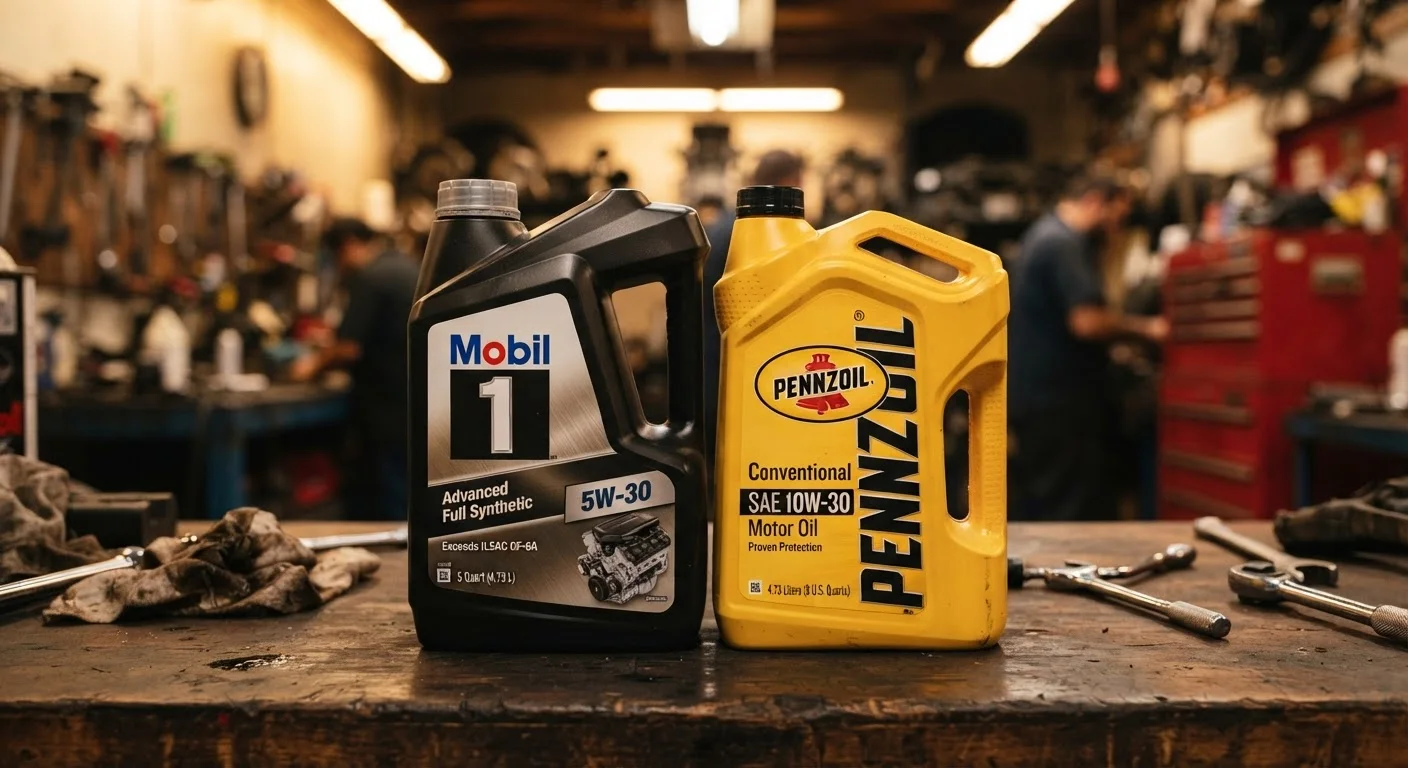
Option A
Synthetic Engine Oil
The engineered, high-performance option for modern engines.
Best for: Best for newer vehicles, high-mileage engines, extreme temperatures, and drivers who want longer oil change intervals.
Option B
Conventional Engine Oil
The traditional, widely available standard for everyday use.
Best for: Best for older or simpler engines with straightforward operating conditions and shorter change intervals.
How They're Made: The Core Difference
The fundamental distinction between synthetic and conventional motor oil is origin. Conventional oil is refined from crude petroleum - it's a natural product that's been filtered, distilled, and treated to remove the worst impurities. Because crude oil is chemically inconsistent, conventional oil contains molecules of varying sizes and structures, which limits how uniformly it can protect your engine.
Synthetic oil, by contrast, is built rather than extracted. Chemists construct its base molecules to a uniform size and structure, then blend in additives for specific performance goals - oxidation resistance, low-temperature flow, and so on. The result is a more predictable, stable lubricant. For more on how oil types are labeled and certified, see our guide on viscosity grades and what oil labels mean.
Performance: Where the Differences Show Up
In everyday driving, both oil types do the same basic job - lubricating moving parts, reducing friction, and helping carry heat away from the engine. But they diverge under stress.
| Criterion | Synthetic Oil | Conventional Oil |
|---|---|---|
| Origin | Chemically engineered base molecules | Refined from crude petroleum |
| Cold-weather flow | Flows faster at low temperatures | Thickens more in the cold |
| Heat resistance | Resists oxidation and breakdown | Degrades faster under sustained heat |
| Typical change interval | 7,500-15,000 miles (vehicle-dependent) | 3,000-5,000 miles |
| Cost per quart | Higher upfront cost | Lower upfront cost |
| Suited to turbocharged engines | Yes - generally required | Generally not recommended |
| Availability | Widely available | Widely available |
Cold starts are one area where synthetic has a measurable edge. On a freezing morning, conventional oil thickens more than synthetic, meaning it takes longer to reach all engine components after ignition - the period when most engine wear occurs. Synthetic oil flows more readily at low temperatures, coating parts faster.
At the high end, synthetic oil resists breaking down - a process called oxidation - better than conventional oil under sustained heat. This matters in turbocharged engines, which run significantly hotter than naturally aspirated ones. It also matters for drivers who frequently tow or haul heavy loads. Don't let common misconceptions shape your choice - engine oil myths still trip up many drivers.
7,500-15,000 mi
Typical synthetic oil change interval
Many vehicle manufacturers now approve extended intervals for full synthetic oil, though the exact range depends on the engine and driving conditions.
~3,000-5,000 mi
Conventional oil change interval
Traditional guidance for conventional oil, though some modern engines running conventional may tolerate up to 5,000 miles between changes per manufacturer specs.
90%+
New US vehicles specifying synthetic
Industry observers note that the large majority of vehicles manufactured in recent years are factory-filled with full synthetic oil, reflecting broader engineering shifts.
Change Intervals, Cost, and Compatibility
Synthetic oil's stability means it degrades more slowly, which is why many manufacturers approve longer change intervals for vehicles running full synthetic - often in the range of 7,500 to 15,000 miles, depending on the vehicle and driving conditions. Conventional oil typically requires changes every 3,000 to 5,000 miles, though modern engine designs and oil quality mean that 3,000-mile rule is largely outdated for most drivers. (See car maintenance myths that cost drivers money for more on that.)
Per quart, synthetic oil costs noticeably more than conventional. However, when you factor in fewer oil changes per year, the cost difference narrows considerably for many drivers. The bottom line on cost: don't compare sticker prices alone - compare annual change frequency and total volume used.
One practical note: switching from conventional to synthetic in a high-mileage engine that has always run conventional is generally safe, but check with a qualified mechanic first if your engine has significant seals wear, as there are occasional compatibility questions worth addressing. There is no credible evidence that switching causes leaks in well-maintained engines - another area covered in our engine oil myths article.
How to Choose: Start With Your Owner's Manual
The single most reliable source for which oil your engine needs is the owner's manual. Manufacturers test their engines extensively and specify oil type, viscosity grade, and change interval based on real engineering data. Marketing language on oil bottles does not override that guidance.
If your manual specifies full synthetic - as most vehicles built in the last decade or so do - use it. If it allows conventional, conventional is fine, provided you keep up with changes. Using a higher-spec oil than required won't harm your engine, but it also won't deliver benefits the engine wasn't designed to use.
This article provides general information about motor oil types and is not a substitute for advice from a qualified mechanic familiar with your specific vehicle.
The content on this site is for informational purposes only and is not a substitute for professional advice. Always consult a qualified professional for guidance specific to your situation.