

Why Experience Can Work Against You
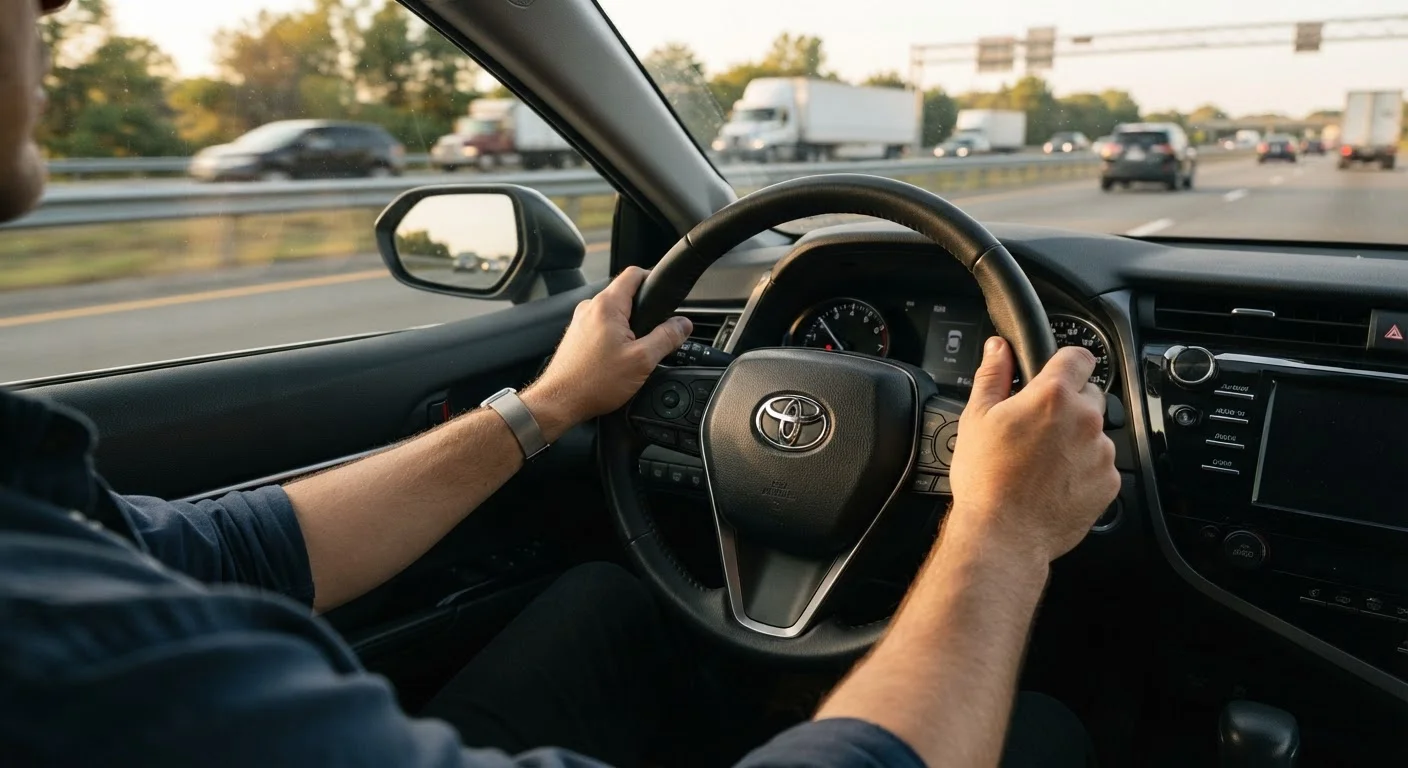
New drivers are cautious by design - they know what they don't know. But somewhere between year two and year ten, many drivers quietly swap conscious skill for automated routine. The road feels familiar, the car feels like an extension of the body, and that very familiarity becomes the hazard.
This isn't a character flaw. It's a cognitive pattern called automaticity - the brain's tendency to hand over repeated tasks to lower-level processing so conscious attention can go elsewhere. On the road, that means genuine hazard perception can dull right when experience suggests it should be sharpest.
The mistakes below aren't the dramatic ones that make headlines. They're the quiet, incremental slips that build risk gradually - and they happen to competent, well-intentioned drivers every day. If you're helping a newer driver develop good foundations, our guide for new drivers building safe habits covers the bedrock practices worth establishing early.
Creeping inside the speed limit buffer as a default rather than an occasional response to conditions.
Why it happens: Experienced drivers calibrate speed by feel, and over time that internal gauge drifts upward - especially on roads they know well.
Checking mirrors less frequently than recommended, especially during lane changes and low-speed manoeuvres.
Why it happens: Drivers who rarely encounter problems in their mirrors begin to treat the check as a formality rather than a genuine hazard scan.
Allowing following distance to shrink to one second or less in normal conditions.
Why it happens: Traffic density and social pressure to 'keep up' gradually normalise tight following, and drivers overestimate how quickly they can react to a stop ahead.
Using a phone for navigation, music, or messaging during brief stops or slow traffic, treating partial attention as safe enough.
Why it happens: Low-speed conditions feel lower-risk, so drivers rationalise quick interactions as acceptable. The cognitive distraction outlasts the physical act.
Underestimating fatigue - particularly on routes driven frequently or during mid-afternoon hours.
Why it happens: Familiar routes feel less demanding, so drivers underreport their own tiredness to themselves. Circadian dips in alertness around 2-4 p.m. are often mistaken for boredom.
Taking bends and curves at carry-over speed without adjusting entry point or sight line.
Why it happens: Drivers who've taken the same corner hundreds of times stop actively reading it and rely on muscle memory - which doesn't account for gravel, wet leaves, or oncoming vehicles crossing the centre line.
Distraction, Tailgating, and the Slow Fade of Situational Awareness
Of all the habits that compound over time, phone use remains the most consequential. The risk isn't just in the obvious glance-at-a-notification moment - it's in the cognitive residue that lingers after you put the phone down. Research consistently shows that mental engagement with a conversation persists well beyond the physical act. Phone use at the wheel is riskier than most drivers believe, even when hands-free, and experienced drivers are not immune to that effect.
Familiarity Does Not Reduce Risk
Driving a route every day can create a false sense of predictability. Road conditions, other drivers, and pedestrian behaviour change constantly - your familiarity with the asphalt does not make those variables more predictable. Stay actively engaged even on roads you could drive in your sleep.
Following distance is another area where habits erode quietly. Early on, most drivers learned the two-second rule (or longer in adverse conditions). Over time, that buffer shrinks as drivers unconsciously match the pace of traffic around them and assume their reactions are fast enough to compensate. They usually are - until the one time they aren't.
Situational awareness also degrades on familiar routes. Drivers on their regular commute are more likely to miss a changed traffic pattern, a cyclist in the bike lane, or a pedestrian stepping off a curb - because their brain has already filed the route as known. City environments are especially unforgiving here; our piece on safe driving in urban areas outlines why anticipation matters more than reaction in built-up areas.
~80%
Crashes linked to driver inattention
According to the National Highway Traffic Safety Administration (NHTSA), approximately 80% of crashes involve some form of driver inattention in the seconds before impact.
23x
Crash risk increase from texting while driving
Research from the Virginia Tech Transportation Institute found that texting while driving increases crash risk by approximately 23 times compared to driving without distraction.
Addressing these habits doesn't require dramatic change. It requires deliberate re-engagement - treating each drive as a task that deserves full attention, not a background activity running alongside other priorities. Pair that mindset with a vehicle that's well-maintained, and you're reducing risk on two fronts at once. The maintenance habits that quietly shorten a car's life are often as invisible as the driving habits described here.
The content on this site is for informational purposes only and is not a substitute for professional advice. Always consult a qualified professional for guidance specific to your situation.