

Start here
Title vs. Registration: What's the Difference?
Next
How to Register a Newly Purchased Vehicle
Then
Transferring Ownership: What Actually Changes Hands
Keep going
Keeping Your Registration Current
Finally
Common Pitfalls and How to Avoid Them
Title vs. Registration: What's the Difference?
These two documents are often confused, but they serve very different purposes.
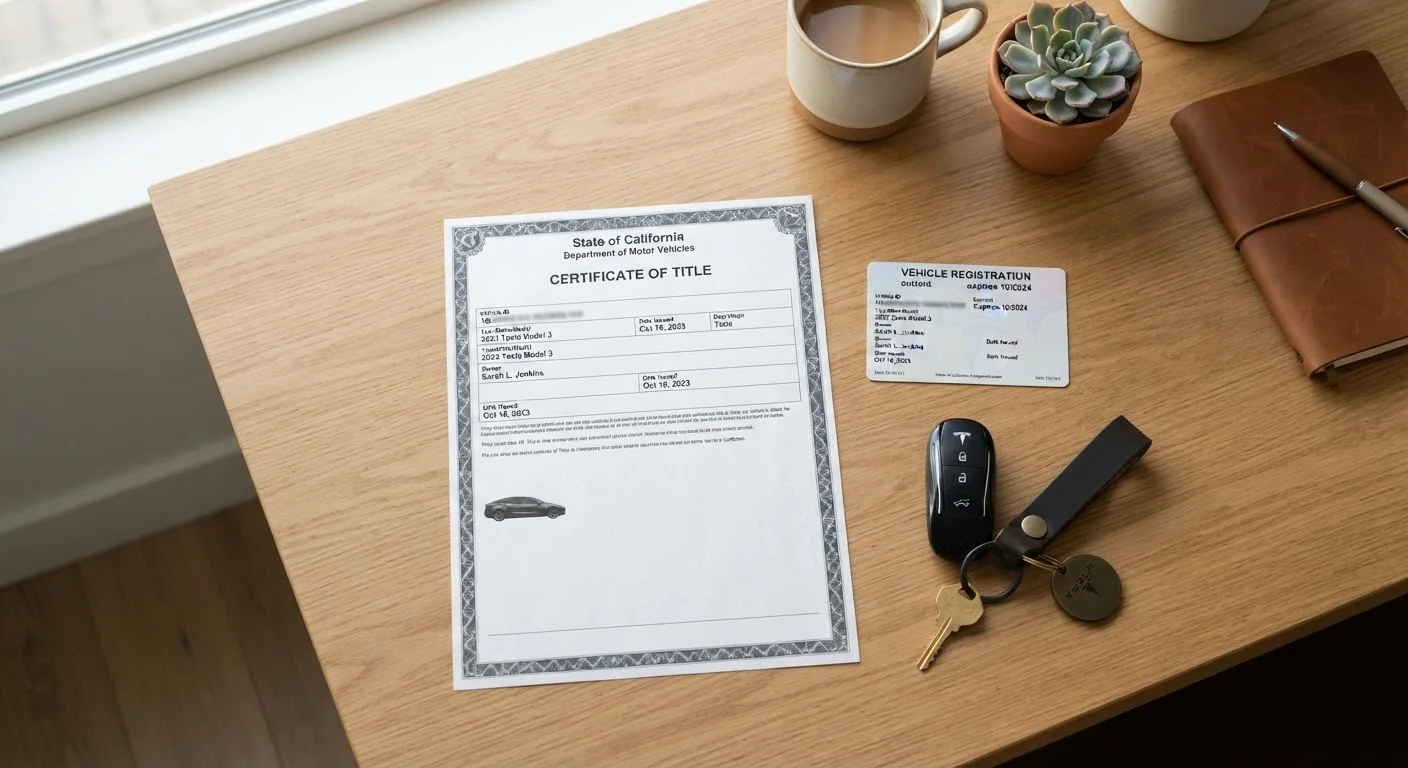
A vehicle title (also called a certificate of title) is the legal proof that you own the car. It lists the owner's name, the vehicle identification number (VIN), and any lienholder - typically a lender if you financed the purchase. Without a clear title in your name, you don't have full legal ownership of the vehicle.
A vehicle registration is the state's permission for you to operate that vehicle on public roads. It's renewed periodically - usually annually - and results in a registration sticker or card that must be kept in the vehicle. Registration is tied to the car and the owner, and it confirms that fees and applicable taxes have been paid.
Vehicle Title
A legal document issued by the state that identifies the official owner of a vehicle. It must be transferred whenever ownership changes.
Vehicle Registration
An annually renewed state permit allowing you to operate a specific vehicle on public roads. It produces a registration card and sticker as proof.
Lienholder
A lender or financial institution that has a legal claim on a vehicle because it financed the purchase. The lien is removed once the loan is repaid in full.
Clear Title
A title with no outstanding liens or claims against it, meaning the owner has full legal ownership of the vehicle free of any lender interest.
Odometer Disclosure
A required statement from the seller certifying the vehicle's mileage at the time of sale. Most states require this for vehicles under a certain age.
Bill of Sale
A written record of a vehicle transaction that documents the purchase price, date, and parties involved. It's often required during registration.
For a deeper look at what these documents actually contain and how liens factor in, see our guide to vehicle ownership paperwork.
How to Register a Newly Purchased Vehicle
Whether you bought from a dealership or a private seller, registration is one of the first tasks on your to-do list. Dealerships often handle the initial registration on your behalf and roll the fees into your closing costs. Private sales are a different story - you're responsible for completing the process yourself.
The documents typically required include:
- The signed vehicle title (transferred to your name)
- Proof of valid auto insurance
- A completed registration application (available at your state's DMV)
- A bill of sale or purchase agreement
- Payment for registration fees, title fees, and any applicable taxes
Some states also require a vehicle inspection or emissions test before registration is issued. Processing can often be done in person at a DMV office, by mail, or online depending on your state.
Gather Documents Before Visiting the DMV
DMV visits go much faster when you arrive with everything in order. Before you go, confirm your state's exact requirements online, make photocopies of all documents, and bring a personal check or know which payment methods are accepted. Many states now offer appointment scheduling to reduce wait times.
Our first 30 days checklist covers registration alongside other immediate tasks new owners face.
Transferring Ownership: What Actually Changes Hands
When a vehicle is sold or gifted, ownership must be formally transferred through the title. The process involves both the seller and the buyer taking specific actions - it's not simply a matter of exchanging keys.
The seller's responsibilities typically include signing and dating the title in the correct fields, completing an odometer disclosure (required in most states for vehicles under a certain age), and in some states notifying the DMV that the vehicle has been sold.
The buyer's responsibilities include submitting the signed title to the DMV along with required documents to apply for a new title in their name and completing registration in the new state or county.
Never Drive on Someone Else's Registration
If you've purchased a vehicle but haven't yet transferred the title and registration, don't assume you can drive indefinitely on the previous owner's plates or registration. This can create legal complications in the event of an accident or traffic stop. Use any temporary permit issued at the time of sale and complete the transfer promptly.
Private-party transfers involve more steps than many buyers expect. Our detailed overview of transferring a car title between private parties walks through the full process.
Keeping Your Registration Current
Registration isn't a one-time task. Most states require annual renewal, and driving with expired registration can result in fines or your vehicle being flagged during a traffic stop. States typically mail renewal notices, but it's your responsibility to renew on time even if that notice doesn't arrive.
Renewal usually involves:
- Paying the annual registration fee (which varies by state, vehicle weight, and sometimes value)
- Passing any required emissions or safety inspection
- Updating your address if you've moved within the state
If you've moved across state lines entirely, you'll generally need to re-register and re-title the vehicle in your new state within a specified window - typically 30 to 90 days. See the administrative side of moving states with a registered vehicle for a breakdown of that process.
Common Pitfalls and How to Avoid Them
New owners frequently run into the same avoidable problems. Here's what to watch for:
- Missing the title transfer deadline
- Many states impose penalties for late title applications. Complete the transfer promptly after purchase - don't wait until your next free weekend.
- Buying a car with a lien
- If the seller still owes money on the vehicle, the lender's name will appear on the title. The lien must be formally released before you can get a clean title in your name. Verify this before completing any private sale.
- Incorrect signatures on the title
- A title with missing, incorrect, or altered information can be rejected by the DMV and may require a court process to resolve. Review the document carefully before leaving a transaction.
- Assuming the dealer handles everything
- Even with dealer purchases, confirm what they're handling and what you're still responsible for. Registration and tax obligations don't disappear because a dealer is involved.
If you're also thinking about eventually selling the vehicle, understanding the process early helps. Our overview of selling a car privately explains what most first-timers don't anticipate until they're already in it.
Frequently Asked Questions
Yes. Registration is required to operate a vehicle on public roads and must be renewed periodically. The title is a separate ownership document you don't carry daily, but you need it whenever the vehicle is sold or transferred.
Deadlines differ by state but commonly range from 10 to 30 days after purchase. Check your state's DMV website for the exact window, since late registration can trigger fees or fines.
When you take out an auto loan, the lender is listed as a lienholder on the title. The title may be held by the lender or the state until the loan is paid in full, at which point the lien is released and you receive a clear title.
Most states allow a short grace period or issue a temporary tag at the point of sale. However, you should not assume you can drive indefinitely without registration - verify your state's rules and keep any sale documentation in the vehicle.
Generally you'll need the signed-over title from the seller, a bill of sale, proof of insurance, a valid ID, and payment for applicable fees and taxes. Some states require an odometer disclosure or emissions inspection as well.
Contact your state's DMV to apply for a duplicate title. You'll typically need to provide your vehicle identification number (VIN), proof of identity, and pay a small fee. Processing times vary by state.
The content on this site is for informational purposes only and is not a substitute for professional advice. Always consult a qualified professional for guidance specific to your situation.