

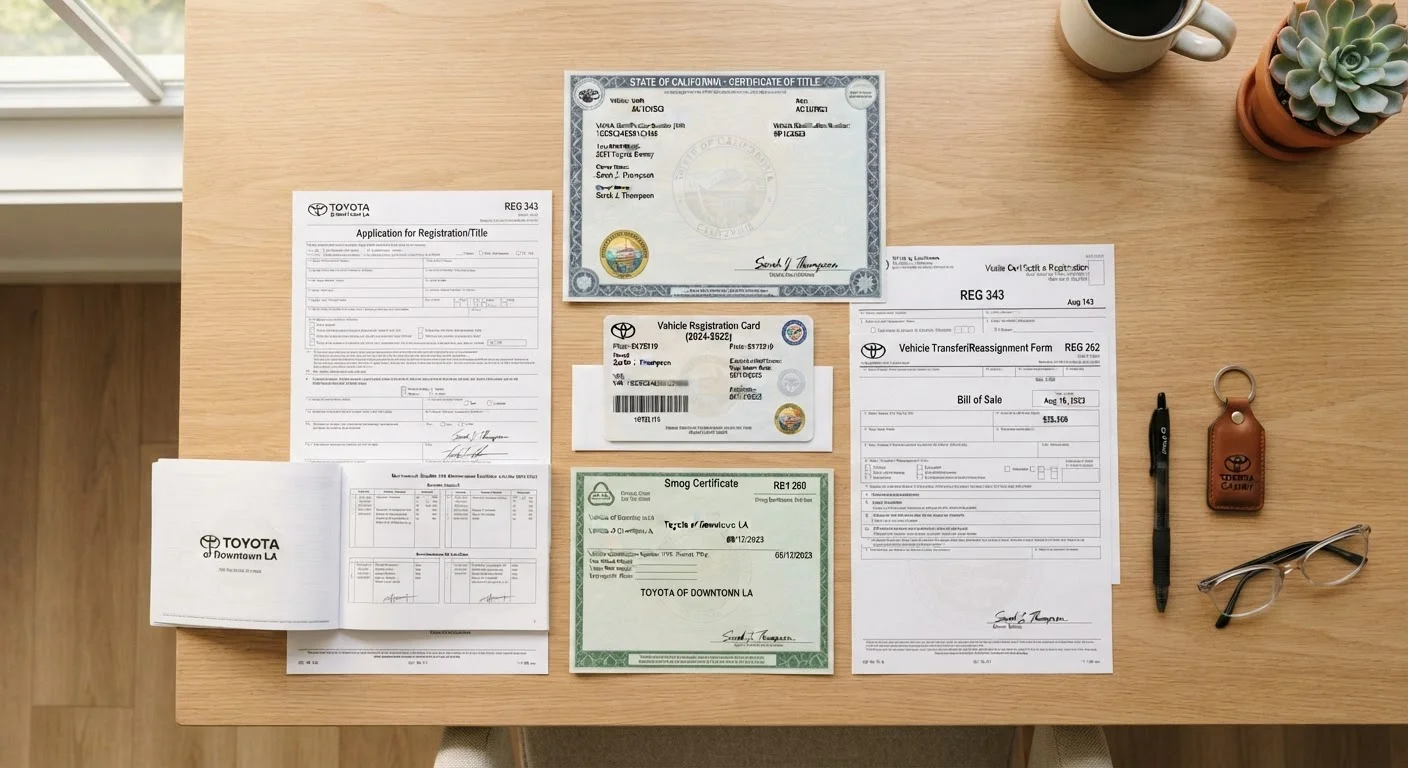
The Three Documents That Define Car Ownership
Most vehicle owners carry a registration card in the glove box and assume that means they own their car outright. But there are actually three distinct documents that govern vehicle ownership in the U.S. - the title, the registration, and any lien recorded against the vehicle. Confusing them can lead to real problems when buying, selling, or financing a car.
| Document that proves legal ownership | Certificate of Title |
| Document that allows road use | Vehicle Registration |
| Who holds the title during a loan | The lender (lienholder) |
| Typical registration renewal cycle | Annual or biennial, varies by state |
| Title branding is | Permanent - travels with the vehicle |
| Issuing authority for titles and registration | State DMV or equivalent agency |
Think of it this way: the title proves who legally owns the vehicle, the registration proves the vehicle is permitted to operate on public roads in a given state, and a lien indicates that a third party - usually a lender - has a legal claim against the vehicle until a debt is paid off.
For a broader look at how all these documents fit together, see this administrative roadmap for new owners.
What a Vehicle Title Actually Is
A certificate of title is a legal document issued by a state government - typically through the Department of Motor Vehicles or an equivalent agency - that identifies the current legal owner of a vehicle. It includes the owner's name and address, the vehicle identification number (VIN), make, model, year, and odometer reading at the time of the most recent ownership transfer.
Titles can carry brands - notations that signal significant events in the vehicle's history, such as being declared a total loss (salvage title) or having its odometer rolled back (odometer rollback brand). These brands travel with the vehicle forever and affect resale value and insurability. You can learn more about what title brands mean when evaluating a used car in our guide on reading a vehicle history report.
When you pay off a loan, the lender is removed from the title and a clean title is issued in your name alone. When you sell a car privately, you sign the back of the title to transfer ownership - a process with its own set of requirements covered in this end-to-end guide to private title transfers.
Certificate of Title
A state-issued legal document identifying the current legal owner of a vehicle. It contains the VIN, owner information, and any recorded liens or title brands.
Vehicle Registration
An annual authorization - issued by the state - allowing a specific vehicle to be operated on public roads. It does not indicate ownership.
Lien
A lender's legal claim against a vehicle used as loan collateral. A lien must be satisfied (paid off) before the owner can freely sell or transfer the vehicle.
Lienholder
The financial institution or individual that holds a lien on a vehicle, typically a bank, credit union, or auto finance company.
Title Brand
A permanent notation on a vehicle title indicating a significant event such as a salvage declaration, flood damage, or odometer discrepancy.
Clean Title
A title with no brands and no recorded liens, indicating the vehicle has not had major damage declarations and is owned free and clear.
Registration, Liens, and What Happens When They're Overlooked
Registration is an annual (or biennial, depending on the state) authorization to operate a vehicle on public roads. It is tied to the vehicle and the registered owner in a specific state. Registration fees vary widely by state and are often calculated based on the vehicle's weight, age, or value. Driving with expired registration can result in fines and, in some states, impoundment.
A lien is a legal claim a lender holds against a vehicle used as collateral for a loan. When you finance a car purchase, the lender is listed as a lienholder on the title. This means you cannot legally sell or transfer the car without first satisfying that debt. If you're considering buying a used vehicle, always check for open liens - an unpaid lien can transfer to you as the new owner in some circumstances.
Leased Vehicles: Registration Without Ownership
If you lease a vehicle, you are the registered operator and responsible for keeping registration current - but the leasing company, not you, holds the title. This distinction matters if you want to sell, modify, or insure the vehicle. Always review your lease agreement to understand what permissions and obligations are tied to the title-holding party.
Leased vehicles introduce another layer of complexity: in a lease, you're the registered operator but the leasing company holds the title. If you're uncertain about what that means for your obligations, see what drivers often misunderstand about lease agreements.
When reviewing a used car's paperwork, cross-reference the VIN on the title with the physical VIN plate on the vehicle. Discrepancies are a significant red flag. Our guide on odometer, VIN, and service history walks through exactly how to verify those records.
The content on this site is for informational purposes only and is not a substitute for professional advice. Always consult a qualified professional for guidance specific to your situation.