

Why These Three Data Points Matter
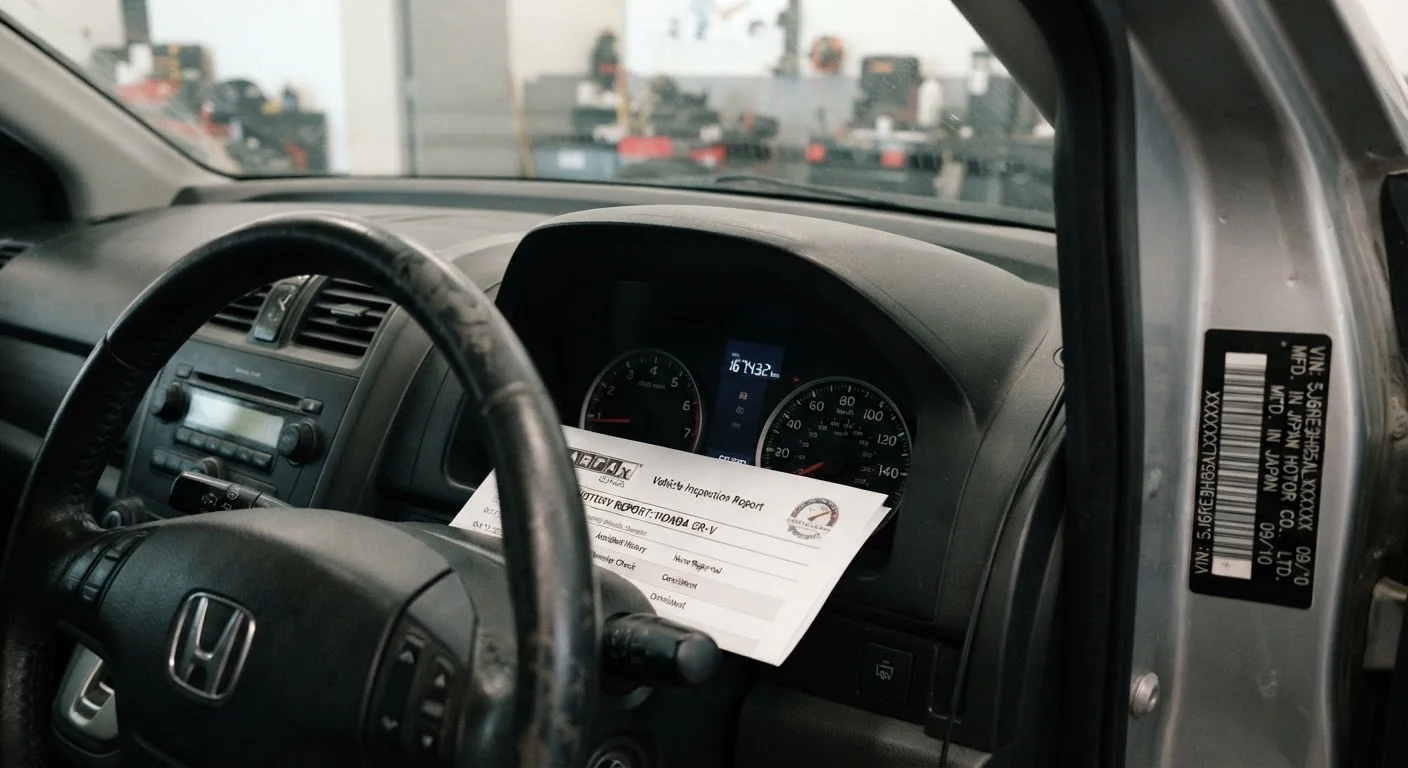
When buying a used vehicle, you're essentially purchasing its entire past along with the car itself. The odometer reading, VIN, and service history each tell a different part of that story - and gaps or conflicts between them can reveal problems a visual inspection would never catch.
The VIN (Vehicle Identification Number) is the vehicle's permanent identity. It encodes the manufacturer, model year, production plant, and a unique serial number. Because it's stamped into metal and recorded with government agencies, it's also the key to unlocking independently verified records.
The odometer shows total accumulated mileage, which directly affects wear on the engine, transmission, suspension, and brakes. Higher mileage isn't automatically disqualifying - a well-maintained high-mileage vehicle often outlasts a neglected low-mileage one - but the number needs to be consistent and verifiable.
The service history documents whether the car received scheduled care. An engine that never had its oil changed on time, or a transmission that skipped fluid services, may look fine today but carry hidden degradation. The vehicle ownership paperwork guide provides useful background on the documents that accompany these records.
Odometer Fraud Is a Federal Crime
Under the federal Motor Vehicle Information and Cost Savings Act, rolling back or misrepresenting an odometer reading is illegal. The National Highway Traffic Safety Administration estimates that odometer fraud costs buyers hundreds of millions of dollars annually. If a vehicle's mileage seems unusually low for its age, treat it as a red flag and verify through multiple independent sources before proceeding.
What You'll Need Before You Start
Gathering your tools upfront makes the verification process faster and more reliable. You'll need physical access to the vehicle to confirm the VIN in person, and an internet connection to cross-reference records.
What you will need
Vehicle History Report Service
Aggregates title records, odometer disclosures, accident reports, and ownership history tied to a specific VIN.
NHTSA VIN Decoder (vin.nhtsa.dot.gov)
Free government tool that confirms the vehicle's factory specifications and any open safety recalls associated with the VIN.
Flashlight or Smartphone Camera
Used to read the VIN from the door jamb or engine bay in low-light conditions.
Maintenance Schedule Reference
Lets you compare the seller's service records against the manufacturer's recommended intervals to spot gaps.
Step-by-Step: Verifying the Records
Follow these steps in order. Each one builds on the last, and skipping ahead can mean you miss a discrepancy that an earlier step would have flagged.
Locate and record the VIN
Find the 17-character Vehicle Identification Number on the dashboard plate (visible through the windshield on the driver's side) or on the sticker inside the driver's door jamb. Write it down exactly - a single transposed digit will return incorrect results. Confirm the number matches what appears on the title, registration, and any insurance documents provided by the seller.
Run a free recall check with the NHTSA VIN decoder
Go to vin.nhtsa.dot.gov and enter the VIN. This free government tool confirms the vehicle's year, make, model, and trim, and lists any open safety recalls. An open recall doesn't automatically disqualify a vehicle, but the repair must be completed - and dealers are required to fix recalls at no charge. Note any open items to discuss with the seller.
Pull a full vehicle history report
Using the VIN, order a vehicle history report from a third-party aggregator. These reports compile data from state DMV title records, insurance claims, auction records, and odometer disclosures. Key sections to review include: title history (how many owners, any salvage or flood designations), odometer readings at each title transfer, and accident or damage records. Cross-reference these with the full guide to interpreting vehicle history report flags to understand what each notation means.
Examine the odometer reading critically
Note the current odometer reading and compare it against every historical reading in the vehicle history report. The mileage should increase consistently across each entry. A reading that drops between ownership transfers is a clear sign of odometer rollback. Also compare total mileage against the vehicle's age: average US driving is roughly 12,000-15,000 miles per year. A five-year-old car showing 25,000 miles is unusually low and deserves extra scrutiny.
Review and verify service records
Ask the seller for all available maintenance documentation: dealer service printouts, independent shop receipts, or a printed maintenance log. Organize the records chronologically and compare the intervals against the manufacturer's recommended schedule. The maintenance schedule guide explains what each milestone involves and why it matters. Look for oil changes, fluid flushes, timing belt or chain service, and brake work. For a deeper look at what the paperwork itself signals, see reading your service history.
Reconcile all three data sources before deciding
Lay the odometer history, VIN report findings, and service records side by side. Inconsistencies between them - such as service records showing 60,000 miles of maintenance when the odometer reads 45,000 - are significant warning signs. A clean reconciliation across all three doesn't guarantee a trouble-free vehicle, but it substantially reduces the risk of undisclosed problems. If anything doesn't add up, request clarification in writing or walk away.
Cross-Reference the VIN in Multiple Places
The VIN appears in at least five locations on most vehicles: the dashboard plate visible through the windshield, the driver's door jamb sticker, the engine block, the title document, and the insurance card. If any two locations show different numbers, walk away - this is a serious indicator of fraud or a salvage rebuild.
Common Red Flags and What They Mean
Not every issue discovered during verification is a dealbreaker, but some patterns warrant serious caution:
- Title brands: Designations like 'salvage,' 'rebuilt,' or 'flood' indicate the vehicle was declared a total loss at some point. These vehicles can be made roadworthy, but their long-term reliability is harder to predict and their resale value is significantly lower.
- Odometer discrepancies: Any mileage figure in the history report that is higher than the current odometer reading is a direct indicator of rollback fraud.
- Large gaps in service records: A two-year period with no recorded maintenance doesn't mean nothing was done - many owners use cash-pay independent shops that don't appear in databases - but it warrants a pre-purchase inspection by an independent mechanic.
- Multiple rapid ownership transfers: A vehicle that has had three owners in two years may have been passed along precisely because problems emerged. Ask for the full title history.
Verbal Assurances Are Not a Substitute for Records
A seller's claim that a car is 'well-maintained' or 'low miles for its age' carries no legal weight without documentation. Always request physical or digital records - and verify them independently. If a seller cannot produce any service records and has no explanation, factor that uncertainty into your decision.
The content on this site is for informational purposes only and is not a substitute for professional advice. Always consult a qualified professional for guidance specific to your situation.