

Why Cars Lose Value the Moment You Drive Off the Lot
Unlike a house or a piece of land, a car is a consumable asset. It wears with use, becomes outdated as newer models arrive, and competes in a used-car market where supply is almost always plentiful. All of that pushes its price down over time.
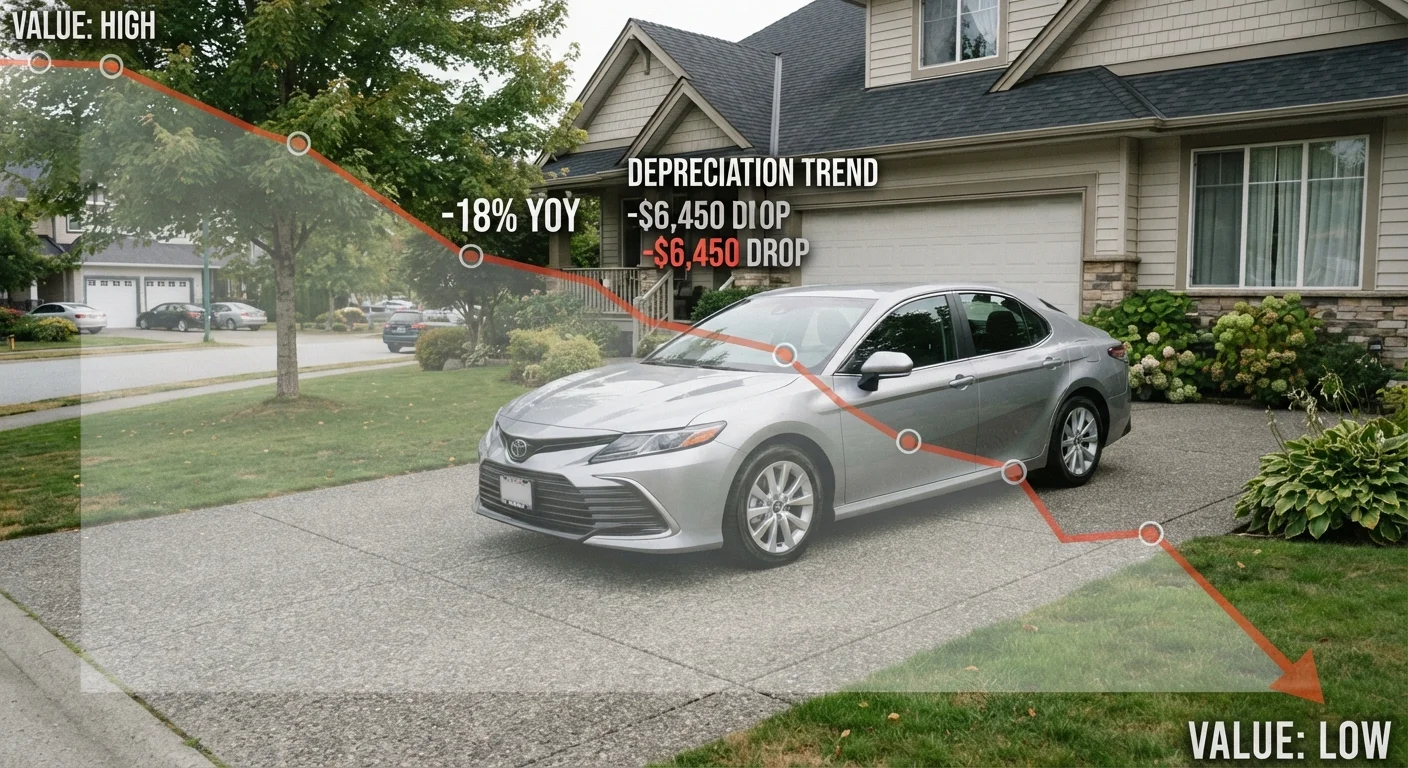
The sharpest drop happens early. Industry data consistently shows that new vehicles lose a significant portion of their value within the first year - some estimates place it between 15% and 20%. After that initial plunge, depreciation continues but at a more gradual pace. By the time a vehicle reaches five years of age, it may be worth only half of its original sticker price, depending on the model.
This matters beyond resale. Depreciation shapes your trade-in offers, affects what an insurer will pay if your car is totaled, and can determine whether you have equity - or debt - when you go to sell. For a fuller picture of how depreciation fits into the overall cost of ownership, see our breakdown of real car ownership costs.
~20%
Value lost in year one for new vehicles
Industry analysts generally estimate new cars lose 15-20% of their value in the first 12 months of ownership.
~50%
Typical value remaining after five years
Many vehicles retain roughly half their original purchase price after five years, though this varies considerably by model and market.
12,000-15,000
Average annual miles driven in the U.S.
According to the Federal Highway Administration, the average American driver logs approximately 13,500 miles per year - a common benchmark for assessing mileage impact on resale.
The Key Factors That Influence Depreciation Rate
Not all vehicles depreciate at the same speed. Several concrete factors push the rate up or slow it down:
- Mileage: Higher mileage signals more wear and shortens expected remaining life. Vehicles driven well above the national average annual mileage (roughly 12,000-15,000 miles per year) typically lose value faster.
- Condition: Dents, stained interiors, and deferred maintenance reduce a car's appeal to buyers. A clean vehicle with documented service history commands a higher price on the used market.
- Model reputation: Vehicles with strong reliability reputations and broad consumer demand hold value better. A model known for mechanical problems or one with a discontinuation announcement tends to depreciate more quickly.
- Fuel type and efficiency: Shifts in fuel prices and consumer preferences can accelerate depreciation for vehicles that suddenly feel expensive to operate or technologically outdated.
- Color and trim: Neutral colors (white, silver, gray, black) typically appeal to a wider pool of buyers. Unusual colors or stripped-down trim levels with missing popular features can limit resale demand.
- Accident history: Even a properly repaired vehicle with a reported accident on its history will generally fetch less than a comparable clean-title car.
How Depreciation Affects Real Ownership Decisions
Understanding depreciation helps you think more clearly about several common decisions:
New vs. used: Buying a vehicle that's two or three years old lets you sidestep the steepest part of the depreciation curve while still getting a relatively modern, reliable car. Our new vs. used car comparison explores this trade-off in detail.
Loan structure: A long loan term with a small down payment can leave you financially exposed in the early years of ownership. Because the car's value drops faster than the loan balance in those years, you may owe more than the car is worth - a situation called negative equity. Our article on the gap between what you owe and what your car is worth covers how this arises and why it matters.
Insurance: Standard policies pay out a vehicle's actual cash value after a total loss - not what you originally paid. If you carry a loan balance, gap coverage can protect you from having to pay off a loan on a car you no longer own.
Protect Your Car's Resale Value
Keeping up with scheduled maintenance, storing service records, and addressing minor cosmetic damage promptly are among the most practical steps owners can take to slow depreciation. A documented service history signals to future buyers that the vehicle was cared for - and that credibility is worth real money at resale.
This article is for general informational purposes only and does not constitute financial or legal advice. Consult a qualified financial professional for guidance specific to your situation.
Frequently Asked Questions
A new car commonly loses around 15-20% of its purchase price in the first year alone. The exact amount varies by make, model, and market conditions. After year one, the rate of loss typically slows but continues steadily.
Low mileage, a clean maintenance record, strong brand reputation for reliability, and sustained consumer demand all help a vehicle hold its value better. Color and trim level can also play a role in resale desirability.
Yes. Most standard auto policies pay out the vehicle's actual cash value (ACV) at the time of a total loss - which reflects depreciation. If your payout is less than your remaining loan balance, you may face a financial gap. Gap insurance is designed to cover this difference.
Not necessarily. Depreciation patterns for electric vehicles (EVs) are still evolving and can differ significantly depending on battery range, model popularity, and available tax incentives. Some EV models depreciate faster than comparable gas vehicles; others hold value well.
Leasing shifts depreciation risk to the leasing company - you return the car at the end of the term rather than owning a depreciated asset. However, you also build no ownership equity. Whether that trade-off makes sense depends on your personal financial situation and driving habits.
If a car loses value faster than you pay down your loan, you can end up owing more than the vehicle is worth - a situation called negative equity or being 'underwater.' This is most common in the early years of a loan with a long term or low down payment.
The content on this site is for informational purposes only and is not a substitute for professional advice. Always consult a qualified professional for guidance specific to your situation.