

Why Simple Frameworks Beat Complex Rules
Nutrition advice can feel like a maze - carbs are bad, then they're fine; fat was the enemy, now it's essential. What tends to survive the noise is simpler than any trending diet: consistent, proportional eating that covers a range of nutrients without obsessive tracking.
If you're new to thinking about food balance, the foundational concepts of nutrition provide useful context before diving into plate models. Established frameworks exist precisely because most people don't have time to weigh food or decode dense research. The goal here is practical architecture - structures you can build a meal around without a calculator.
“The best diet is one you can maintain long-term. Simple visual tools that don't require precise measurement are often more effective in practice than elaborate tracking systems.”
— Registered Dietitian Consensus View, Reflected across major dietetic associations including the Academy of Nutrition and Dietetics
The Plate Method: A Durable Starting Point
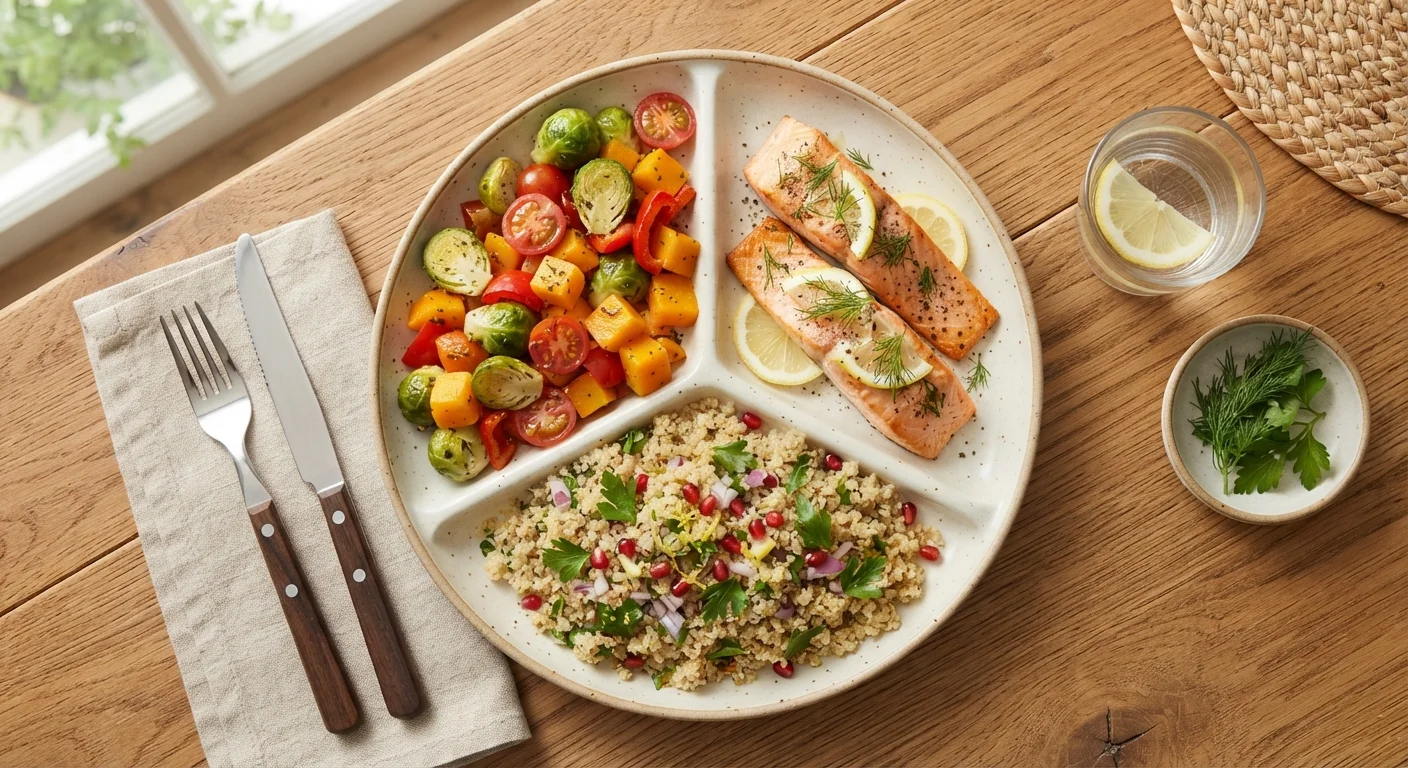
One of the most widely used visual tools in nutrition education is the plate method, popularized in various forms by dietitians and public health programs. The core idea: divide a standard dinner plate into sections by food type, not calorie count.
Fill half your plate with non-starchy vegetables or fruit at most meals.
Vegetables and fruit provide fiber, micronutrients, and water content that support satiety and overall health. This proportion is consistent across multiple authoritative dietary guidelines, including USDA's MyPlate model.
Reserve roughly one quarter of your plate for a quality protein source.
Protein supports muscle maintenance, satiety, and a range of metabolic functions. Including it at most meals helps prevent energy dips and reduces overeating later.
Use the remaining quarter for whole or minimally processed grains or starchy vegetables.
Whole grains and starchy vegetables - like brown rice, quinoa, or sweet potato - supply sustained energy through complex carbohydrates and additional fiber, unlike refined grain alternatives.
Add a small source of healthy fat to support nutrient absorption.
Fat-soluble vitamins (A, D, E, K) require dietary fat to be absorbed effectively. Including modest amounts of unsaturated fats also contributes to meal satisfaction.
Apply the same proportional thinking to mixed-dish meals, not just traditional plates.
Most people eat stews, wraps, or bowls - not literal divided plates. Extending the framework to these formats prevents an all-or-nothing mindset that undermines consistency.
These proportions aren't arbitrary. Research consistently shows that diets higher in vegetables and fiber-rich foods support healthy weight management, gut health, and reduced chronic disease risk. The plate method makes that science visible without requiring any specialized knowledge.
Hand-Based Portioning: Nutrition on the Go
When a plate isn't in front of you - at a restaurant, a buffet, or a friend's kitchen - visual tools tied to your own body become surprisingly reliable. Hand-based portioning is taught by registered dietitians as a portable alternative to measuring cups.
The logic holds because hand size roughly scales with body size, meaning larger individuals naturally get slightly larger portions. It's not a precise science, but precision isn't the point - reasonable consistency is. For a deeper look at how food labels can supplement this approach, see how to read a nutrition label.
Eat Your Vegetables First
Starting a meal with the vegetable portion - before grains or protein - has been shown in some research to support lower overall calorie intake and better satiety signaling. It also ensures you finish the most nutrient-dense part of the meal even if appetite fades. This single habit can shift your plate balance without any other change.
Applying Frameworks to Real Eating Patterns
Plate models work best when they flex around your actual life. A stir-fry, a grain bowl, a sandwich - none of these look like a divided plate, but the same proportional thinking applies. Aim for roughly half the volume to come from vegetables and fruit, a quarter from whole or minimally processed grains, and a quarter from a protein source.
Certain well-researched dietary patterns - such as Mediterranean or DASH-style eating - naturally align with these proportions. You can explore eating patterns with a strong research base to see how they map onto everyday choices.
~50%
Of the plate recommended for vegetables and fruit
USDA's MyPlate guidance, reflecting decades of nutritional research, recommends filling at least half of every plate with fruits and vegetables.
9 in 10
Americans fall short of vegetable intake goals
According to CDC dietary data, approximately 90% of US adults do not meet federal recommendations for daily vegetable consumption.
Pairing balanced eating with regular movement compounds the benefit. The Fitness & Movement hub offers practical approaches for building activity into your routine alongside nutritional habits.
This article is for general informational and educational purposes only. It is not a substitute for personalized medical or nutritional advice. Consult a registered dietitian or qualified healthcare professional before making significant changes to your diet, especially if you have an existing health condition.
The content on this site is for informational purposes only and is not a substitute for professional advice. Always consult a qualified professional for guidance specific to your situation.