

Our Verdict
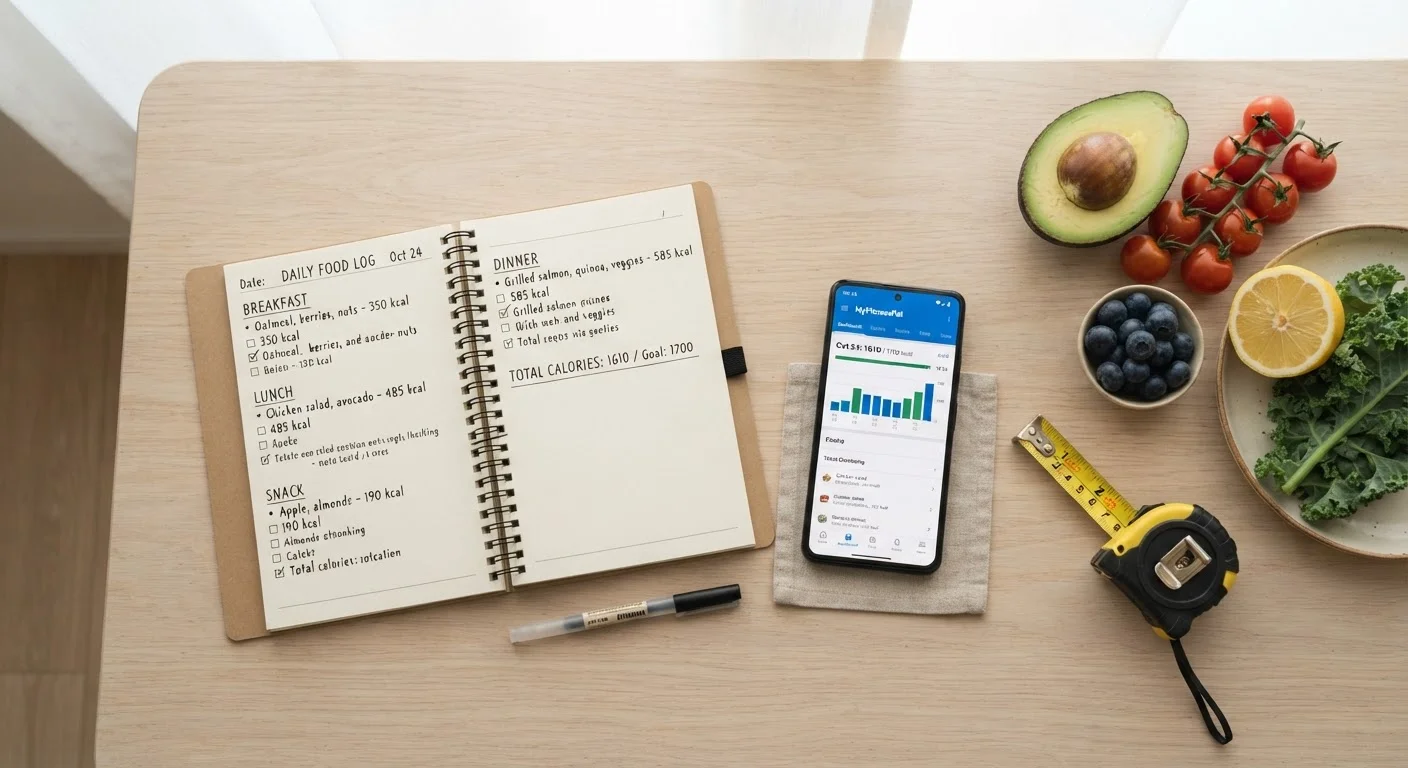
Calorie counting is a legitimate educational tool that can help people understand portion sizes and energy intake - but it oversimplifies the complexity of real nutrition. It measures quantity, not quality, and ignores the many individual factors that shape how each body processes food. Used thoughtfully and temporarily, it offers genuine insight; used rigidly or long-term, it can create more problems than it solves.
Best suited for people who want a structured starting point for understanding their eating habits, and who can engage with the numbers without anxiety or obsessive tendencies - ideally with guidance from a registered dietitian.
What Calorie Counting Actually Is
A calorie is a unit of energy - specifically, the amount of energy needed to raise one kilogram of water by one degree Celsius. In nutrition, calories measure the energy your body can extract from food. Calorie counting is the practice of logging the estimated caloric value of everything you eat and drink, typically to stay within a daily target.
The concept is grounded in the first law of thermodynamics: energy in versus energy out. If you consistently consume more energy than your body uses, weight tends to increase; consume less, and it tends to decrease. That foundation is scientifically sound. The complications arise in how it gets applied in everyday life. If you're new to thinking about energy and macronutrients, our foundational nutrition guide is a helpful starting point.
Where Calorie Counting Gets It Right
There are real, evidence-supported reasons why calorie awareness is useful for many people.
Builds awareness of portion sizes and intake patterns
Most people significantly underestimate how much they eat. Logging food - even imperfectly - makes habitual patterns visible and quantifiable.
Provides a structured starting point for dietary change
Having a concrete number to work toward gives some people the structure they need to begin making intentional food choices.
Identifies hidden calorie sources
Condiments, cooking oils, drinks, and snacks often contribute significant calories that go unnoticed without deliberate tracking.
Supports productive conversations with healthcare providers
A food log offers a concrete record that dietitians and physicians can use to give more targeted, evidence-based guidance.
Research consistently shows that people significantly underestimate how much they eat. Logging - even imperfectly - disrupts that unconscious pattern. For anyone trying to understand why their diet isn't producing expected results, a short period of tracking often reveals blind spots: the cooking oil that goes unmeasured, the portion sizes that have crept up, or the calorie density of foods assumed to be light.
Calorie counting also provides a common language for discussing food intake with healthcare providers or dietitians, making conversations more productive and grounded in data rather than vague recollection.
Where Calorie Counting Falls Short
The limitations of calorie counting are significant - and frequently underacknowledged.
Measures quantity, not nutritional quality
A 400-calorie meal of refined snack food and a 400-calorie meal of vegetables, legumes, and whole grains are not nutritionally equivalent - a distinction calorie counting entirely misses.
Can trigger anxiety and disordered eating behaviors
For vulnerable individuals, obsessive calorie tracking has been associated with increased dietary rigidity and behaviors linked to eating disorders. It is not appropriate for everyone.
Calorie databases contain significant inaccuracies
Studies have found that food labels and database entries can be off by 20-25%, and restaurant meals are especially difficult to estimate accurately.
Ignores individual metabolic differences
Factors like gut microbiome composition, hormonal status, and medication use mean two people eating the same calories can experience very different outcomes.
Encourages focus on numbers over hunger cues
Relying on external data can erode the ability to recognize and respond to internal hunger and fullness signals - an important long-term skill for sustainable eating.
Perhaps the most important gap is the difference between calorie count and nutrient quality. Two meals can contain identical calories while providing completely different vitamins, minerals, fiber, and phytonutrients. Calorie density versus nutrient density is a distinction worth understanding before committing to any number-based approach.
There's also the psychological dimension. For some individuals, tracking every bite can fuel anxiety, rigid thinking about food, or behaviors associated with disordered eating. This is not a minor footnote - it is a reason why calorie counting is not appropriate for everyone, and why a qualified healthcare professional should be consulted before starting if you have any history of an eating disorder or difficult relationship with food.
A Note on Eating Disorders and Calorie Tracking
Calorie counting is not recommended for individuals with a current or past eating disorder, or for those with a history of a difficult relationship with food or body image. If you are in this situation, please consult a registered dietitian or mental health professional before engaging with any form of dietary tracking. Nutrition support is available and can be tailored to your specific needs without requiring calorie logging.
The Biology That Counting Ignores
Human metabolism is not a simple calculator. Several biological realities make raw calorie numbers an incomplete picture:
- The thermic effect of food: Your body burns more energy digesting protein than fat or carbohydrates, meaning 100 calories of chicken and 100 calories of sugar are not metabolically equivalent.
- Gut microbiome variation: Emerging research suggests that different people extract different amounts of energy from the same food, depending on the composition of their gut bacteria.
- Hormonal signaling: Hunger and satiety hormones like leptin and ghrelin are influenced by sleep, stress, and meal composition - not just calorie totals.
- Food preparation: Cooking, processing, and chewing all affect how much energy the body actually absorbs from a food versus what a calorie label states.
Nutrition science continues to evolve in this space. Understanding why nutrition guidance changes can help make sense of seemingly contradictory findings over time.
~20%
Average underreporting of daily calorie intake
Research published in nutrition journals has consistently found that self-reported food intake tends to underestimate actual consumption by roughly 20% or more.
Up to 25%
Potential error in food calorie labels
Studies examining calorie label accuracy have found discrepancies of up to 25% between stated and measured calorie content, particularly in restaurant and packaged foods.
How to Use Calorie Information More Thoughtfully
Rather than treating a daily calorie number as a hard rule, consider using calorie information as one data point among many. Pairing it with an understanding of food quality - fiber content, protein adequacy, micronutrient density - gives a much fuller picture. Learning to read a nutrition label accurately is a practical complement to any calorie awareness practice.
Short-term tracking (a few weeks, periodically) tends to deliver the educational benefits without the risks of long-term rigidity. If calorie data leaves you feeling anxious or consumed by numbers, that's a meaningful signal. Nutrition guidance that creates stress is working against your health, not for it. Always consult a registered dietitian or physician before making significant changes to your diet - particularly if you have a chronic health condition, are pregnant, or are supporting a child's nutrition.
This article is for general informational and educational purposes only and does not constitute medical or dietary advice. Consult a qualified healthcare professional for guidance specific to your individual health needs.
The content on this site is for informational purposes only and is not a substitute for professional advice. Always consult a qualified professional for guidance specific to your situation.