

Why the Week Is the Right Unit of Measurement
Most nutrition advice focuses on single meals: eat this, avoid that. But the body doesn't process food in isolated snapshots - it responds to cumulative patterns of intake over time. Vitamins, minerals, fiber, and macronutrients all operate on timescales longer than a single sitting.
This is why researchers and dietitians consistently evaluate dietary quality at the weekly level. A day of heavier eating, a skipped vegetable, or a celebratory dessert doesn't meaningfully shift your nutritional trajectory. What matters is the overall direction your choices take across the week. Eating patterns with the strongest research support - Mediterranean, DASH, and others - all define themselves by weekly habits, not daily rules.
Eat Patterns, Not Just Meals
Meals that seem 'imperfect' in isolation rarely undermine a healthy week. What matters is the consistent direction of your choices - predominantly whole foods, adequate vegetables and protein, and limited added sugar. Thinking weekly takes the pressure off individual meals and makes the whole approach more sustainable.
The Core Practices That Hold a Healthy Week Together
A nutritionally sound week doesn't require elaborate planning or dietary perfection. It emerges from a handful of consistent habits applied flexibly across different meals and days. The practices below reflect principles that appear repeatedly in established nutrition science - and they're designed to work in real life, not ideal conditions.
Think of nutritional balance as a weekly average, not a daily checklist.
Trying to hit every nutrient target at every meal creates unnecessary stress and is rarely how eating actually works. Research consistently shows that dietary patterns - evaluated over days and weeks - are far more predictive of health outcomes than any single meal's composition.
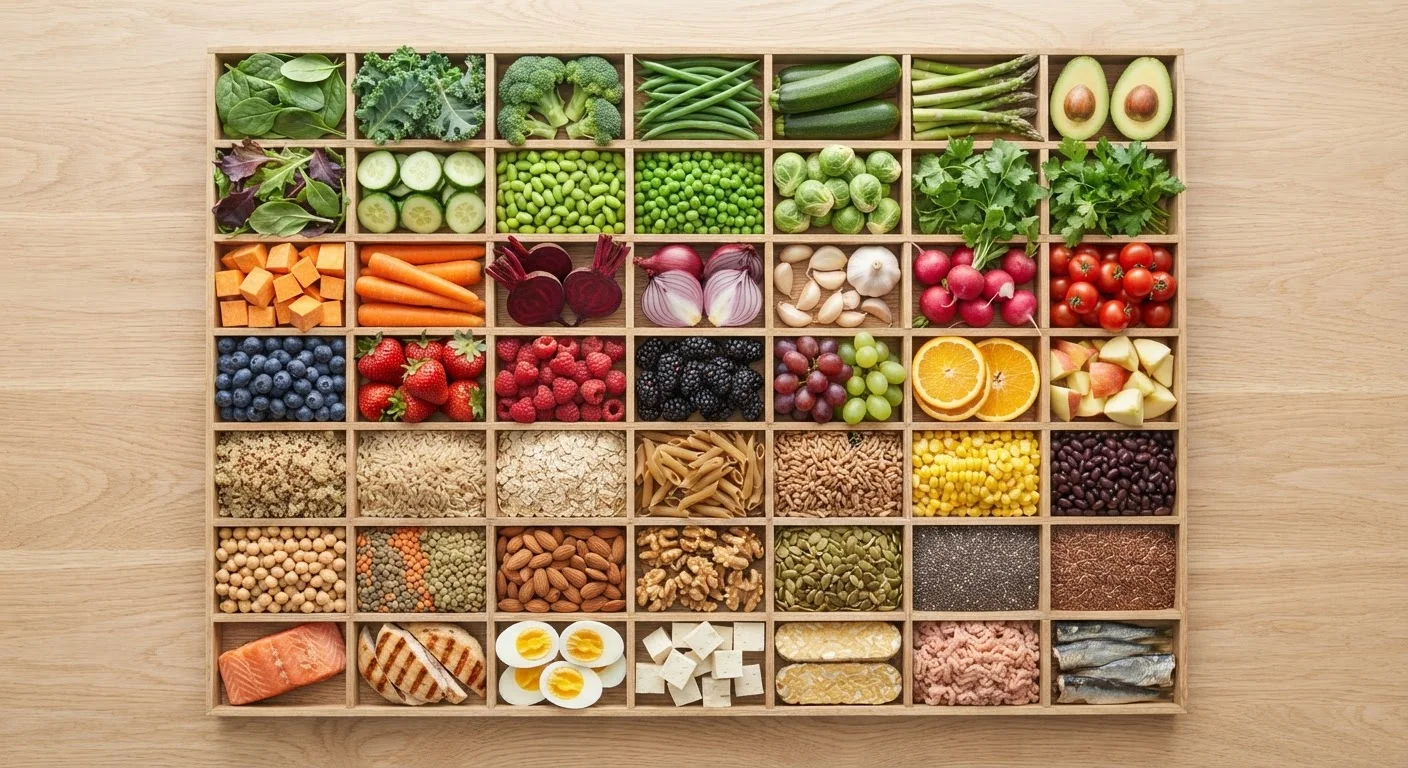
Build most meals around a foundation of vegetables, whole grains, and a protein source.
This simple structure - sometimes called the 'balanced plate' approach - naturally crowds out lower-nutrient options without requiring calorie counting. It aligns with the frameworks used by nutrition educators and public health guidelines.
Rotate your protein sources throughout the week.
Different protein foods bring different accompanying nutrients. Fish provides omega-3 fatty acids; legumes add fiber and folate; eggs supply choline; poultry offers selenium. Rotating sources ensures you collect a wider micronutrient profile without supplementation.
Plan at least two to three meals ahead each week to reduce unplanned processed food choices.
Decision fatigue is one of the most consistent drivers of less nutritious eating. Having a loose weekly structure - not a rigid meal plan - reduces the number of on-the-spot food decisions and the likelihood of defaulting to convenience options high in sodium and added sugar.
Include at least one fruit or vegetable with every eating occasion.
Most Americans fall short of recommended produce intake. A simple 'one produce item per meal or snack' rule, rather than a specific quantity, is easier to sustain and meaningfully increases fiber, antioxidants, and overall diet quality over a week.
1 in 10
US adults meet recommended vegetable intake
According to the CDC's Behavioral Risk Factor Surveillance System, only about 10% of US adults consume the recommended amount of vegetables daily.
57%
Of average US calorie intake from ultra-processed foods
A study published in the journal BMJ Open estimated that ultra-processed foods account for more than half of total caloric intake in the average American diet.
What This Actually Looks Like Day to Day
Translating principles into daily eating is where most people get stuck. A useful mental model: anchor each day with two or three meals that broadly follow the balanced plate structure, allow flexibility for social meals or convenience, and trust the week to average out. You don't need to eat identically each day.
For practical guidance on how specific food combinations support sustained energy, see nutrition habits that support steady daily function. And if deciphering packaged food labels is part of your weekly shopping process, understanding nutrition labels clearly can make those decisions faster and more confident.
“The overall dietary pattern is more important to health than any individual food or nutrient. Healthy eating is about the totality of what you eat over time.”
— Walter Willett, Professor of Epidemiology and Nutrition, Harvard T.H. Chan School of Public Health
If budget is a concern - and it often is - varied, whole-food eating doesn't have to be expensive. Understanding what a realistic grocery budget looks like can help you plan nutritiously within your means.
This Is General Information, Not Medical Advice
The guidance in this article reflects general nutrition principles supported by established research. It is not intended to replace personalized advice from a registered dietitian, physician, or other qualified healthcare provider. Individual nutritional needs vary based on age, health status, activity level, and other factors. Please consult a professional for guidance tailored to your situation.
Start Here: Quick Wins for This Week
The practices above are most effective when they're approached as gradual additions rather than sweeping overhauls. The following actions are concrete, low-effort starting points that move the needle on weekly nutritional quality without requiring a full diet change. Pairing improved eating with regular movement compounds the benefit - explore practical approaches to fitness and movement to see how the two reinforce each other.
This article is for general informational purposes only and does not constitute medical or dietary advice. Nutritional needs vary by individual. Consult a registered dietitian or qualified healthcare provider before making significant changes to your diet, especially if you have a health condition or specific nutritional requirements.
The content on this site is for informational purposes only and is not a substitute for professional advice. Always consult a qualified professional for guidance specific to your situation.