

Why Renovation Scope Is the First Decision to Make
Before choosing tile colors or fixture finishes, every bathroom renovation demands one foundational decision: how deep are you actually going? Scope - the defined boundary of what work will and won't be done - determines your budget range, the trades you'll need, the permits required, and how long you'll be without a functioning bathroom.
Many projects run over budget not because costs were underestimated, but because scope was undefined. A homeowner planning a simple tile replacement discovers deteriorated cement board underneath; a fixture swap reveals corroded supply lines. Without a clear scope baseline, these discoveries feel catastrophic. With one, they become anticipated contingencies.
If you're still orienting yourself to renovation vocabulary, the home improvement terms reference is a useful primer before diving into contractor conversations. And if this is your first project, planning your first room renovation covers budgeting and trade sequencing in detail.
Level 1: Cosmetic Refresh
A cosmetic refresh updates the appearance of a bathroom without touching its plumbing rough-in (the supply and drain lines behind walls and floors), electrical panel, or structural elements. Fixtures stay in place; the room's footprint doesn't change.
Typical scope includes:
- Repainting walls and ceilings
- Replacing a vanity mirror or light fixture (same wiring location)
- Swapping out faucets or showerheads
- Installing new towel bars, toilet paper holders, and accessories
- Replacing a toilet seat or toilet
- Laying peel-and-stick or floating floor over existing subfloor
- Recaulking the tub or shower surround
Most of this work is DIY-accessible for a reasonably handy homeowner. It generally requires no permits, involves no licensed trades, and can be completed over a weekend or two. The tradeoff is that cosmetic work doesn't address underlying functional problems - a slow drain, poor ventilation, or aging waterproofing will remain.
Start with function, not finish
Even in a cosmetic refresh, run the exhaust fan, check for soft spots near the tub edge, and look under the vanity for signs of past leaks before committing to new finishes. Surface work on top of a hidden moisture problem rarely ends well.
Level 2: Mid-Range Remodel
A mid-range remodel replaces surfaces and fixtures more comprehensively but keeps them in their existing locations. This is the most common renovation level for bathrooms that are functionally sound but outdated or worn.
Typical scope includes:
- Full tile replacement on floors and shower or tub surround
- Vanity cabinet and countertop replacement
- New tub or shower unit in the same position
- Updated lighting and exhaust fan (same circuit, possibly a new rough-in location)
- New toilet in the same drain location
- Drywall repair and skim coating
This level crosses into licensed-trade territory. Tile work over a tub or shower requires proper waterproofing membrane installation - work that, if done incorrectly, leads to hidden water damage within a few years. Electrical work involving new circuits or relocating outlets requires a licensed electrician and, in most US jurisdictions, a permit.
Waterproofing failures are invisible until they're serious
In wet areas like showers and tub surrounds, cutting corners on waterproofing membrane installation is one of the most common - and costly - renovation mistakes. Water migrates through grout lines and tiny tile cracks over time, saturating framing and subfloor. By the time visible damage appears, the repair scope has typically grown to a full gut. If you're retiling a shower, treat waterproofing as non-negotiable.
A mid-range remodel typically takes one to three weeks and requires the bathroom to be out of service. If it's your home's only bathroom, that sequencing matters significantly. Use the bathroom renovation readiness checklist to assess your space before work begins.
~$10,000-$15,000
Typical mid-range bathroom remodel cost
According to Remodeling Magazine's Cost vs. Value data, a mid-range full bathroom remodel in the US has historically fallen in this range, varying significantly by region and material choices.
3-4 weeks
Average timeline for a mid-range remodel
Industry estimates for a complete mid-range bathroom remodel - including demolition, rough-in, and finish work - typically run three to four weeks when licensed trades are properly sequenced.
Level 3: Full Gut Renovation
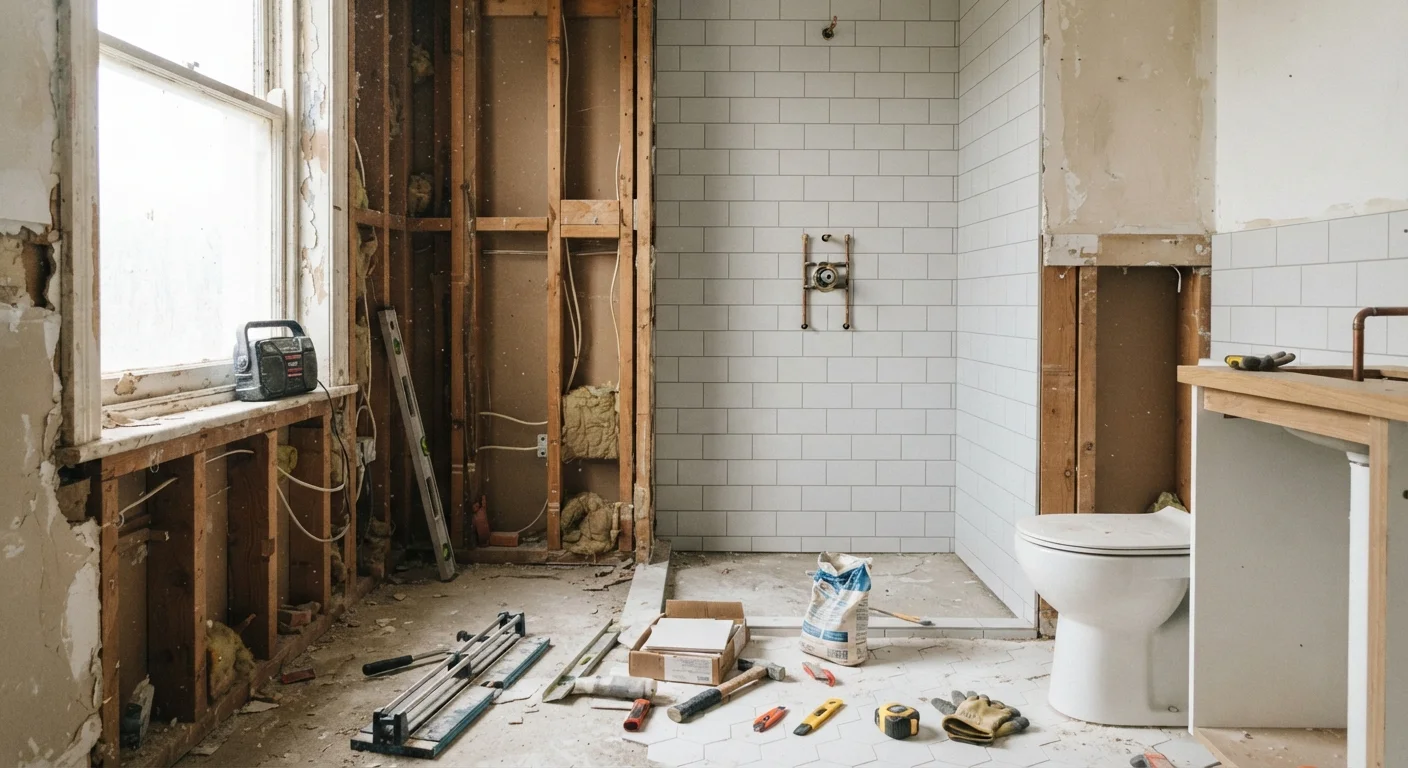
A full gut renovation strips the bathroom back to studs and subfloor, addressing the structure, plumbing rough-in, electrical, and ventilation before any finish work begins. This level is appropriate when the existing layout is dysfunctional, when significant water damage or mold is present, or when the homeowner wants to relocate fixtures or expand the room's footprint.
Scope typically involves:
- Complete demolition of all finish surfaces
- Moving or replacing drain and supply rough-in lines
- Upgrading electrical panel capacity or adding GFCI-protected circuits
- New subfloor or concrete board substrate
- Waterproofing system installation (shower pan liner or membrane)
- Structural modifications if walls are moved or a window is relocated
- Full tile, fixture, and cabinetry installation from scratch
At this level, multiple licensed trades are almost always required: a plumber for rough-in work, an electrician for wiring, and potentially a structural engineer if walls are involved. Permits are standard and inspections at multiple stages are typical. This is not a DIY project in most of its phases - and attempting to treat it as one can create serious safety and resale complications.
Unpermitted plumbing and electrical work creates real liability
Work done without required permits can complicate homeowner's insurance claims, trigger required correction orders at resale, and - in the case of electrical or structural failures - create genuine safety hazards. The short-term cost of permits and inspections is almost always less than the long-term cost of unpermitted work discovered later. Check requirements with your local building department before any work begins.
Price the plumbing rough-in change separately when getting quotes. A fixture that moves even 12 inches requires re-routing drain lines - that labor cost alone can rival the fixture itself.
Plumbing rough-in work is billed by the hour and involves permit fees and inspection scheduling. Homeowners who don't isolate this line item often underestimate how much layout changes add to a project.
Before demolition starts on any gut renovation, have a plumber scope the existing drain lines with a camera. Knowing what's already there avoids mid-project surprises that delay inspections.
Older drain lines - particularly cast iron or clay pipe - can have partial blockages, root intrusion, or improper slope that only becomes a permit problem once walls are opened and inspectors are involved.
What Determines Which Level You Need
Choosing scope isn't purely a budget decision - it's largely driven by the condition of what's already there. Several factors push a project from cosmetic into mid-range or gut territory:
- Age of existing plumbing
- Galvanized steel supply lines common in homes built before the 1970s are often brittle and corroded. Once walls are open, a licensed plumber may recommend replacement to current code.
- Waterproofing integrity
- If existing tile is cracked, grout is missing, or there's any soft subfloor near the tub or shower, the waterproofing beneath may already be failing. Covering the problem with new tile compounds it.
- Ventilation
- Bathrooms without properly ducted exhaust fans - common in older homes - accumulate moisture that damages framing over time. Adding or rerouting ventilation typically requires cutting into walls or ceilings.
- Layout goals
- If any fixture moves - even a few inches - the drain rough-in must move with it. That's a plumbing permit job regardless of scope intent.
Comparing scope levels across room types can also help calibrate expectations. The kitchen remodelling overview illustrates how similar decisions play out in a more complex space.
Permits, Professionals, and What You Can DIY
A useful rule of thumb: anything that involves opening walls, moving water, or changing circuits requires a permit in most US jurisdictions. Cosmetic work on surfaces generally does not. When in doubt, call your local building department - they can confirm what's required without judgment.
DIY-appropriate tasks across all scope levels typically include painting, accessory installation, and minor fixture swaps where supply valves are already accessible. Tile installation is DIY-possible with proper substrate and waterproofing preparation, though the waterproofing itself is critical and worth professional verification.
Work that consistently warrants licensed professionals:
- Any plumbing that connects to drain-waste-vent (DWV) lines
- Electrical work beyond replacing a like-for-like fixture on an existing circuit
- Structural modifications, including any load-bearing wall work
- Gas line work if a radiant floor or other gas appliance is involved
Before signing any contractor agreement, it's worth understanding how quotes are structured. The renovation estimate guide explains what labor, materials, contingency, and markup mean in practical terms - and where to ask questions.
Scope definition is also the foundation of the pre-work assessment process. The bathroom renovation readiness checklist walks through plumbing access, waterproofing condition, and permit requirements room by room so you start from an accurate picture of what you're working with.
This article is for general informational and educational purposes only. Renovation requirements, permit obligations, and safety regulations vary by location. Always verify local code requirements with your building authority and consult licensed professionals for plumbing, electrical, and structural work.
The content on this site is for informational purposes only and is not a substitute for professional advice. Always consult a qualified professional for guidance specific to your situation.