

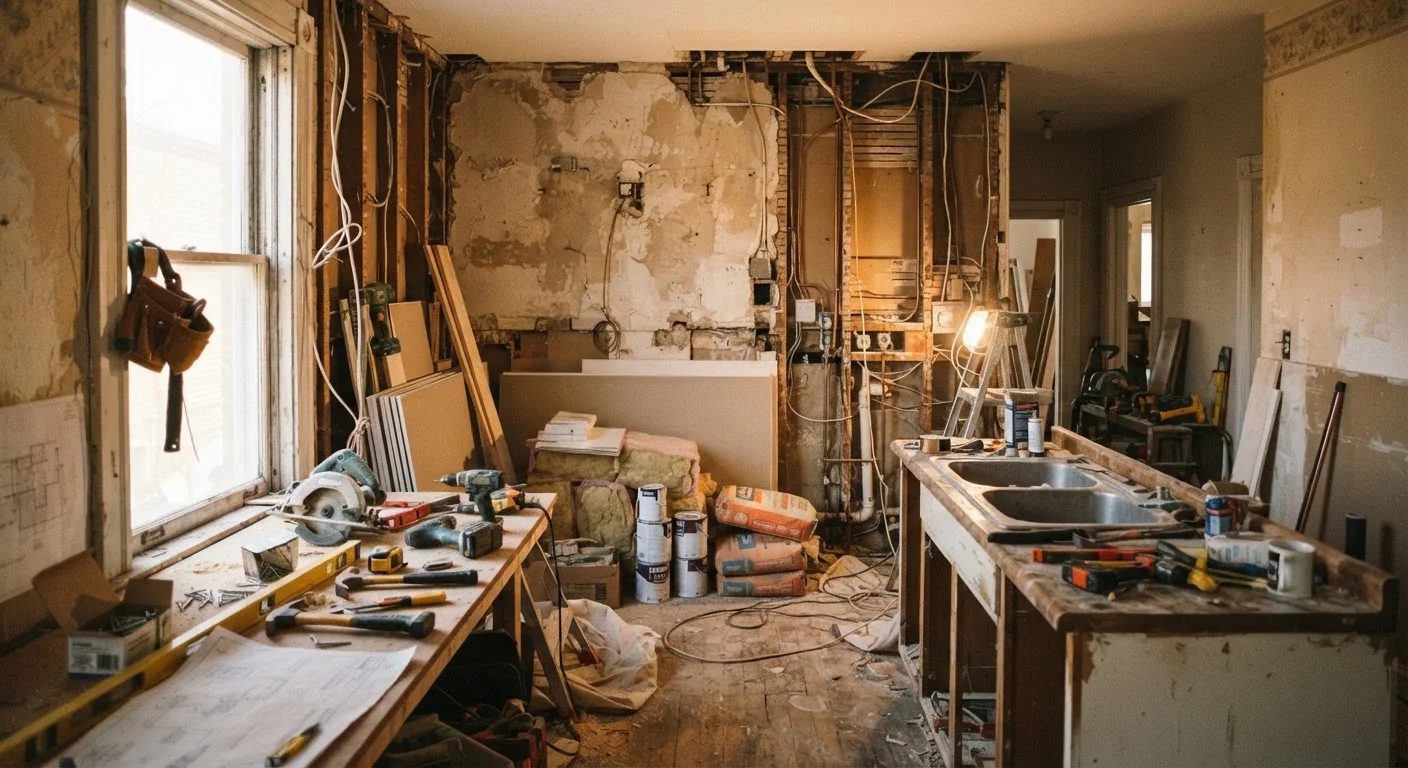
Why Renovation Budgets Go Off the Rails
Most homeowners approach a renovation with a quote in hand and a hopeful mindset. Yet time and again, final invoices land well above that initial number. The gap isn't usually contractor dishonesty - it's the category of costs nobody talks about until a wall comes down or a permit application reveals a compliance issue.
Understanding where budgets quietly expand is the first step toward preventing the shock. As our companion piece on why renovation projects almost always cost more than the quote explains, the culprits are usually predictable - if you know where to look.
Taking the first quote at face value without asking what it excludes.
Why it happens: Homeowners often assume a quote is comprehensive. Contractors, working competitively, quote only the specified scope and omit uncertain variables.
Skipping a contingency fund and spending the full budget on planned work.
Why it happens: When a renovation budget feels tight, it's tempting to allocate every dollar to visible improvements. The cost of the unexpected feels hypothetical until it isn't.
Assuming permit and inspection fees are included in the contractor's estimate.
Why it happens: Contractors often list permits as the homeowner's responsibility or include only a rough allowance. Fees can be higher than expected depending on project scope and municipality.
Overlooking the cost of living disruption during the project.
Why it happens: The focus is naturally on construction costs. The expense of eating out during a kitchen renovation or using a gym for showers can feel minor - until it accumulates over weeks.
Ignoring the possibility of hidden structural or systems issues behind walls.
Why it happens: What's behind drywall is unknowable without opening it. Homeowners and contractors often optimistically price based on best-case conditions.
The Costs Most Estimates Leave Out
A contractor's quote typically covers labor and materials for the agreed scope of work. What it often excludes can be just as significant.
Permit and Inspection Fees
Many structural, electrical, plumbing, and HVAC projects legally require a permit before work begins. Fees vary widely by municipality and project type, but they are rarely pre-loaded into a standard estimate. Beyond the fee itself, required inspections can pause work for days. If you're unsure which jobs need permits in your area, our guide to renovation permits walks through the basics.
Code-Compliance Upgrades
Opening walls for a remodel often triggers a requirement to bring adjacent systems - older wiring, undersized ductwork, outdated plumbing - up to current local building codes. These upgrades benefit you long-term but can add substantial unplanned cost mid-project.
~80%
Renovations that exceed initial budget
Industry surveys consistently find that the large majority of home renovation projects finish over the original estimate, with scope changes and hidden conditions among the top drivers.
15-20%
Recommended contingency buffer
Experienced contractors and financial advisers commonly recommend setting aside 15-20% of a renovation budget to cover unforeseen expenses.
Debris Removal and Disposal
Dumpster rentals, haul-away services, and landfill tipping fees for materials like drywall, tile, or concrete are rarely itemized in base quotes. On a mid-sized kitchen or bathroom renovation, disposal alone can run several hundred dollars.
Temporary Accommodations
If a bathroom renovation leaves you with one less functioning toilet, or a kitchen gut leaves you without a stove for three weeks, temporary lodging or restaurant meals become a real budget line. Factor in the disruption cost before work begins.
Skipping Permits Can Cost More Than the Project
Unpermitted work can trigger fines, forced removal of completed work, and serious complications when you sell your home. Some lenders and insurers also treat unpermitted improvements as liabilities. Always verify local permit requirements before work begins, and don't let a contractor talk you out of pulling one to save time.
For a deeper look at what every line in a contractor quote actually covers, see reading a renovation estimate.
Building a Budget That Actually Holds
No budget survives contact with demo day perfectly intact, but you can reduce the margin of surprise with deliberate planning.
Start with a realistic contingency. Financial planners and experienced contractors generally recommend reserving 15-20% of your total project budget for unforeseen costs. This isn't pessimism - it's standard practice on projects where hidden conditions are inherently unknowable until walls open up.
Commission a pre-renovation inspection. A licensed inspector or structural engineer can identify issues - moisture damage, failing joists, outdated panels - before your contractor encounters them mid-project. The inspection fee is almost always less expensive than discovering a problem after work has started. For guidance on structural considerations specifically, see our structural safety checklist.
Ask your contractor explicit questions. Request a breakdown that distinguishes materials, labor, disposal, permit allowances, and any subcontractor markups. Knowing what isn't covered is as valuable as knowing what is. If unfamiliar terms appear in your quote, our plain-English home improvement glossary can help.
Know What You're Signing Before Work Starts
A signed contract locks in scope, not total cost - changes discovered mid-project are typically billed as extras. Before authorizing any work, confirm in writing how unforeseen conditions will be priced, who is responsible for permit fees, and what the process is for approving cost overruns. A few clarifying questions upfront can prevent significant disputes later.
For broader financial preparedness as a homeowner, our home maintenance hub and budgeting basics resources offer practical frameworks to keep your finances stable through major projects.
This article provides general home improvement information for educational purposes. Costs, permit requirements, and code standards vary significantly by location. Always consult licensed contractors and your local building authority before beginning any renovation project.
The content on this site is for informational purposes only and is not a substitute for professional advice. Always consult a qualified professional for guidance specific to your situation.