

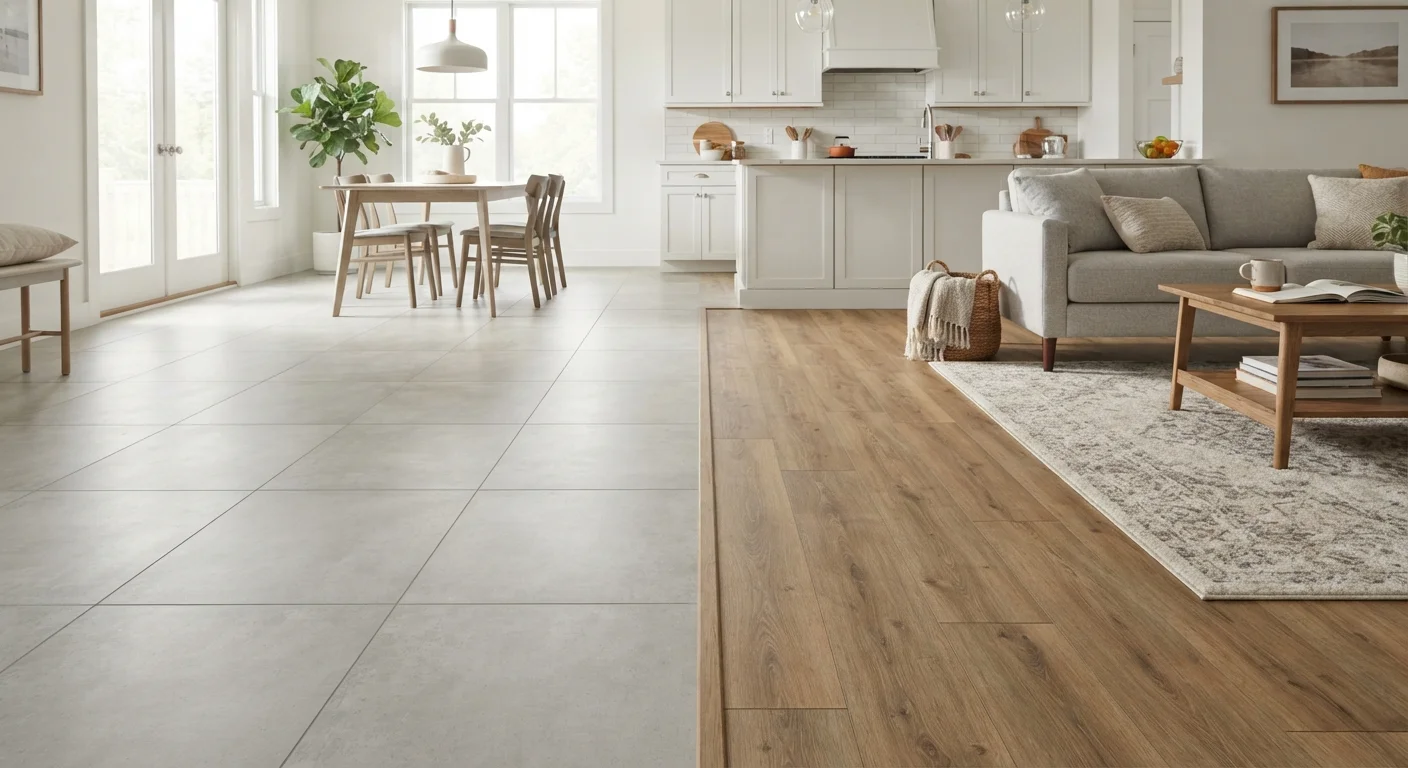
Option A
Ceramic / Porcelain Tile
The durable, timeless hardscape solution.
Best for: Homeowners prioritizing longevity, water resistance, and a classic aesthetic in kitchens, bathrooms, or entryways.
Option B
Luxury Vinyl Plank (LVP)
The comfortable, budget-accessible modern alternative.
Best for: Homeowners wanting a warm, softer underfoot feel with straightforward DIY installation across most rooms.
What Sets These Two Materials Apart
Ceramic and porcelain tile are kiln-fired clay products - dense, rigid, and virtually impervious to water. Luxury vinyl plank (LVP) is a multi-layer synthetic flooring composed of a rigid or flexible core, a printed design layer, and a protective wear layer on top. Both can mimic the look of wood or stone, and both handle moisture well - but the similarities largely end there.
The core difference comes down to hardness vs. comfort. Tile is unyielding: it resists scratches, heat, and heavy impact, but it transmits cold and sound and is punishing on joints during long periods of standing. LVP gives a little underfoot, stays closer to room temperature, and absorbs more ambient noise - qualities that matter significantly in kitchens, family rooms, and bedrooms.
| Criterion | Ceramic / Porcelain Tile | Luxury Vinyl Plank (LVP) |
|---|---|---|
| Durability | Extremely high; 50+ year lifespan possible | Good; lifespan typically 15-25 years |
| Water resistance | Fully waterproof tile; grout needs sealing | Highly water-resistant; seams can be a weak point |
| Comfort underfoot | Hard, cold, unforgiving | Warmer, slightly cushioned feel |
| DIY friendliness | Difficult; usually requires a professional | Beginner-accessible with click-lock systems |
| Typical installed cost | Higher, especially with labor | Lower overall, especially DIY |
| Scratch resistance | Very high | Moderate; depends on wear layer thickness |
| Maintenance | Easy tile; grout requires periodic sealing | Easy; no grout to maintain |
| Noise / acoustics | Hard surface amplifies sound | Absorbs more ambient noise |
Installation: How Much Work Are You Taking On?
Tile installation is a skilled trade. A successful tile job demands a flat, stiff, properly prepared subfloor - often requiring cement board or an uncoupling membrane - along with careful layout, wet-saw cuts, thinset mortar, and grouting. Mistakes in any step can lead to cracked tiles or failed grout within a few years. Most homeowners are better served hiring a qualified tile installer, which adds meaningfully to the total project cost.
LVP, by contrast, was partly engineered for the DIY market. Most planks use a click-lock floating system that snaps together without adhesive. The subfloor still needs to be clean, dry, and reasonably level, but the tolerance for minor imperfections is greater than with tile. A patient first-time DIYer with basic tools can typically complete an average-size room over a weekend.
Subfloor Flatness Is Critical for Both Materials
Both tile and LVP require a subfloor that meets flatness tolerances - typically no more than 3/16 inch variance over a 10-foot span for tile, and 3/16 inch over 6 feet for most LVP products. Tile is less forgiving: a subfloor with deflection or movement can crack tiles and grout over time. Always check your subfloor condition before purchasing materials, as correcting it adds time and cost to any flooring project.
For a deeper look at how these materials compare specifically in bathrooms and other wet areas, see our guide to tile vs. LVP in wet areas.
Durability, Maintenance, and Long-Term Value
Tile's lifespan is one of its strongest arguments. Porcelain tile in particular is extremely hard - rated on the Mohs hardness scale above most flooring materials - and properly installed tile can remain in excellent condition for 50 years or more. Grout lines require periodic sealing and occasional cleaning to prevent staining, but the tile itself is nearly indestructible under normal household conditions.
LVP is durable for a synthetic product but has meaningful limits. The wear layer (measured in mils - thousandths of an inch) determines how well it resists scratching and scuffing. Thicker commercial-grade wear layers hold up better, but LVP remains more susceptible to deep gouges, heavy furniture dragging, and damage from very hot objects than tile. It also cannot be refinished if worn through - replacement is the only option.
12-20 mil
Wear layer thickness in quality residential LVP
Industry guidance generally suggests 12 mil or more for residential use and 20 mil or more for high-traffic areas or households with pets.
50+ years
Potential lifespan of well-installed porcelain tile
The Tile Council of North America notes that properly installed ceramic and porcelain tile installations can last the life of a building when maintained correctly.
Day-to-day maintenance favors LVP: it requires only sweeping and occasional damp mopping, with no grout to seal. Tile cleaning is similarly simple but grout maintenance adds an ongoing responsibility many homeowners underestimate.
Cost, Comfort, and Making the Final Call
Material costs for both products vary widely by quality and style, but tile typically carries higher installed costs when professional labor is factored in. LVP's lower installation cost - especially when self-installed - makes it attractive for larger areas or whole-home projects.
Comfort and lifestyle fit should carry real weight in your decision. Households with young children or older adults may genuinely appreciate LVP's softer, warmer surface. Homes with dogs or heavy foot traffic may see LVP's wear layer erode faster than expected. Radiant floor heating works with both materials, though tile conducts heat more efficiently.
Ultimately, neither material is universally superior. The right choice depends on your subfloor condition, the specific room's demands, your installation skills and budget, and how long you plan to stay in the home. Use the comparison table and verdict cards above as a starting framework, then walk through each room's specific conditions before committing.
The content on this site is for informational purposes only and is not a substitute for professional advice. Always consult a qualified professional for guidance specific to your situation.