

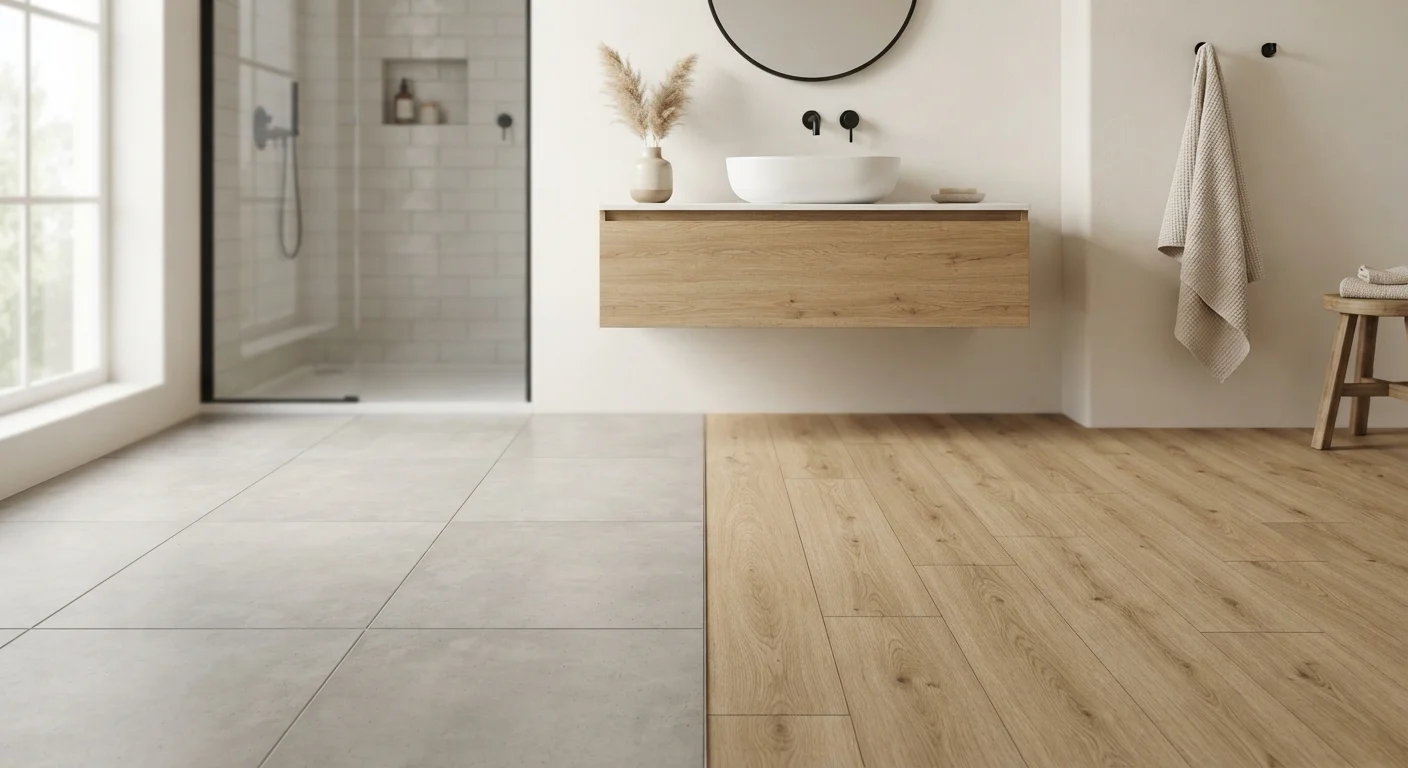
Option A
Ceramic & Porcelain Tile
The time-tested, fully waterproof hard surface.
Best for: Homeowners who want a permanent, water-impenetrable floor in high-use wet areas like shower surrounds and mudrooms.
Option B
Luxury Vinyl Plank (LVP)
The comfortable, DIY-friendly water-resistant alternative.
Best for: Homeowners who want a warmer, quieter floor in bathrooms or laundry rooms and prefer a faster, easier installation.
How Each Material Handles Water
Understanding how these two flooring types respond to water is the most important factor in a wet-area decision.
Ceramic and porcelain tile is genuinely waterproof at the surface level. The tile itself does not absorb water - porcelain especially, being fired at very high temperatures, is dense and impermeable. The vulnerability in a tiled floor lies in the grout lines. Unsanded or improperly sealed grout can absorb moisture over time, potentially leading to mold growth or substrate damage underneath. Using epoxy grout or diligently sealing cement-based grout addresses this weakness significantly.
Luxury vinyl plank is water-resistant, not fully waterproof as a system. The planks themselves won't swell or warp when wet, but water that seeps beneath the floating floor - through seams, around toilet bases, or near tub edges - can become trapped and cause mold or subfloor damage. LVP is appropriate for bathrooms and laundry rooms where splashing is common, but it should not be used inside shower pans or in wet rooms where water routinely sits on the floor.
| Criterion | Ceramic & Porcelain Tile | Luxury Vinyl Plank (LVP) |
|---|---|---|
| Waterproofing | Fully waterproof surface (grout needs sealing) | Water-resistant; not for full immersion |
| Comfort underfoot | Hard and cold without radiant heat | Warmer, slightly cushioned feel |
| DIY installation difficulty | Moderate to high; multi-day process | Low to moderate; often one day |
| Typical lifespan | 30-50+ years with proper care | 15-25 years under normal use |
| Ongoing maintenance | Grout sealing and crack repair | Minimal; no sealing required |
| Scratch & dent resistance | Highly scratch-resistant | Can dent or scratch under heavy loads |
| Subfloor tolerance | Requires flat, rigid, stable subfloor | Tolerates minor imperfections better |
Comfort, Feel, and Everyday Livability
If you've ever stepped onto a cold tile floor on a winter morning, you already understand one of LVP's biggest practical advantages. Tile conducts heat away from your feet quickly, making it feel cold unless the room is warm or the floor has a radiant heating system installed beneath it. Radiant heat is an excellent pairing with tile but adds cost and complexity.
LVP has a resilient core - typically rigid SPC (stone plastic composite) or WPC (wood plastic composite) - that provides a slightly cushioned feel and retains warmth far better than tile. It also reduces noise: footsteps and dropped items sound noticeably less harsh on vinyl than on hard ceramic.
That said, tile's hardness is also a durability asset. It won't dent from heavy furniture, scratch from pet claws, or fade from UV exposure near windows. LVP, especially thinner profiles, can show indentations from concentrated weight over time.
Radiant Heat and Tile: Worth the Cost?
Electric radiant heat mats installed beneath tile can transform a cold bathroom floor into a year-round comfort feature. The system adds to project cost and requires electrical work - which should be performed by a licensed electrician. If you're already investing in a full tile installation, it may be worth getting a quote for in-floor heat at the same time, since adding it later means removing the finished floor.
Installation: What Each Project Actually Involves
Tile installation in a wet area is a multi-stage process. The subfloor typically needs a cement backer board (such as cement board or uncoupling membrane) to prevent flex. Tiles are then set in thinset mortar, allowed to cure, and grouted - a process that usually spans at least two to three days and requires tile-cutting tools, notched trowels, and careful leveling. Mistakes in a wet area can be costly to fix and may require permits depending on your local building codes. If you're uncertain about structural or waterproofing work, consulting a licensed tile setter is worthwhile.
LVP installation, by contrast, is accessible to most DIYers. Modern click-lock planks float over the subfloor without adhesive in most applications. The subfloor must be clean, flat, and dry, but the process itself - measuring, cutting with a utility knife or miter saw, and snapping planks together - can often be completed in a single day for an average bathroom. For a broader look at how these two materials compare across the whole home, see our full tile vs. LVP comparison guide.
2-3 days
Typical tile installation timeline for a bathroom
Industry estimates suggest most bathroom tile projects require at least two to three days when accounting for mortar cure time before grouting.
12 mils
Minimum recommended LVP wear layer for wet areas
Flooring industry guidance generally recommends a wear layer of at least 12 mils for residential areas with heavy foot traffic or moisture exposure.
Long-Term Maintenance and Replacement
Tile's primary ongoing maintenance task is grout care. Grout should be resealed periodically - the frequency depends on foot traffic and grout type - and any cracked or missing grout should be repaired promptly to prevent moisture infiltration. Individual tiles can crack from impact or subfloor movement, but replacing a single tile is possible if matching material is available. Tile floors that are well-maintained can last 50 years or more.
LVP requires little routine maintenance beyond sweeping and damp mopping, but it has a shorter expected lifespan - typically 15 to 25 years under normal residential use. If a plank is damaged, replacing it is straightforward on a floating floor but can require disassembling rows to reach the affected plank. LVP cannot be refinished the way hardwood can; once the wear layer is depleted, replacement is the only option. Consider LVP's wear layer thickness (measured in mils) when evaluating options - thicker wear layers generally hold up better in high-traffic wet areas.
The content on this site is for informational purposes only and is not a substitute for professional advice. Always consult a qualified professional for guidance specific to your situation.