

The Simple Idea Behind the Number
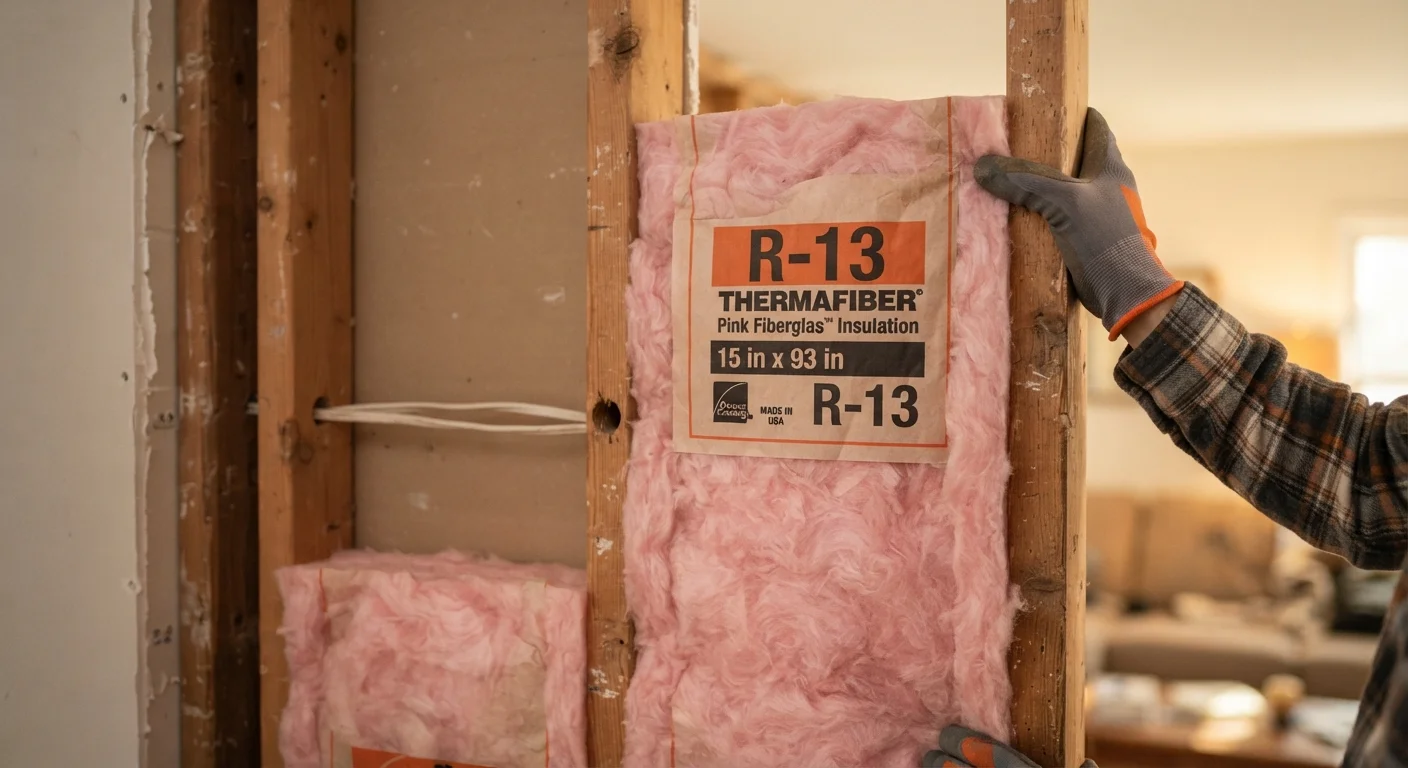
Every bag of blown-in insulation and every roll of fiberglass batt carries an R-value label. The "R" stands for resistance - specifically, resistance to the flow of heat through a material. Heat naturally moves from warmer areas to cooler ones, and insulation slows that movement. A higher R-value means the material is a more effective barrier.
Think of it like sunscreen SPF. A higher number offers more protection, and you can compare products directly using that single figure. The same logic applies to insulation: R-13 fiberglass and R-13 mineral wool both slow heat at the same rate, even though the materials are physically different.
For a broader glossary of renovation terminology, see our home improvement terms reference - R-value is one of many numbers that appear in contractor quotes and permit plans.
R-38 to R-60
Recommended attic R-value for most US homes
According to the US Department of Energy's zone-based guidelines for climate zones 4 through 7, covering the majority of the continental US.
~15%
Estimated heat loss through the roof/ceiling
The DOE estimates that poorly insulated attics account for a substantial share of home heating and cooling losses in typical American homes.
R-3 to R-6
R-value per inch by insulation type
Standard fiberglass batts average R-3 to R-4 per inch, while closed-cell spray foam can reach R-6 or more per inch, allowing higher performance in thinner spaces.
Why Location in Your Home Changes Everything
R-value requirements are not the same throughout a house. Heat moves in all directions, but the largest losses typically happen at the ceiling and roof because warm air rises. That is why attics generally call for the highest R-values - commonly R-38 to R-60 in most US climate zones - while exterior walls may only need R-13 to R-21.
The US Department of Energy divides the country into climate zones numbered 1 through 8, ranging from hot southern regions to frigid northern ones. A home in Minnesota needs significantly more insulation than a home in Florida to achieve the same energy efficiency. Your local building code reflects these zone-specific requirements.
Climate Zone Maps Are Publicly Available
The US Department of Energy publishes free climate zone maps that show which zone every US county falls into. These maps are the standard reference used in building codes and energy efficiency programs. Checking your zone before purchasing insulation ensures you are targeting the right R-value for your specific location.
Floors above unheated spaces like garages or crawl spaces also need attention. Cold air beneath an uninsulated floor pulls heat downward just as effectively as a cold attic pulls it upward.
What R-Value Does Not Tell You
R-value measures how well a material resists conductive heat transfer under controlled laboratory conditions. It does not account for two other significant sources of energy loss: air leakage and radiant heat.
Air leaks - gaps around electrical outlets, plumbing penetrations, window frames, and attic hatches - can short-circuit even well-insulated walls. Cold or hot air bypasses the insulation entirely. This is why building professionals typically recommend air sealing before or alongside any insulation upgrade.
Seal Air Leaks Before Adding Insulation
Before purchasing additional insulation, inspect your attic for gaps around recessed lights, plumbing stacks, and ceiling penetrations. Sealing these with caulk or spray foam first ensures your new insulation performs as close to its rated R-value as possible. Air sealing materials are widely available and the task is generally suitable for a careful DIYer.
R-value also does not capture how insulation performs in real-world conditions when it is compressed, wet, or improperly installed. A batt stuffed tightly into a cavity that is too narrow loses a portion of its rated value. For a detailed look at how different materials behave under real conditions, see our guide on insulation materials for home walls.
Putting R-Value to Practical Use
When planning an insulation project, start by identifying your climate zone and the specific area you are improving - attic, wall, floor, or basement. Then compare the current estimated R-value of your existing insulation against the recommended target for your zone. The gap between those two numbers tells you how much improvement is needed.
Because R-value is additive, you can reach a higher target by layering materials. Two layers of R-19 mineral wool in an attic, for example, combine to approximately R-38. This flexibility is useful when working in tight spaces or when phasing a project over time.
For most homeowners, the attic is the highest-priority starting point - it offers the greatest return for the investment and is typically the most accessible space for a DIY project. Always verify local permit requirements before beginning any significant insulation work, and consult a qualified contractor for projects involving electrical, structural, or moisture-related complications.
Frequently Asked Questions
There is no single universal answer - the ideal R-value depends on your climate zone, the part of the house you are insulating, and local energy codes. In general, US attics may need R-38 to R-60, while walls commonly fall in the R-13 to R-21 range. The Department of Energy provides zone-specific recommendations.
Higher R-value generally improves energy efficiency, but it is not the only factor. Air sealing, window quality, and HVAC performance all affect your overall energy use. Adding insulation beyond a certain point also produces diminishing returns.
The R-value scale is consistent across products, allowing fair comparisons. However, different materials achieve specific R-values at different thicknesses. Spray foam, for instance, can reach R-6 or more per inch, while standard fiberglass batts average around R-3 to R-4 per inch.
Yes, in most cases you can add new insulation over existing material to boost total R-value - this is common in attics. Just make sure existing insulation is dry and free of mold before adding layers, and avoid compressing the material, which reduces its effectiveness.
Most insulation materials maintain their rated R-value for decades when kept dry and undisturbed. However, moisture intrusion, settling, pest damage, or compression can reduce real-world performance over time. Regular inspections help ensure your insulation is still doing its job.
The content on this site is for informational purposes only and is not a substitute for professional advice. Always consult a qualified professional for guidance specific to your situation.