

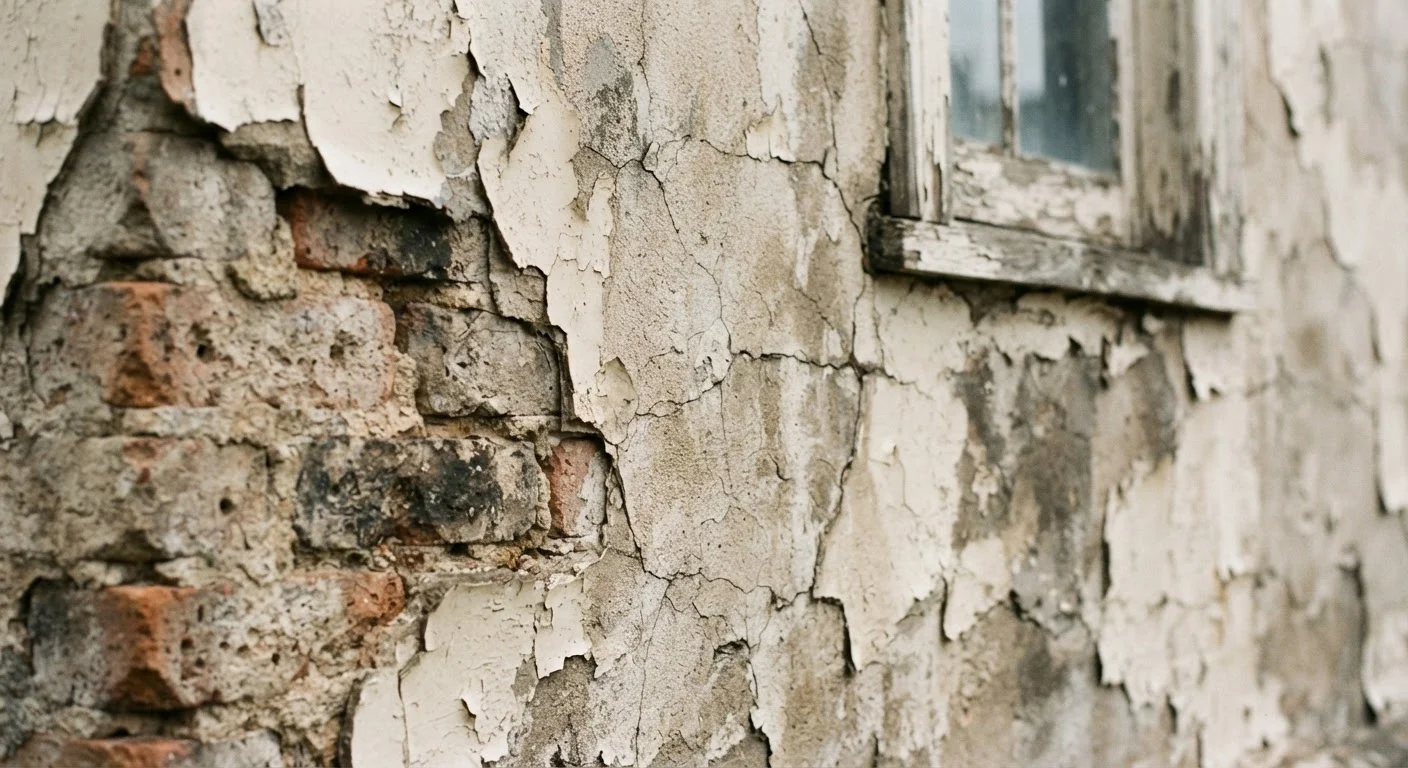
How to Read Your Home's Exterior at a Glance
Your home's exterior is made up of several distinct layers, and each one ages and fails in its own way. Peeling paint is not the same problem as cracked render, and cracked render is not the same as spalling brick. Treating the wrong symptom - or treating every symptom the same way - wastes money and can mask a deeper issue.
This reference guide walks through the most common warning signs for exterior paint, render, and masonry, what each one typically indicates, and what level of response it warrants. For a broader look at timing your exterior work, see our seasonal maintenance guide.
| Paint recoat interval | Typically every 5-10 years for exterior surfaces (Varies by paint type, climate, and wall aspect) |
| Render lifespan | Sand-cement render: 20-30 years; acrylic render: 15-25 years (Dependent on mix quality, application, and exposure) |
| Mortar joint repointing | Recommended when joints are recessed more than 10-15 mm (General masonry maintenance guidance) |
| Crack width threshold | Cracks wider than 0.5 mm in render warrant monitoring or professional assessment (General building inspection guidance) |
| Efflorescence cause | Water-soluble salts drawn to surface by moisture movement (Building pathology consensus) |
| Spalled brick remedy | Individual unit replacement - cannot be patched (Standard masonry repair practice) |
Exterior Paintwork: Signs and What They Mean
Exterior paint serves as the first line of moisture defense. When it begins to fail, the substrate beneath becomes vulnerable.
Render
A coating of sand-cement or polymer-modified material applied to masonry or block walls to provide a smooth or textured finish and weather protection.
Spalling
The flaking or breaking away of the face of brick or stone, typically caused by freeze-thaw cycles or moisture trapped beneath the surface.
Efflorescence
White chalky deposits on masonry surfaces formed when water carries soluble salts to the face of the wall as it evaporates. It signals active moisture movement through the material.
Repointing
The process of removing deteriorated mortar from masonry joints and replacing it with fresh mortar to restore the wall's weather resistance and structural integrity.
Delamination
The separation of render, paint, or a surface coating from the substrate beneath it, often detectable as a hollow sound when the surface is tapped.
Chalking
The formation of a fine, powdery residue on the surface of exterior paint as the binder breaks down through UV exposure and weathering.
- Chalking: A fine, powdery residue that rubs off on your hand. This is normal weathering in older paints but accelerates in low-quality formulations or when paint is applied in direct sun. Mild chalking can be cleaned and recoated; heavy chalking means the paint film has broken down.
- Peeling or flaking: Usually caused by moisture trapped beneath the paint film - either from condensation, a roof or flashing leak, or insufficient surface prep before the original coat. Simply repainting over peeling surfaces without addressing the moisture source will repeat the cycle. Investigate the source first.
- Blistering: Bubbles beneath the paint surface. Typically a sign that moisture or solvent vapor was trapped when the paint was applied, or that the surface was painted in high heat. Small blisters may resolve after drying; widespread blistering means the whole coat needs to come off.
- Fading or uneven color: Often cosmetic, particularly on south- and west-facing walls that receive the most UV exposure. Repainting is a straightforward fix, but first check that the underlying surface is sound.
As a general rule: paint problems that repeat in the same spot after repainting point to a substrate or moisture issue, not a paint quality issue.
Render: Hairline Cracks vs. Structural Cracks
Render (the sand-and-cement or acrylic coating applied over masonry or block walls) is designed to flex slightly with temperature changes. Not every crack is cause for alarm, but some are.
~80%
Of render failures linked to moisture
Building pathology surveys consistently identify water ingress as the primary cause of render deterioration on residential properties.
10-15 mm
Mortar recess depth that triggers repointing
General masonry maintenance guidance: joints recessed beyond this depth allow water to pool and penetrate the wall.
- Hairline cracks (under 0.5 mm wide): Common as render cures and ages. They are generally cosmetic but should be monitored. If they do not widen over one full seasonal cycle (winter to summer), they can be filled with a flexible exterior filler and redecorated.
- Map cracking (crazing): A network of fine cracks across the surface, resembling a dried mud flat. Usually caused by the render drying too quickly or by too-strong a mix. The render may still be structurally sound; probe gently to check for hollow spots.
- Step or diagonal cracks: Cracks that follow mortar joints in a stair-step pattern, or diagonal cracks running from corners of windows and doors. These can indicate differential settlement in the wall or foundation. Do not fill and repaint these without consulting a qualified professional - they may signal a structural issue requiring investigation.
- Hollow or delaminated render: Tap the surface with your knuckle. A dull, drumlike sound indicates the render has detached from the wall behind. Hollow patches will eventually fall away and allow water ingress. Sections that sound hollow should be cut out and re-rendered.
For an honest assessment of what exterior maintenance involves in practice, see our balanced exterior maintenance guide.
Masonry: Brick, Stone, and Mortar
Masonry is the most durable component of most home exteriors, but it is not maintenance-free. The mortar joints between units are typically the first to deteriorate.
- Mortar joint erosion (pointing loss): Mortar recessed more than 10-15 mm from the face of the brick is allowing water to sit and penetrate the wall. Repointing - raking out the old mortar and replacing it - is a straightforward repair but requires matching the original mortar strength. Using a mix that is too hard for older soft brick can cause spalling.
- Spalling brick or stone: The face of the brick breaks away, exposing the softer interior. Usually caused by freeze-thaw cycling when water has penetrated the brick face. Spalled bricks cannot be repaired - individual units need to be replaced with matching material. Widespread spalling often indicates a waterproofing problem or that a previous water-repellent treatment has trapped moisture inside the wall.
- Efflorescence: White, chalky deposits on the brick face. These are water-soluble salts that have been carried to the surface as water evaporates. Efflorescence is a symptom of water moving through the masonry. The deposits themselves can be brushed off, but the water source - a failed damp-proof course, inadequate drainage, or leaking flashings - needs to be identified and addressed.
- Staining: Green algae and moss growth typically indicates persistently damp areas, often related to a blocked gutter, missing flashing, or poor drainage at the base of the wall. Remove the moisture source before treating the growth.
For help identifying whether a crack is cosmetic or urgent, Reading Your Home's Warning Signs Before They Become Emergencies provides a broader symptom guide.
When to Call a Licensed Professional
Step or diagonal cracks in render or masonry, widespread hollow render, or spalling on a large area of wall are not standard DIY repairs. These symptoms may indicate structural movement, failed damp-proofing, or foundation issues. In many jurisdictions, significant structural repairs also require permits or inspections - verify local requirements with your building department before starting work.
Many masonry and render repairs that appear straightforward - cutting out hollow render, repointing historic brick, or investigating diagonal cracks - can have significant implications if done incorrectly. For any work involving structural cracks, large areas of failed render, or historic or heritage materials, consult a licensed masonry professional before proceeding.
The content on this site is for informational purposes only and is not a substitute for professional advice. Always consult a qualified professional for guidance specific to your situation.