

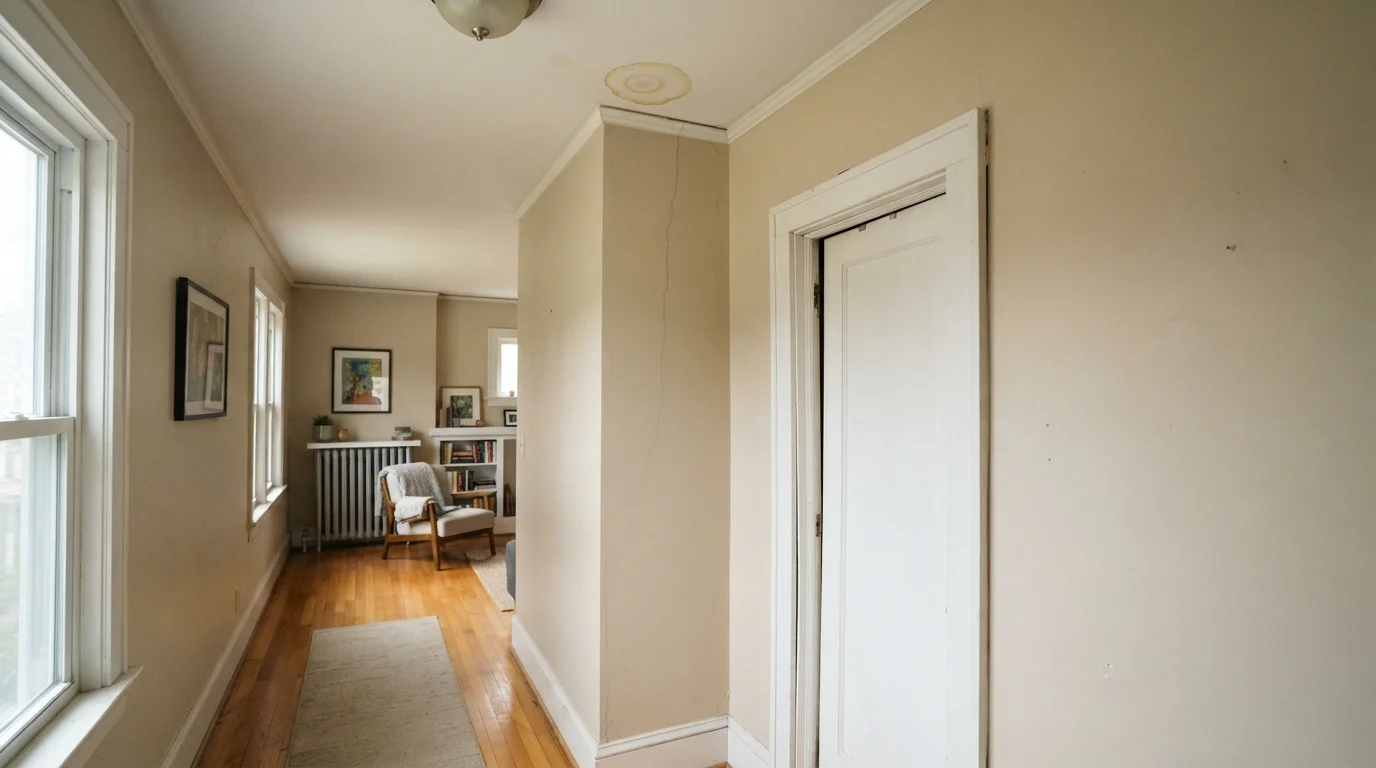
How Homes Communicate Trouble
Your home doesn't break down all at once. Most serious - and expensive - damage begins with small, easy-to-dismiss symptoms: a hairline crack, a faint smell, a door that no longer closes cleanly. Learning to read these signals early is one of the most practical skills a homeowner can develop.
Think of it the way you'd think about a car's dashboard. A warning light doesn't mean the engine has already failed; it means something needs attention before it escalates. Our annual home maintenance reference lays out system-by-system check frequencies that pair well with the symptom guide below.
| Most common homeowner emergency | Water damage and plumbing failures (Insurance industry data, general consensus) |
| Foundation crack requiring immediate attention | Horizontal cracks in basement walls |
| Gas leak response | Evacuate immediately, call utility from outside |
| Stair-step brick cracks - next step | Structural engineer assessment |
| Musty odor source | Often hidden mold behind walls or under flooring |
| Efflorescence indicates | Water moving through masonry |
The sections that follow organize common symptoms by type, note what each may indicate, and flag which ones require prompt professional attention.
Cracks, Gaps, and Structural Signals
Not every crack is a crisis, but context matters enormously.
- Hairline cracks in drywall or plaster - Usually caused by normal seasonal expansion and contraction. Monitor them; if they don't widen over several months, they're generally cosmetic.
- Stair-step cracks in brick or block - These follow mortar joints in a diagonal staircase pattern and can signal differential foundation settlement. Have a structural engineer assess these, especially if they're widening.
- Horizontal cracks in a basement wall - Among the most serious signs. Horizontal cracking in poured concrete or block walls often indicates lateral soil pressure and warrants immediate professional evaluation.
- Gaps around door and window frames - Doors that stick seasonally are usually responding to humidity. Gaps that persist year-round, or that appear suddenly, may point to foundation movement or framing shifts.
For exterior surfaces specifically, our guide on exterior paintwork, render, and masonry explains what cracked render versus peeling paint each tends to indicate.
Efflorescence
White, powdery mineral deposits left on masonry surfaces when water carries dissolved salts to the surface and evaporates. It signals active water movement through the wall.
Differential settlement
When different parts of a foundation sink at different rates, causing uneven stress on the structure. It can produce stair-step cracks, sloping floors, and misaligned doors.
Subfloor
The structural layer of wood sheathing or boards installed on top of floor joists, beneath finished flooring materials. Prolonged moisture exposure causes it to rot or delaminate.
Flashing
Thin strips of metal or waterproof material installed at roof joints, valleys, and penetrations to direct water away from vulnerable seams. Failing flashing is a leading cause of roof leaks.
Lateral pressure
Horizontal force exerted by soil or water against a basement or retaining wall. When it exceeds the wall's design capacity, it can cause bowing or horizontal cracking.
Water Stains, Moisture, and Musty Odors
Water-related symptoms are among the most common - and the most deceptive. Visible staining is often just the endpoint of a moisture pathway that originates somewhere else entirely.
~98%
Of basements that experience water intrusion at some point
Commonly cited estimate in the waterproofing and home inspection industry; verify with a licensed inspector for your specific home.
2-10×
Cost multiplier when water damage is left unaddressed
Remediation costs can increase significantly the longer moisture issues go untreated, according to general restoration industry guidance.
- Ceiling stains - Yellow or brown rings suggest a slow, recurring leak from a roof, flashing, or plumbing above. A one-time stain that remains dry and stable may be an old, resolved issue; fresh or growing rings need tracing to their source.
- Efflorescence on basement walls - This white, chalky mineral deposit means water has moved through the masonry. The deposit itself isn't structural damage, but it confirms water intrusion is occurring. See our article on signs of failing waterproofing for a fuller picture.
- Musty odors without visible mold - Mold growth can begin behind walls or under flooring well before it's visible. A persistent musty smell in a basement or bathroom warrants moisture testing and possibly professional inspection.
- Soft or spongy flooring - Subfloor deterioration from prolonged moisture exposure. Don't delay; the longer it goes, the more framing is typically involved.
Any time you're working on moisture issues in an older home, be aware that disturbing walls or floors can expose hazardous materials. Our guide on working safely around older homes covers what to know before you start.
Electrical, Mechanical, and Odor Warning Signs
Some symptoms are inconvenient. Others are genuinely dangerous. The following require heightened attention:
- Burning or hot-plastic smell from outlets or the electrical panel - Stop using the circuit and contact a licensed electrician promptly. This can indicate overloaded wiring or failing components. Our electrical panel primer explains how panels work and when only a qualified electrician should intervene.
- Flickering lights - Occasional flicker when a large appliance starts is normal. Persistent or whole-house flickering may signal a loose main connection - an electrician should evaluate this.
- Sulfur or rotten-egg smell - Natural gas has an odorant added specifically for detection. If you smell it, don't use switches or open flames: leave the home, leave the door open, and call your gas utility from outside.
- Gurgling drains or slow drainage throughout the house - Isolated slow drains are usually clogs. Multiple drains backing up simultaneously often points to a main sewer line issue requiring a plumber.
- HVAC running constantly without reaching set temperature - Could indicate refrigerant loss, a failing compressor, or simply a dirty filter. Start with the filter; if that doesn't help, schedule a technician visit before the system fails completely.
When to Call a Professional Immediately
Gas smells, sparks or burning odors from outlets, horizontal basement wall cracks, and sewage backup in multiple drains are all situations that warrant calling a licensed professional the same day - not adding to a weekend to-do list. When in doubt about urgency, err on the side of getting an expert opinion quickly. Early intervention almost always costs less than delayed repair.
If you're evaluating these symptoms as part of a real estate transaction, our article on reading a home inspection report can help you distinguish what's serious from what's routine.
The content on this site is for informational purposes only and is not a substitute for professional advice. Always consult a qualified professional for guidance specific to your situation.