

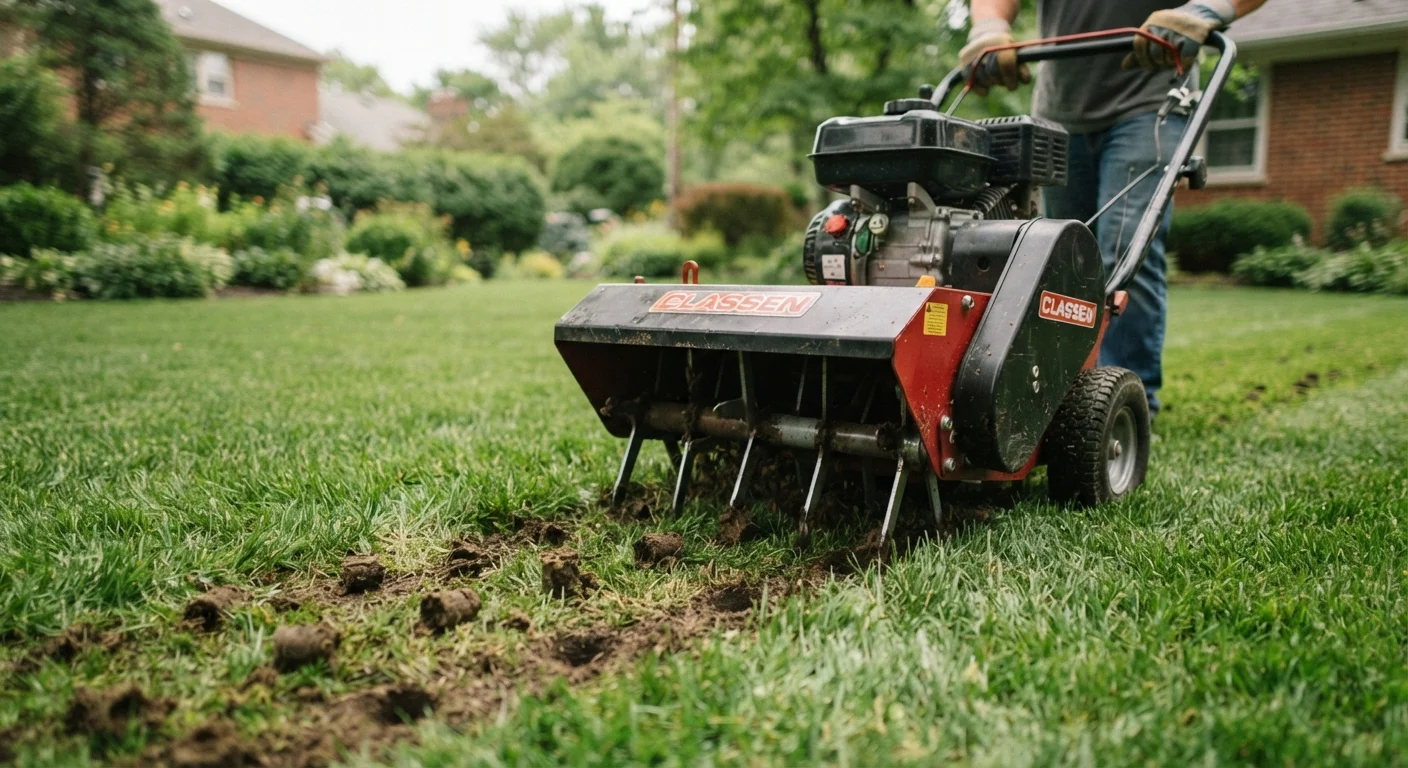
What Aeration Actually Does to Your Soil
Over time, soil beneath a lawn gets compressed by foot traffic, mowing equipment, rain, and its own weight. When soil particles pack tightly together, the pore spaces that hold air and water shrink. Grass roots struggle to penetrate dense ground, and water tends to run off instead of soaking in. This is compaction, and it is the core problem that aeration is designed to address.
Core aeration fixes this by physically removing small cylinders of soil - typically a half-inch in diameter and two to three inches deep - at regular intervals across the lawn. The holes left behind let oxygen, moisture, and fertilizer reach root zones directly. Roots can extend into the newly opened space, thatch starts to break down faster, and soil microbes become more active. The result, over several weeks, is grass that can access what it needs to grow.
For a broader look at how soil health affects grass performance, see our guide to growing lawn grass.
~½ inch
Typical thatch thickness that warrants action
Lawn care professionals generally recommend addressing thatch once it exceeds about half an inch; beyond three-quarters of an inch, aeration alone may be insufficient.
2-3 inches
Depth of cores removed during aeration
Core aerators typically extract plugs two to three inches deep - deep enough to relieve surface compaction and reach the active root zone of most grass types.
1-2 weeks
Time for soil plugs to break down naturally
Cores left on the surface after aeration generally dissolve within one to two weeks through rainfall and mowing, returning organic matter to the lawn.
When Your Lawn Actually Needs It
Aeration is not universally necessary. The clearest sign your soil is compacted is a simple screwdriver test: push a standard screwdriver into moist soil. If it resists at a depth of two inches or less, compaction is likely a problem. Other signs include water pooling on the surface after rain, a spongy or thatch-heavy feel underfoot, or grass that stays thin and pale despite adequate watering and fertilization.
High-traffic lawns - those used regularly for play, pets, or entertaining - are the most common candidates. Clay-heavy soils compact much more readily than sandy ones. Newly constructed homes often have subsoil that was compacted during building work, making early aeration a sound idea. A lawn that has not been aerated in several years and is showing stress despite basic care is another good candidate.
Test Before You Aerate
Before renting equipment or hiring a service, do the screwdriver test: push a standard screwdriver into moist soil. Easy penetration to four or more inches suggests compaction is not your problem. Resistance at two inches or less is a reliable indicator that aeration would help. This simple check takes under a minute and can save unnecessary effort.
Timing matters. Cool-season grasses (such as Kentucky bluegrass, tall fescue, or ryegrass) respond best to fall aeration, when growing conditions support quick recovery. Warm-season grasses (Bermuda, zoysia, St. Augustine) do better when aerated in late spring or early summer. Avoid aerating during heat stress or drought - recovering from aeration requires active growth.
When Aeration Probably Won't Help
If your lawn grows in sandy, well-draining soil and sees light foot traffic, compaction is unlikely to be the limiting factor. Aerating in this situation delivers minimal benefit and can be skipped. Similarly, a newly seeded or sodded lawn should not be aerated - the root system needs time to establish before the soil is disturbed.
Thin or patchy grass is not always a compaction problem. Poor soil pH, nutrient deficiencies, shade, disease, or inadequate watering are common culprits that aeration will not fix. Before scheduling aeration, it is worth ruling out other causes. Soil pH imbalances and watering habits - including shallow or excessive irrigation - often contribute more to struggling turf than compaction does.
Aeration Doesn't Fix Every Lawn Problem
If your grass is thin, yellowing, or slow to recover, compaction may not be the cause. Soil pH that is too high or too low can lock out nutrients even in well-aerated soil. A basic soil test - available through many local cooperative extension offices - can identify whether pH or nutrient levels are the actual limiting factor before you commit to aeration.
In short, aeration is a targeted solution to a specific problem. Applying it indiscriminately adds work without adding benefit.
Putting It Into a Lawn Care Routine
For lawns that genuinely benefit from aeration, it works best as part of a broader care routine rather than a standalone fix. Aerating before overseeding improves seed-to-soil contact and germination rates. Following aeration with a top dressing of compost or a balanced fertilizer application gives roots immediate access to nutrients through the newly opened channels.
Monitor your lawn's response. Compaction-related thinning and pooling should improve noticeably within one growing season of proper aeration. If problems persist, consider a soil test to check for pH or nutrient issues that may also be at play. For a complete picture of lawn care from the ground up, this resource on starting and sustaining a healthy lawn covers all the major factors together.
Frequently Asked Questions
Most lawns benefit from aeration once a year or every other year. Heavily compacted or clay-heavy lawns may need annual treatment, while well-maintained sandy-soil lawns might only need it every two to three years. Let soil conditions and grass health guide the schedule rather than the calendar alone.
Core aeration removes small plugs of soil and thatch, creating open channels. Spike aeration simply pokes holes without removing material, which can actually compress surrounding soil further. Core aeration is the more effective method for relieving true compaction.
Yes - core aerators are available to rent at many equipment rental centers. Walk-behind models work well for average-sized yards. For large properties or severely compacted soil, hiring a lawn care professional is a practical option.
Leave the soil plugs on the surface - they break down naturally and return nutrients to the lawn. Water deeply after aerating, and if you plan to overseed or fertilize, do it shortly after aeration when the soil is most receptive.
Aeration disrupts and loosens thatch - the layer of dead organic matter between grass blades and soil - improving the flow of air and moisture. However, if thatch is thicker than about three-quarters of an inch, dethatching before or alongside aerating may be more effective.
Minor surface disruption is normal and temporary. The soil plugs left behind look untidy for a week or two but dissolve on their own. Grass typically recovers and shows improvement within a few weeks, especially when aeration is timed correctly.
The content on this site is for informational purposes only and is not a substitute for professional advice. Always consult a qualified professional for guidance specific to your situation.