

Why pH Is the Hidden Lever in Your Garden
You can have nutrient-rich, well-watered soil and still watch plants limp along. Yellowing leaves, poor fruit set, and patchy lawns are often blamed on insufficient fertiliser - but the real culprit is frequently soil pH working against you behind the scenes.
pH determines the chemical environment around plant roots. Many essential nutrients - iron, manganese, phosphorus - become chemically locked in the soil at extreme pH values, meaning roots simply cannot take them up no matter how much is present. This phenomenon is called nutrient lockout, and it's one of the most common and underdiagnosed garden problems.
Understanding pH doesn't require a chemistry degree. Think of it as a dial that either opens or closes the door to nutrients your plants need. Getting it into the right range is often more impactful than any fertiliser application. See our guide to common fertiliser myths for more on why adding more product doesn't always solve the problem.
6.0-7.0
Optimal pH range for most vegetables
According to the University of Minnesota Extension, the majority of vegetable crops perform best within this moderately acidic to neutral range.
~10×
pH change per unit on the scale
Because pH is logarithmic, a one-unit shift - say from 6 to 5 - represents a tenfold increase in acidity, making even small deviations from the ideal range significant.
70%+
Nutrient availability tied to soil pH
Soil science literature consistently shows that pH influences the availability of nearly all major and secondary plant nutrients, including nitrogen, phosphorus, and potassium.
Reading the pH Scale: What the Numbers Mean
The pH scale runs from 0 to 14. Below 7 is acidic, 7 is neutral, and above 7 is alkaline (also called basic). Because the scale is logarithmic, a soil with a pH of 5 is ten times more acidic than one at 6 - a small number shift represents a significant chemical change.
Here's how common plants align with the scale:
- pH 4.5-5.5: Blueberries, azaleas, rhododendrons, and camellias thrive in strongly acidic conditions.
- pH 5.5-6.5: Most vegetables, fruits, and ornamentals perform well in this mildly acidic range.
- pH 6.0-7.0: Lawns and many perennials prefer this near-neutral zone.
- pH 7.0-7.5: Lilacs, lavender, and some ornamental grasses tolerate slightly alkaline soil.
When plants are placed in soil outside their preferred range, they show it - through discoloration, stunted growth, or failure to flower despite apparently good care.
Native Plants and Local Soil Chemistry
Plants native to your region have typically adapted to local soil pH conditions. If you're struggling to establish non-native ornamentals or edibles, it's worth considering whether their preferred pH range aligns with what your soil naturally provides. Sometimes choosing regionally appropriate plants is more sustainable than repeatedly amending soil to match a plant's preference.
How to Test Your Soil
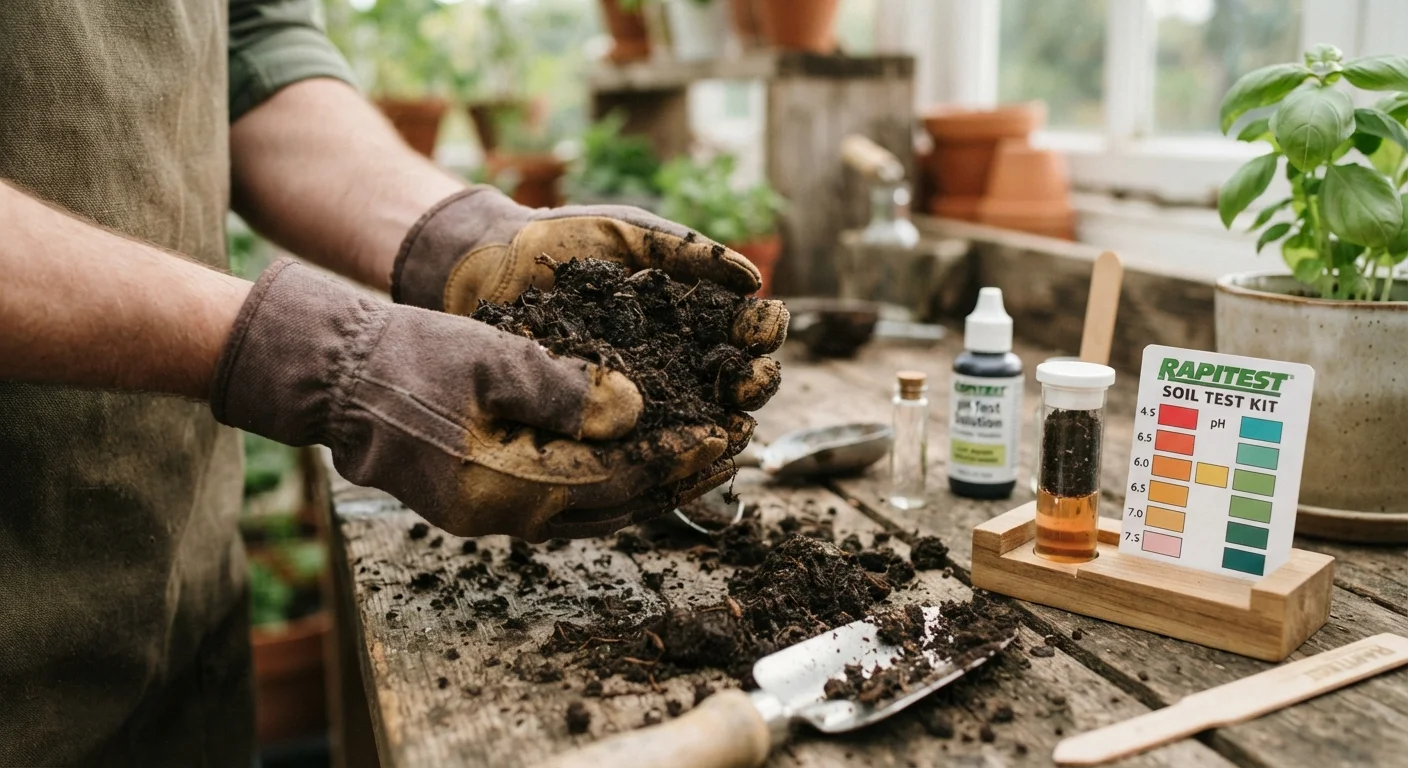
Testing is the only way to know where your pH actually stands. Guessing based on plant symptoms alone can lead to corrections that make things worse. Two reliable options exist for home gardeners:
- At-home test kits: Color-indicator strips or liquid kits are inexpensive and give a quick reading. They're sufficient for a general sense of whether your soil is acidic, neutral, or alkaline, though they're less precise than lab analysis.
- Cooperative extension lab testing: Most US states offer low-cost soil analysis through their land-grant university extension service. Lab tests typically return a precise pH reading along with nutrient levels and specific amendment recommendations for your plants - well worth the small cost.
When collecting a sample, take small amounts from several spots around the bed or lawn area, mix them together, and test that composite. A single scoop from one location can be misleading. Lawn aeration performed around the same time can improve amendment penetration after you've identified what your soil needs.
Sample Soil at the Right Depth
For lawn areas, collect samples from the top 4 inches of soil. For vegetable gardens and ornamental beds, go 6-8 inches deep, since that's where the bulk of active root growth occurs. Sampling at the wrong depth can give a misleading reading and lead to incorrect amendment rates.
Adjusting pH: Raising, Lowering, and Staying Patient
Once you have your test results, correction is straightforward in principle - though it takes time to see results. Changes in soil pH happen over months, not days.
To raise pH (make soil less acidic)
Ground agricultural limestone - often called garden lime - is the standard amendment. Calcitic lime raises pH while adding calcium; dolomitic lime also supplies magnesium, which can be beneficial if your soil is deficient in both. Application rates depend on your current pH, your target pH, and your soil type (clay soils require more amendment than sandy soils to shift the same amount).
To lower pH (make soil less alkaline)
Elemental sulfur is the most common option. Soil bacteria convert it into sulfuric acid over time, gradually lowering pH. Results are slower than with lime, particularly in cool soil. Acidifying organic matter - such as composted pine bark or peat - can also help lower pH incrementally when worked into beds over several seasons.
Avoid adding large quantities of any amendment at once. Gradual adjustment - retesting and reapplying over two or more seasons if needed - is safer for soil biology and plant health alike. Pairing pH correction with good watering practices helps amendments distribute evenly through the root zone.
Frequently Asked Questions
Simple color-indicator test kits are widely available and give a reasonable estimate. For more precision, send a sample to your local cooperative extension service, which can also recommend specific amendments based on your results.
Testing every two to three years is generally sufficient for established gardens. Test more frequently - annually - if you've recently applied amendments or are noticing persistent plant problems.
Significant changes take months to a year to fully register, particularly in clay-heavy soils. Rushing corrections with large quantities of lime or sulfur can cause more harm than the original pH imbalance.
Yes. Heavy or frequent rainfall gradually leaches calcium and magnesium from soil, making it more acidic over time. This is why gardens in high-rainfall regions often need periodic liming.
Yellowing - especially between leaf veins - can signal nutrient lockout caused by the wrong soil pH rather than a lack of fertiliser. When pH is off, plants cannot absorb nutrients that are physically present in the soil.
The content on this site is for informational purposes only and is not a substitute for professional advice. Always consult a qualified professional for guidance specific to your situation.