

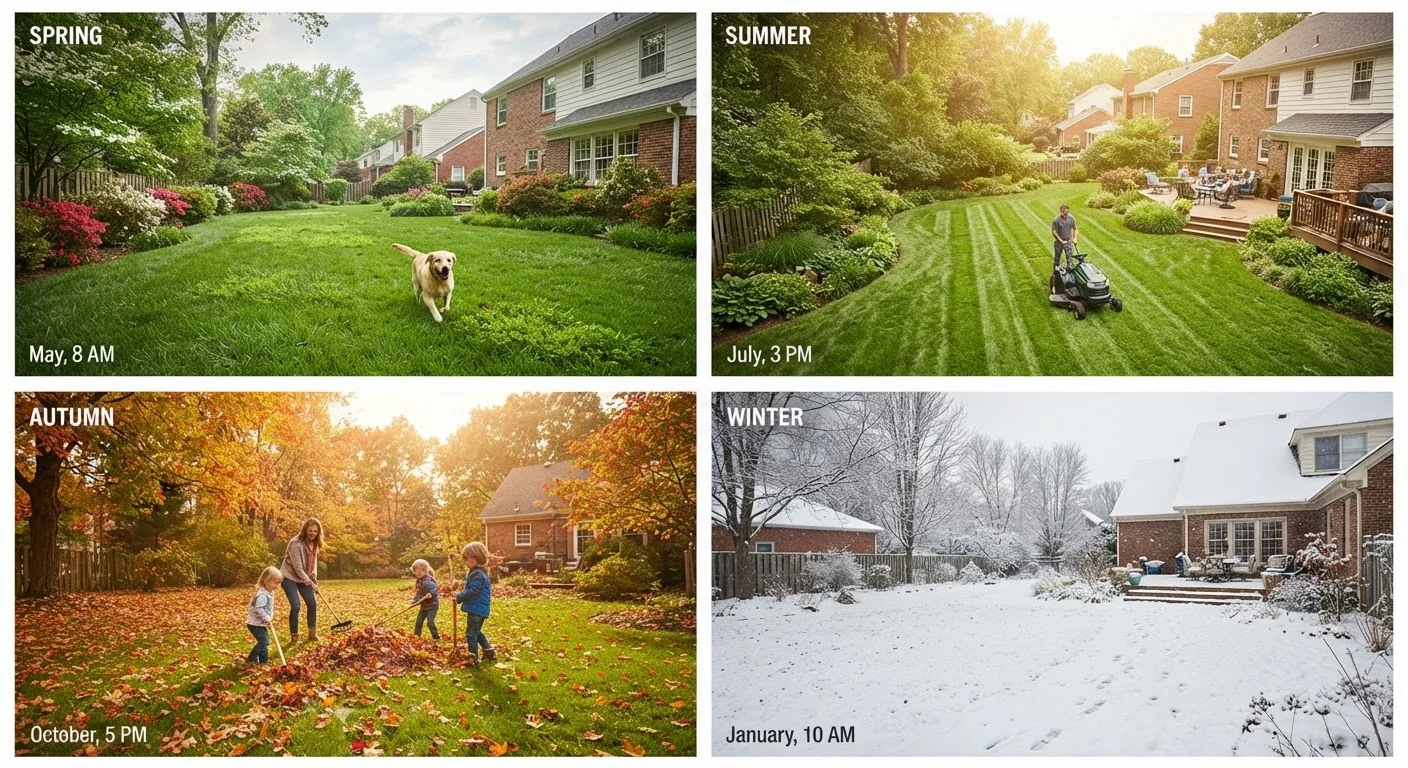
Why Seasonal Timing Is the Foundation of Lawn Health
A healthy lawn isn't just the result of fertilising or mowing regularly - it's the result of doing the right tasks at the right time. Grass is a living plant with distinct growth cycles, and its needs shift considerably as temperatures, daylight hours, and rainfall patterns change throughout the year. Ignoring seasonal timing - fertilising in the wrong month, aerating when the ground is frozen, or overwatering during a cool autumn - can waste effort and even set the lawn back.
This reference calendar breaks down lawn care by season, covering what to do, why it matters, and what to watch for. It's designed for cool-season and warm-season grasses common across the United States, though your local climate will always be the most reliable guide. For a broader look at how outdoor spaces change through the year, see the seasonal garden calendar.
| Cool-season grass growth window | Spring and early autumn (University cooperative extension general guidance) |
| Warm-season grass growth window | Late spring through summer (University cooperative extension general guidance) |
| Ideal overseeding time (cool-season grass) | Late August to mid-October |
| Recommended watering frequency | 1 inch per week (deep, infrequent) |
| Thatch concern threshold | Over ½ inch accumulation |
| Safe mowing rule | Never remove more than one-third of blade at once (Standard horticultural practice) |
Spring: Revival and Preparation
Spring is the most critical window for setting up a successful lawn year. As soil temperatures rise above 50°F, cool-season grasses like Kentucky bluegrass and tall fescue break dormancy and begin active growth. Warm-season grasses such as Bermuda and Zoysia emerge later, once temperatures are consistently warmer.
- Rake and dethatch: Remove matted dead grass (thatch) that accumulated over winter. A thin thatch layer is normal; anything over half an inch can block water and nutrients.
- Overseed bare patches: Spring is a good window for cool-season grass seeding. Warm-season grass is better seeded in late spring to early summer.
- Apply pre-emergent herbicide: Timing is key - apply before soil temperatures reach 55°F to prevent crabgrass germination without disrupting overseeding plans.
- Begin mowing: Once grass reaches one-third above your target mowing height, begin cutting. Never remove more than one-third of the blade at once.
- Fertilise cautiously: A light, balanced spring feed supports growth, but avoid heavy nitrogen applications early - they push excessive top growth at the expense of roots.
Cool-Season vs. Warm-Season: Timing Differs
The seasonal calendar applies differently depending on your grass type. Cool-season grasses (common in the northern US) thrive in spring and autumn and may go semi-dormant in summer heat. Warm-season grasses (typical in the South) peak in summer and go dormant in winter. Always match task timing to your specific grass type and local climate rather than following calendar dates alone.
Summer: Stress Management and Conservation
Summer places significant stress on lawns, particularly during heat waves or drought. The goal shifts from growth promotion to protection and conservation.
- Water deeply, not frequently: Aim for about one inch of water per week (including rainfall), applied in the early morning to reduce evaporation and fungal risk. Shallow, frequent watering encourages shallow roots.
- Raise your mowing height: Taller grass shades soil, reducing moisture loss and discouraging weed germination. Most lawn types benefit from being kept slightly longer in summer.
- Avoid fertilising warm-season grasses mid-summer: Heavy feeding during peak heat can stress already-taxed grass. Cool-season grasses often enter partial dormancy and require very little feeding.
- Monitor for pests and disease: Summer humidity creates ideal conditions for fungal diseases like brown patch. Yellowing, irregular patches are a common early sign.
Maintaining your lawn through summer supports the full property - a topic explored in our guide to seasonal home maintenance.
Autumn: Strengthening and Recovery
Autumn is the single most important season for cool-season grasses. As temperatures cool, grass rebounds from summer stress and roots deepen before winter dormancy. For warm-season grasses, autumn is primarily about preparation for dormancy.
- Aerate compacted soil: Core aeration in early autumn allows water, air, and nutrients to penetrate the root zone. This is especially valuable for high-traffic lawns.
- Overseed: Late summer to early autumn is the optimal window for overseeding cool-season lawns - soil is still warm enough for germination, but air temperatures are cooler and less stressful.
- Apply a winter fertiliser: A fertiliser higher in potassium (the third number in the NPK ratio) supports root strength and winter hardiness without stimulating excessive shoot growth.
- Keep mowing until growth stops: Avoid leaving grass too long over winter - it can mat and invite fungal problems - or cutting it too short, which stresses roots going into cold weather.
- Manage leaves promptly: Thick layers of fallen leaves block sunlight and trap moisture. Mulch them with a mower or rake regularly.
Thatch
A layer of dead and living organic matter (stems, roots, debris) that accumulates between the soil surface and the green grass blades. A thin layer is natural, but excessive thatch blocks water and nutrient absorption.
Core aeration
A process where small plugs of soil are removed from the lawn using a machine or manual aerator. It relieves soil compaction and allows air, water, and fertiliser to reach grass roots more effectively.
NPK ratio
The three-number label on fertiliser bags representing the percentages of nitrogen (N), phosphorus (P), and potassium (K). Each nutrient supports different aspects of plant growth and health.
Dormancy
A period of minimal or suspended growth that grass enters in response to extreme heat, cold, or drought. Dormant grass may appear brown but is not dead - it resumes growth when conditions improve.
Pre-emergent herbicide
A weed control product applied to soil before weed seeds germinate. It prevents germination rather than killing established weeds, and must be timed carefully to avoid interfering with grass seeding.
Winter: Dormancy and Light Maintenance
For most of the US, winter means lawn dormancy. Cool-season grasses may stay green in mild climates but slow dramatically; warm-season grasses turn brown and go fully dormant. Winter lawn care is largely about protection and planning.
- Stay off frozen or frosty grass: Traffic on frozen turf breaks brittle grass blades and compacts soil, causing damage that shows up in spring.
- Avoid de-icing salt near lawn edges: Salt runoff damages grass roots. Use sand or a calcium chloride-based product with care around lawn borders.
- Service your equipment: Winter is the ideal time to sharpen mower blades, change engine oil, and check spreader calibration so everything is ready for spring.
- Plan and order seed: Research grass varieties suited to your region and order early. Understanding your soil type, sun exposure, and usage needs helps you choose effectively. Our complete resource on starting and sustaining a healthy lawn covers selection in depth.
50°F
Soil temperature that triggers cool-season grass growth
Soil thermometers are an inexpensive way to confirm when conditions are right for spring tasks like seeding and fertilising.
1 inch
Weekly water target for most established lawns
This includes rainfall; a rain gauge is a simple way to track how much supplemental irrigation is actually needed.
The content on this site is for informational purposes only and is not a substitute for professional advice. Always consult a qualified professional for guidance specific to your situation.