

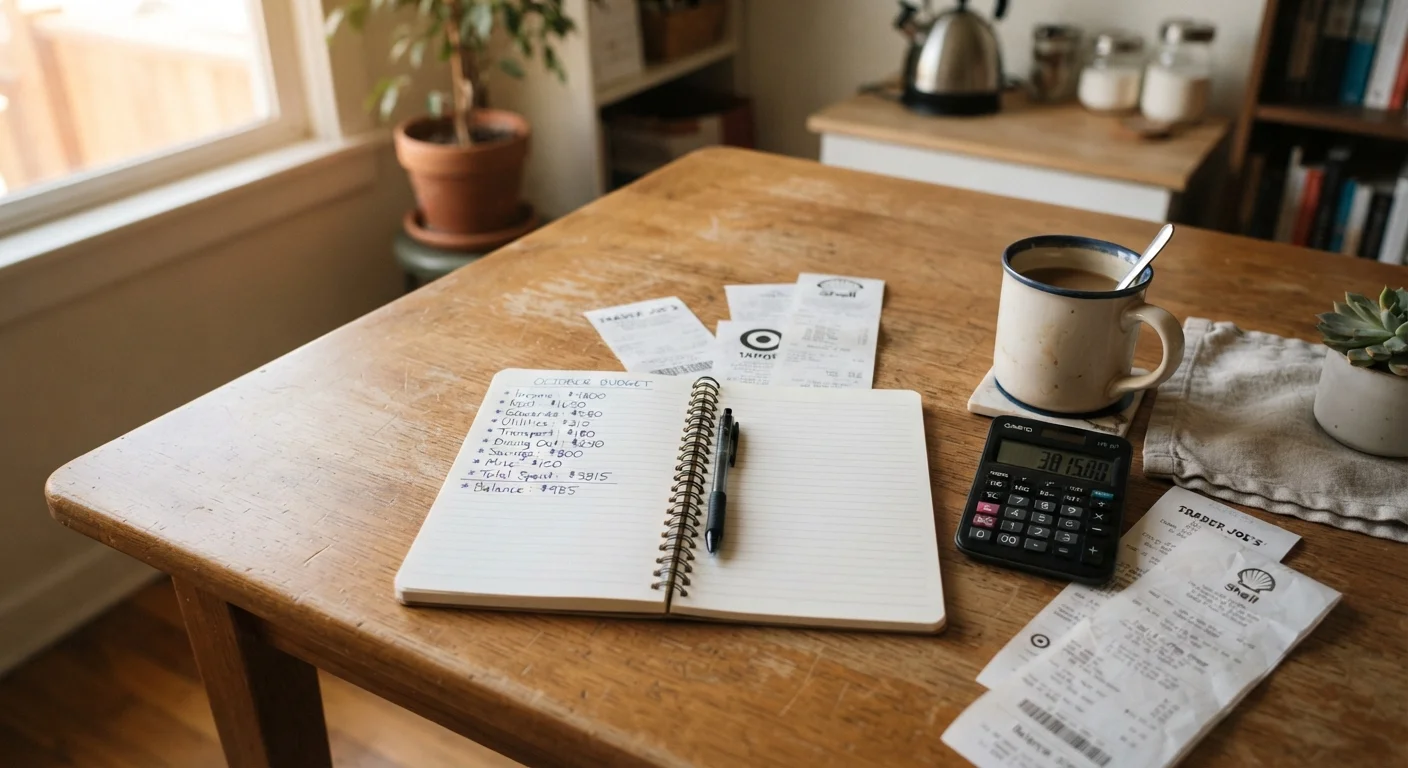
Why Most Budgets Break Down
Most budgets fail not because people lack discipline, but because the budget itself was unrealistic from the start. A spending plan built on round numbers and best-case assumptions runs into trouble the moment a car registration, a medical copay, or an annual subscription appears - costs that are entirely predictable, just not monthly.
The other common failure point is rigidity. A budget that treats every month as identical treats you as a machine rather than a person. Spending naturally shifts with seasons, life events, and income changes. When a plan can't flex, people abandon it entirely rather than adapt it.
Understanding these failure modes is the first step toward building something durable. As the budget that actually reflects real life framework puts it: the goal is a plan that accounts for both irregular expenses and human behavior. That's a significantly higher bar than simply listing income minus expenses.
Averaging Irregular Costs Is a Common Trap
Many people estimate irregular expenses by thinking of a 'typical' month - which, by definition, excludes unusual costs. Instead, look at a full 12 months of actual spending to calculate a true average. Using only recent months almost always understates what you'll actually spend across a year.
Choosing a Budgeting Method That Fits You
There is no universally correct budgeting system. The right method is whichever one you'll actually use. Here are three well-established approaches:
- 50/30/20: Allocate roughly 50% of after-tax income to needs (housing, food, utilities), 30% to wants, and 20% to savings and debt repayment. It's simple and flexible, making it a strong starting point for first-time budgeters.
- Zero-based budgeting: Every dollar of income is assigned a purpose until the balance reaches zero. This method offers maximum control and is particularly useful for people who want to optimize their spending but requires more time each month.
- Pay-yourself-first: Savings and investments are automatically transferred at the start of each pay period before any discretionary spending occurs. This works well for people who find it easier to spend what remains than to save what's left over.
If you're starting from scratch, the step-by-step monthly budget walkthrough provides a structured way to build your first plan. For a deeper comparison of approaches, the complete personal budgeting resource covers each method in detail.
Before choosing a budgeting method, audit one month of actual spending first - most people underestimate discretionary costs by 20-30%. The data reveals which system will fit your patterns.
Selecting a method before understanding your baseline means you're designing for an imaginary version of your finances, not your real one. A spending audit removes that guesswork.
Name your savings accounts after their goals - 'Car Registration Fund' or 'Holiday Fund' - rather than leaving them as generic savings accounts. The psychological friction of spending a named fund is meaningfully higher.
Behavioral finance research consistently shows that mental accounting - assigning specific purposes to money - improves follow-through on savings goals.
Setting Up Categories That Reflect Real Spending
Budget categories should describe how you actually spend money - not how you wish you spent it. Start by pulling three months of bank and credit card statements and sorting transactions into groups. Common categories include:
- Fixed essentials: Rent or mortgage, insurance premiums, loan minimums, subscriptions with set prices.
- Variable essentials: Groceries, utilities, gas, medications - costs that recur but fluctuate.
- Discretionary: Dining out, entertainment, clothing, hobbies.
- Irregular/annual: Car registration, holiday gifts, annual memberships, tax preparation fees.
- Savings and goals: Emergency fund contributions, retirement, travel, home repairs.
The irregular category is where most budgets leave a gap. These expenses are predictable in aggregate even when the exact timing varies. Add up a year's worth of irregular costs, divide by 12, and set that amount aside monthly in a dedicated account - sometimes called a sinking fund. The personal finance glossary has a plain-language explanation of sinking funds and other budget terms worth knowing.
~40%
Americans who cannot cover a $400 emergency
According to the Federal Reserve's Report on the Economic Well-Being of U.S. Households, a significant share of adults would struggle to cover an unexpected $400 expense without borrowing or selling something.
3-6 months
Recommended emergency fund size
The CFPB and most major financial education organizations recommend maintaining three to six months of essential living expenses in an accessible emergency fund.
Handling Irregular Expenses and Emergencies
Irregular expenses are predictable; emergencies are not. These two categories require different tools.
For irregular expenses, the sinking fund approach described above works well. For genuine emergencies - job loss, major medical costs, urgent home repairs - the standard guidance from financial educators and the Consumer Financial Protection Bureau (CFPB) is to build a dedicated emergency fund covering three to six months of essential expenses, kept in a liquid, accessible account separate from day-to-day spending.
Building that fund takes time. A practical approach is to treat it like any other monthly expense line: contribute a fixed amount each month, even if it's modest, until you reach your target. Once built, replenish it promptly after any withdrawal.
Don't Skip the Emergency Fund
An emergency fund is not optional for a budget that survives real life. Without it, any unexpected expense forces you into debt or causes you to abandon your spending plan entirely. Even a starter fund of $500-$1,000 provides meaningful protection while you build toward a fuller reserve.
For people managing existing debt while trying to save, the saving and debt hub offers clear guidance on prioritizing both goals without sacrificing one entirely.
Staying Consistent Over Time
A budget is not a one-time document - it's an ongoing practice. The habits that keep it alive are simpler than most people expect:
- Schedule a monthly review. Set aside 20-30 minutes at the end of each month to compare actual spending against your plan. This isn't about judgment; it's about data.
- Adjust categories, not just behavior. If you consistently overspend in one area, the category allocation may be unrealistic. Adjust the number before assuming a willpower problem.
- Revisit after life changes. A new job, a move, a child, or a paid-off debt each changes your cash flow. Update your budget within 30 days of any significant change.
- Automate where possible. Automatic transfers to savings and automatic bill payments reduce the number of decisions required each month, lowering the chance of drift.
For those sharing finances with a partner, the couples budgeting guide addresses the specific challenges of merging two spending styles. And for the longer view, the principles of long-term financial stability connects daily budgeting habits to broader financial health goals.
The 'One Change at a Time' Rule
When your budget feels overwhelming, resist the urge to overhaul everything at once. Pick the single category causing the most friction, address it, and let that change stabilize before moving on. Incremental adjustments are far more likely to stick than complete redesigns.
This article is for general informational and educational purposes only and does not constitute personalized financial advice. Consult a licensed financial professional for guidance tailored to your specific situation.
The content on this site is for informational purposes only and is not a substitute for professional advice. Always consult a qualified professional for guidance specific to your situation.