

Why One 'Savings Account' Isn't Enough
Many people treat savings as a single undifferentiated pile - money that isn't being spent right now. The problem with this approach is that when an unexpected car repair collides with a planned vacation or a pending holiday budget, everything competes for the same dollars. The result is predictable: the urgent wins, the planned gets raided, and the long-term goal stalls.
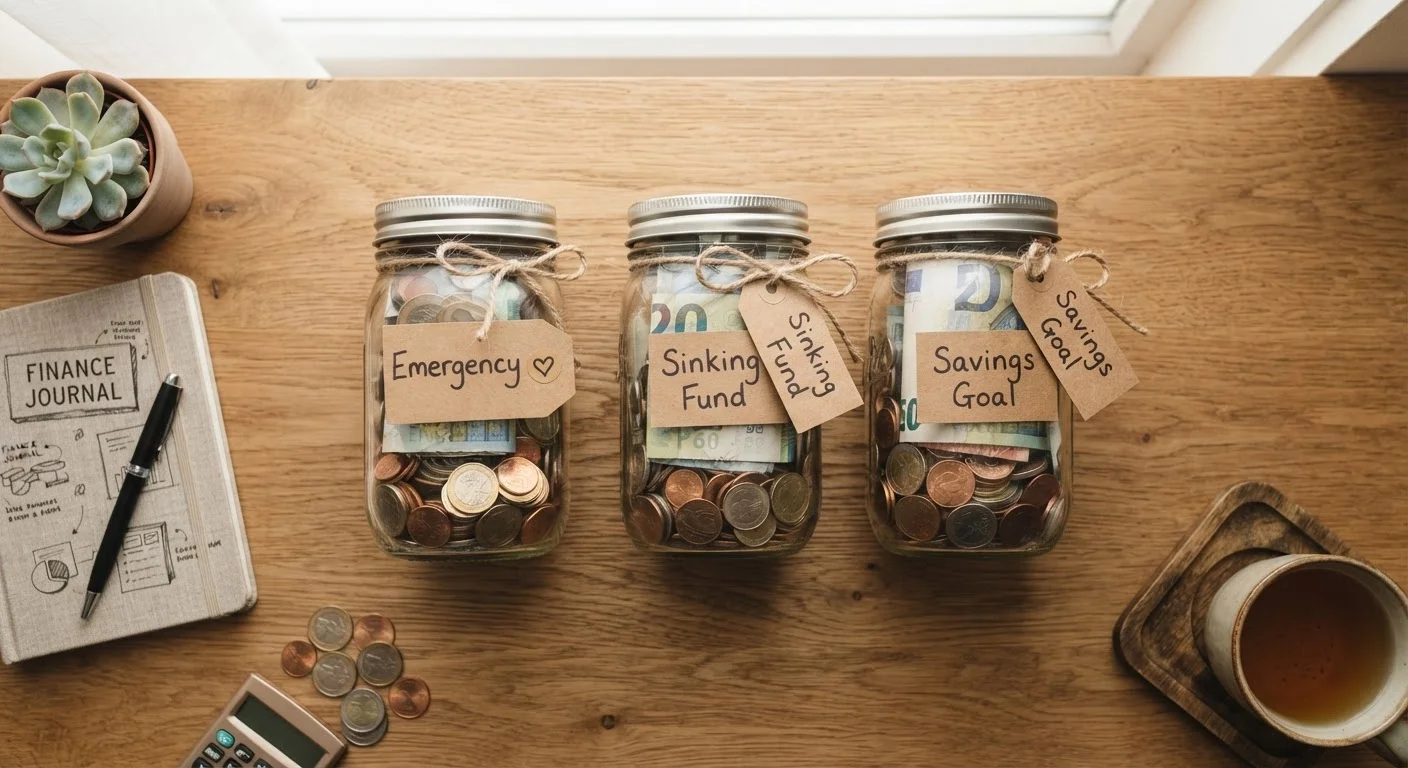
A more resilient structure separates savings into three clearly defined categories, each with its own purpose and rules. Understanding the distinctions - and funding each deliberately - is one of the most practical moves you can make inside a monthly budget. For a broader look at how structured approaches support consistent saving, see budgeting methods that actually support long-term saving.
~57%
Americans unable to cover a $1,000 emergency with savings
According to Bankrate's annual emergency savings survey, a majority of U.S. adults would struggle to cover an unexpected $1,000 expense from savings alone.
3-6 months
Recommended emergency fund size in living expenses
The Consumer Financial Protection Bureau (CFPB) and most mainstream financial educators recommend covering three to six months of essential expenses.
4.6%
U.S. personal savings rate (approximate recent range)
The U.S. Bureau of Economic Analysis tracks the personal saving rate; it has fluctuated between roughly 3% and 5% in recent years, underscoring how thin the margin is for most households.
The Emergency Fund: Your Financial Circuit Breaker
An emergency fund exists for one purpose: to absorb genuine financial shocks without forcing you to take on debt or liquidate other savings. Think sudden job loss, a medical bill not covered by insurance, or a critical home repair. These events are unplanned, often urgent, and can be financially devastating without a dedicated buffer.
The conventional guidance - supported by organizations like the Consumer Financial Protection Bureau (CFPB) - points to three to six months of essential living expenses as a reasonable target. Getting there takes time, but even a starter fund of a few hundred dollars meaningfully reduces the likelihood of reaching for a credit card when something goes wrong.
Keep Your Emergency Fund Accessible but Separate
Your emergency fund should be liquid - available within a day or two - but not so accessible that it blends with your checking account. A dedicated high-yield savings account at a separate institution works well for many people. It earns some interest while remaining mentally and logistically distinct from your day-to-day spending money.
Crucially, an emergency fund is not for irregular-but-predictable expenses like car registration or holiday gifts. Those have their own category. For a deeper look at sizing and building this fund step by step, see the logic, math, and method behind building an emergency fund.
Sinking Funds: Smoothing Out Irregular Costs
A sinking fund is money you set aside each month for an expense you know is coming - just not every month. Car registration, annual insurance premiums, holiday gifts, a back-to-school shopping run, or a planned home maintenance project are all classic sinking fund candidates. Because these costs are predictable in category, even if variable in exact timing, you can calculate a monthly contribution and build toward them gradually.
For example, if you expect to spend $600 on holiday gifts in December, setting aside $50 per month starting in January means the money is ready - and your regular budget is never blindsided. Sinking funds help you save in small increments so irregular costs don't derail your financial plan.
Unlike an emergency fund, a sinking fund is meant to be spent in full. Once the expense is paid, you start refilling the bucket for the next cycle. For a full walkthrough of how sinking funds differ from emergency funds and how to set one up, see sinking funds: saving for planned expenses without disrupting your budget.
Savings Goals: Building Toward a Defined Milestone
Savings goals are forward-looking and accumulative. Unlike a sinking fund - which empties and refills - a savings goal is a bucket you keep filling until you reach a target: a house down payment, a college fund, a vehicle purchase, or early retirement. These goals typically span months or years and require consistent, intentional contributions.
Because savings goals are long-horizon commitments, they are generally funded after the emergency fund is established and active sinking funds are covered. They're aspirational by design, but they work best when attached to a specific dollar target and timeline, which makes the required monthly contribution concrete and trackable.
Tracking your savings rate - the share of income you set aside - is one of the clearest ways to monitor whether your savings goals are progressing at the pace you need.
“A goal without a plan is just a wish. Savings goals only become real when they're connected to a specific number, a deadline, and a monthly contribution that fits your budget.”
— Consumer Financial Protection Bureau, U.S. federal agency providing financial education resources
How to Order and Fit All Three Into Your Budget
The sequencing matters. Financial educators broadly recommend this order of priority:
- Build a starter emergency fund - even $500 to $1,000 - before doing much else with surplus income.
- Fund active sinking funds for known upcoming expenses so they don't ambush your cash flow.
- Grow your emergency fund to three to six months of essential expenses over time.
- Contribute to long-term savings goals with what remains after the first two layers are covered.
This doesn't mean savings goals are unimportant - it means the first two layers protect your ability to stay on track when life doesn't go according to plan. If your savings efforts tend to stall before they gain momentum, understanding why savings plans break down can help you identify and fix the structural gaps.
This article is for general informational and educational purposes only and does not constitute personalized financial, investment, tax, or legal advice. For guidance tailored to your specific situation, consult a qualified financial professional.
Frequently Asked Questions
Most financial educators recommend three to six months of essential living expenses. The right amount depends on factors like job stability, household size, and whether you have dependents. Those with variable income or a single earner in the household may benefit from targeting the higher end of that range.
Technically yes, but it's generally not advisable. Mixing funds makes it harder to track what's available for true emergencies versus planned expenses. Using separate labeled accounts - or sub-accounts offered by many online banks - keeps each bucket clearly defined and protected.
A sinking fund covers a known, recurring or irregular expense - like car registration or holiday gifts - that you'll spend in full and refill. A savings goal targets a future milestone, like a down payment or a college fund, where the money continues to accumulate toward a defined target.
Many financial educators suggest building a small starter emergency fund - often around $1,000 - before aggressively paying down debt, to avoid going deeper into debt when an unexpected expense arises. The sequencing beyond that depends on your interest rates and overall financial situation. Consulting a qualified financial adviser can help you prioritize for your specific circumstances.
Start small and prioritize. Even $25 per month toward an emergency fund builds a habit and a cushion. Once that's on track, add sinking fund contributions for your most pressing irregular expenses. Savings goals can be funded with whatever remains, scaled up as your income allows.
The content on this site is for informational purposes only and is not a substitute for professional advice. Always consult a qualified professional for guidance specific to your situation.