

Why the Envelope Method Still Makes Sense
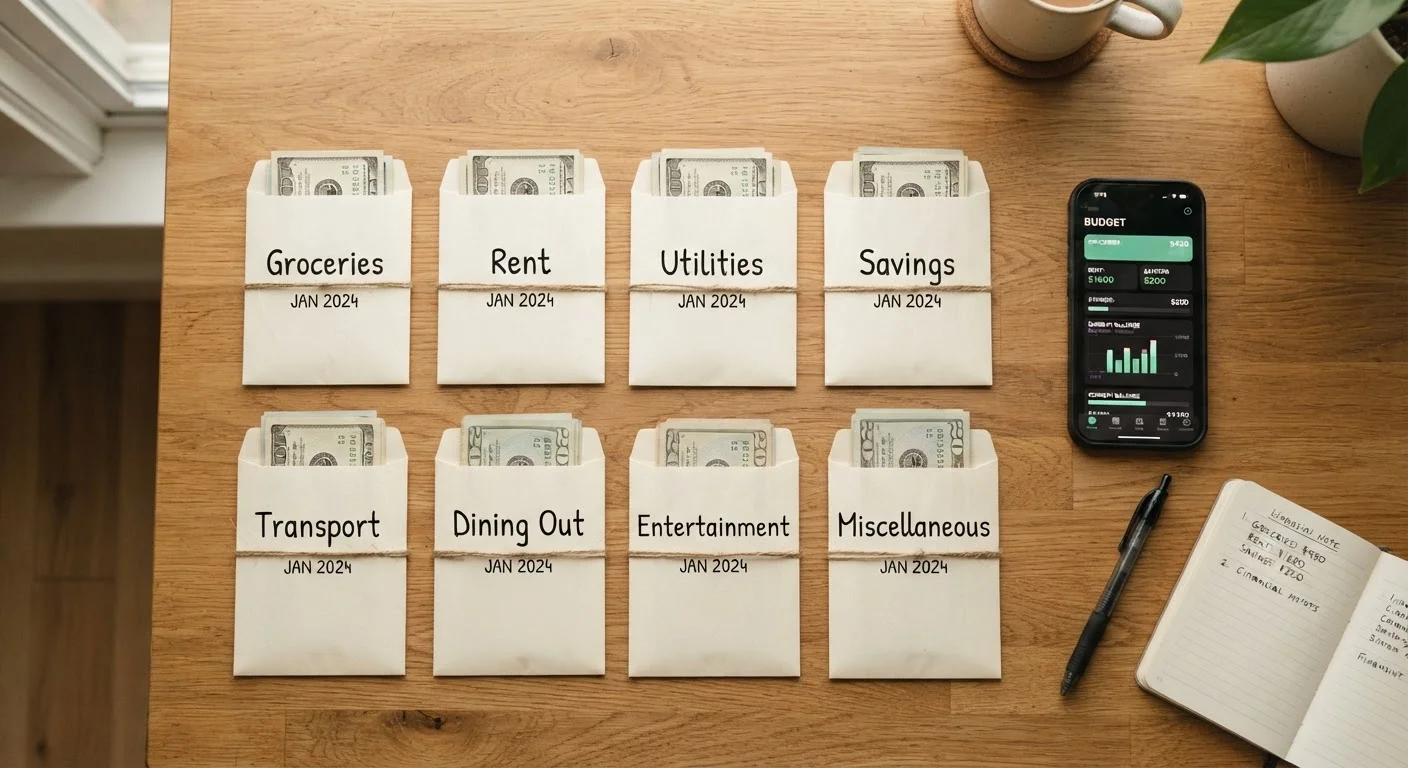
The envelope method dates back to an era when households managed everything in cash - literally placing physical bills into labeled envelopes for groceries, utilities, and rent. When the grocery envelope was empty, you stopped buying groceries. The simplicity was also the discipline.
Most Americans today rarely use cash, yet the logic behind envelopes remains as sound as ever: spending limits must be visible, finite, and tied to specific categories before money is spent, not after. Research from behavioral economics consistently shows that people spend more when they can't immediately see a declining balance - which is exactly what most bank accounts and credit cards obscure.
Adapting the method to digital tools doesn't change the core constraint. It just replaces paper with pixels. Whether you use a spreadsheet column or an app category, the rule is identical: when the envelope is empty, the spending stops. For a broader comparison of how this approach stacks up against other frameworks, see our guide to popular budgeting methods.
What you will need
How to Set Up Your Digital Envelope System
The steps below will walk you through building a functioning digital envelope budget from scratch. You'll need the tools listed here before you begin:
Bank or credit card statements
Reveal your actual spending patterns so you can set realistic category limits.
Spreadsheet (Google Sheets or Excel)
Create a free, fully customizable digital envelope system without any app required.
Budgeting app (e.g., a zero-based or envelope-style app)
Automates transaction imports and running balances across your digital envelopes.
Calculator
Quickly verify that your envelope totals don't exceed your monthly take-home pay.
Calculate your monthly take-home income
Add up every reliable source of after-tax income you receive in a typical month - wages, freelance payments, side income. If your income varies, use a conservative estimate (your lowest recent month) so you never over-allocate.
List every spending category you need
Review your last two or three months of statements and write down every category where money actually went - housing, utilities, groceries, transportation, dining out, subscriptions, personal care, entertainment, savings, and debt payments. Aim to capture reality, not an ideal version of your spending.
Assign a dollar amount to each envelope
Based on your statement history, assign a realistic monthly spending limit to each category. Start with fixed expenses (rent, insurance, minimum debt payments), then allocate remaining income across variable categories. The total of all envelopes must equal - not exceed - your take-home income. This zero-sum discipline is the engine of the method.
Build your digital envelopes
In a spreadsheet, create one row per category with three columns: Budgeted, Spent, and Remaining. The Remaining column auto-calculates as Budgeted minus Spent. In a budgeting app, this structure is usually built in - simply name each category and enter the allocated amount. Either approach creates the visual boundary that makes the system work.
Log every transaction as it happens
Each time you spend, record the amount in the correct envelope immediately - or at least daily. If you use a budgeting app that connects to your bank, review imported transactions each evening to confirm category assignments. Timely logging is what separates a working system from a neglected spreadsheet.
Respect the envelope limit - or make a deliberate trade
When an envelope hits zero, spending in that category stops for the month. If an urgent need arises, you may move money from a lower-priority envelope - but do it consciously and record the transfer. This deliberate trade-off is the behavioral core of the method; it forces an active choice rather than an unconscious swipe.
Review and reset at month's end
Before your next income arrives, review every envelope. Note which categories consistently ran out early (may need more funding) and which always had surplus (may be over-funded). Adjust allocations for the coming month. This monthly review is how the system improves over time rather than staying a static snapshot.
Digital Envelopes Work Best for Variable Spending
Fixed expenses like rent and insurance don't need an envelope - they're predictable and automatic. Focus your envelope energy on variable categories such as groceries, dining, entertainment, and clothing, where day-to-day decisions actually affect your balance. That targeted attention delivers the most behavioral benefit with the least administrative overhead.
Don't Let Transfers Become a Habit
Moving money between envelopes is a legitimate safety valve, but doing it routinely signals that your category limits aren't realistic. If you transfer from savings or debt-payment envelopes to cover discretionary spending, you're borrowing from your future self. Track every transfer and review the pattern monthly - it's one of the most informative data points your budget can produce.
Always Fund an Emergency Envelope First
Before allocating money to any discretionary category, set aside a dedicated emergency envelope - separate from your monthly spending budget. Financial educators broadly recommend working toward three to six months of essential expenses in an accessible savings account. Without this buffer, any unexpected expense will force you to break your envelope limits or take on debt, undermining the entire system.
Once your system is running, the monthly review in Step 7 is where most of the learning happens. Budgets that improve over time outperform perfect first drafts every time. For more on building budgeting into a lasting habit, the complete personal budgeting resource covers the full arc from setup to long-term consistency.
Common Pitfalls and How to Avoid Them
Even a well-designed envelope system can stall. Here are the patterns most likely to derail it - and straightforward fixes:
- Too many envelopes: Tracking 25 categories creates fatigue. Start with 8-12 and consolidate small categories until the system feels manageable.
- Ignoring irregular expenses: Annual subscriptions, car registration, and holiday gifts don't appear monthly, but they will arrive. Divide their annual cost by 12 and fund a dedicated envelope each month so the expense is never a surprise. This is a core idea behind budgeting for real-life irregularity.
- Treating credit card spending differently: If you pay with a card, log the transaction in your envelope the same day - not when the statement arrives. The card is just a payment mechanism; the envelope limit is what governs the decision.
- Skipping the monthly reset: An envelope budget from three months ago is a historical document, not a live plan. Block 20-30 minutes at month-end to reset and realign.
If you find envelope budgeting too rigid for your lifestyle, that's useful information too. It may mean a different framework fits better - our overview of budgeting methods for long-term saving can help you evaluate alternatives.
This article is for general informational purposes only and does not constitute personalized financial advice. Consult a qualified financial professional for guidance specific to your situation.
The content on this site is for informational purposes only and is not a substitute for professional advice. Always consult a qualified professional for guidance specific to your situation.