

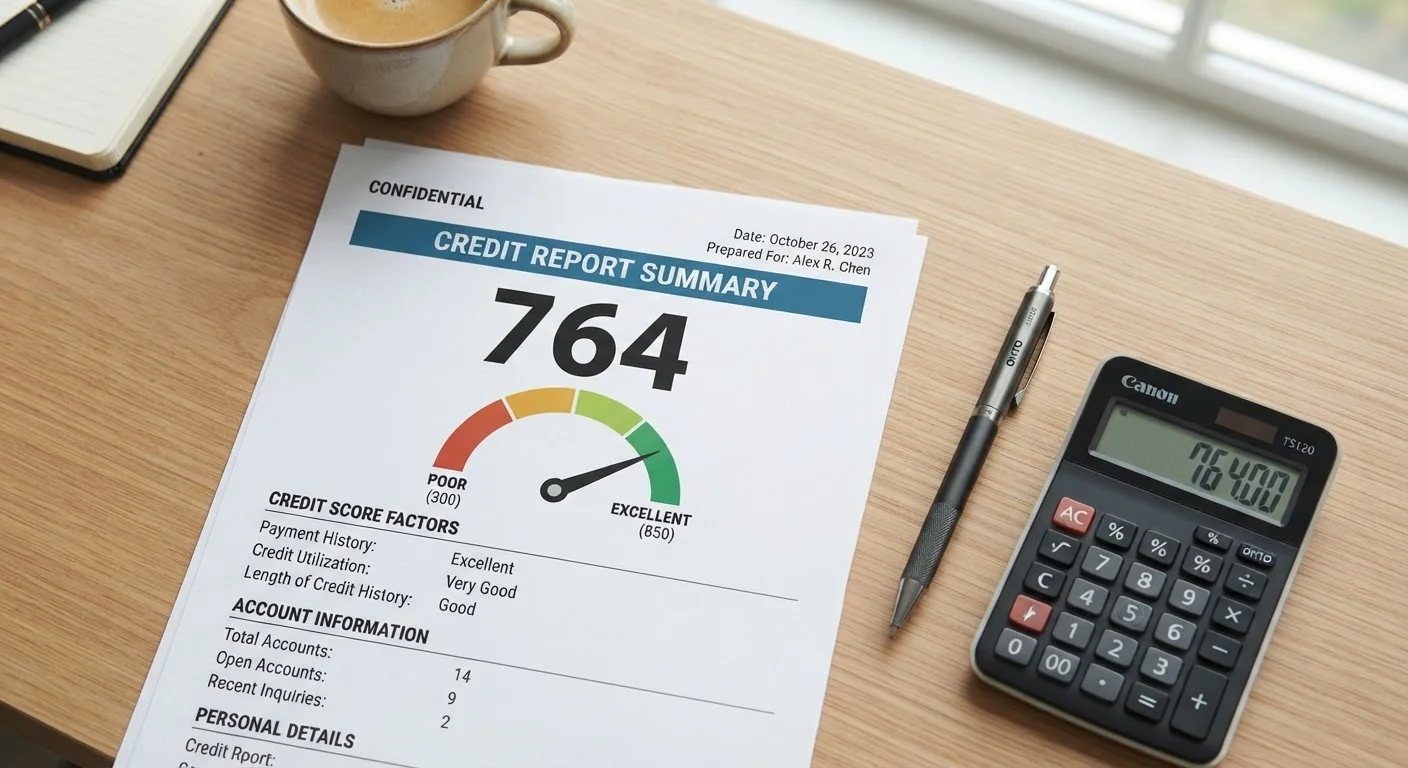
Where Your Score Comes From
Your credit score is not a judgment about your character - it's a statistical summary of your borrowing behavior drawn from your credit report. The three major credit bureaus (Equifax, Experian, and TransUnion) collect data from lenders, credit card issuers, and other creditors. Scoring models like FICO then analyze that data and produce a number.
Because each bureau may hold slightly different information, you technically have three credit reports and potentially three different scores. That's why it's worth reviewing all three. Under federal law, you can access a free report from each bureau annually at AnnualCreditReport.com.
Multiple Scores Are Normal
Because lenders don't all report to every bureau, your Equifax, Experian, and TransUnion reports may contain different information - which means your scores can differ across them. When a lender checks your credit, they may pull from one or all three bureaus depending on the type of credit you're applying for. Focusing on the underlying habits that drive all scoring models is more productive than fixating on a single number.
The Five Factors That Shape Your Score
FICO breaks its scoring formula into five weighted categories:
- Payment history (35%): Whether you pay on time is the dominant factor. Even one missed payment can meaningfully drag your score down, particularly if you have a shorter credit history.
- Amounts owed / Credit utilization (30%): This measures how much of your total available credit you're using. Using a large portion signals financial stress to lenders. Keeping utilization below 30% is a widely cited guideline.
- Length of credit history (15%): Older accounts and a longer average account age generally help. This is why financial educators often caution against closing old credit cards unnecessarily.
- Credit mix (10%): Having a variety of account types - such as a credit card, an auto loan, and a mortgage - can modestly improve your score by showing you can manage different debt forms.
- New credit / Hard inquiries (10%): Applying for multiple new accounts in a short period can lower your score temporarily, as each application triggers a hard inquiry.
35%
Weight of payment history in FICO scoring
According to FICO, on-time payment history is the single largest contributor to your credit score.
~59%
Share of Americans with a 'good' score or higher
FICO data has consistently shown a majority of U.S. consumers score 670 or above, though a significant portion still fall below that threshold.
7 years
How long most negative items stay on your report
Under the Fair Credit Reporting Act (FCRA), most derogatory marks - including late payments and collections - must be removed after seven years.
Why the Number Matters Beyond Borrowing
Most people associate credit scores with loan approvals, and that's valid - a higher score typically unlocks lower interest rates. On a 30-year mortgage, a difference of even half a percentage point in rate can translate to tens of thousands of dollars in total interest paid.
But the number's reach extends further. Landlords frequently use credit scores to screen rental applicants. In most states, auto and home insurers are permitted to factor credit-based insurance scores into premium calculations - a concept explored in detail in our article on factors that influence your auto insurance premium.
It's equally important to understand what a credit score doesn't measure. Income, net worth, and savings are invisible to it. Our companion piece on what a credit score actually measures - and what it doesn't unpacks those blind spots in detail. Lenders also weigh your debt-to-income ratio alongside your score, since DTI captures your income-to-debt picture that credit scores leave out.
Check Your Credit Report Regularly
Errors on credit reports are more common than many people realize, and inaccurate information can drag your score down unfairly. Review your reports from all three bureaus at least once a year via AnnualCreditReport.com. If you spot an error, you have the right under the Fair Credit Reporting Act to dispute it with the bureau directly.
Common Misconceptions Worth Clearing Up
Credit scoring is surrounded by persistent myths that can lead people to make counterproductive decisions. For a full breakdown, see our article on widespread credit score myths. A few of the most consequential to know:
- Carrying a balance does not help your score. You don't need to pay interest to build credit. Paying your statement balance in full each month keeps utilization low and avoids interest charges.
- Your score is not one fixed number. It varies by bureau, by scoring model, and changes over time as new data arrives.
- Closing a paid-off account can hurt. Doing so reduces your total available credit, which can spike your utilization ratio and shorten your average account age.
This article provides general financial education and is not personalized financial or credit advice. Consult a licensed financial professional for guidance specific to your situation.
Frequently Asked Questions
Generally, a FICO Score of 670 or above is considered 'good,' while 740 and above is 'very good' and 800+ is 'exceptional.' Scores below 580 are typically considered poor and may limit your borrowing options. Different lenders set their own thresholds, so requirements vary.
Your credit score can change whenever your credit report is updated, which happens as lenders report new information - typically monthly. A single on-time payment or a new account can shift your score. Major changes, like paying off a large balance, may produce noticeable movement.
No. Viewing your own score is a 'soft inquiry' and has no effect on your score. Only 'hard inquiries' - triggered when a lender pulls your report to make a credit decision - can temporarily lower your score by a few points.
Yes, with your written permission, landlords and some employers can access a version of your credit report. Most landlords use it to assess rental risk. Employers in certain industries may review it as part of background screening, though practices and legal restrictions vary by state.
Most negative items - such as late payments, collections, and charge-offs - remain on your credit report for seven years. A Chapter 7 bankruptcy can stay for up to ten years. Over time, these items carry less weight as newer positive history accumulates.
The content on this site is for informational purposes only and is not a substitute for professional advice. Always consult a qualified professional for guidance specific to your situation.