

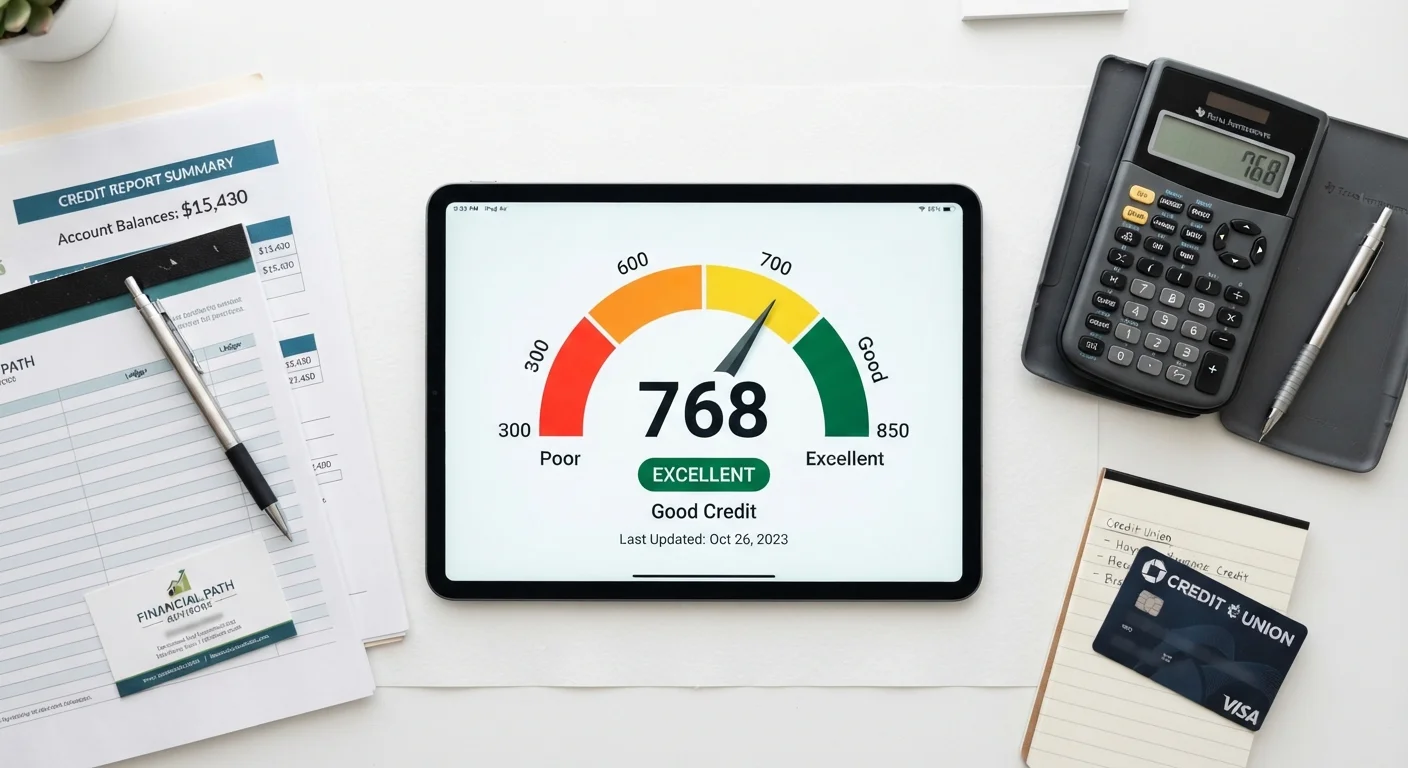
The Five Factors That Actually Drive Your Score
Credit scores are calculated from specific data points in your credit report - and the weighting is deliberately structured to predict one thing: the probability that you will repay a debt as agreed. Here is what each factor covers under the FICO model, which remains the most widely used by lenders:
- Payment history (35%): Whether you have paid bills on time. Even one missed payment can cause a significant drop.
- Amounts owed / credit utilization (30%): How much of your available revolving credit you are currently using. Keeping utilization below 30% is widely recommended as a general guideline.
- Length of credit history (15%): How long your accounts have been open. Older accounts generally help your score.
- Credit mix (10%): The variety of credit types you manage - installment loans, credit cards, mortgages, and so on.
- New credit (10%): Recent applications for credit, each of which generates a hard inquiry.
For a deeper look at how each factor is weighted and applied, the credit scores decoded guide walks through the mechanics in detail.
35%
Weight of payment history in FICO scores
According to FICO's published scoring criteria, on-time payment history is the single largest factor in calculating your score.
~49%
Americans with a "very good" or "exceptional" FICO score
FICO data has indicated that roughly half of U.S. consumers score 740 or higher, qualifying them for more competitive lending terms.
300-850
Standard FICO score range
Most FICO and VantageScore models use this range; scores above 670 are generally considered good by most lender benchmarks.
What a Credit Score Deliberately Leaves Out
This is where many Americans run into confusion. A credit score is not a holistic measure of financial health - it is a narrow, specific tool. Several significant financial factors simply do not appear in it:
- Income and employment: Earning $30,000 or $300,000 a year has no direct effect on your score. A high earner who misses payments will score lower than a modest earner who pays consistently.
- Savings and investments: Bank account balances, retirement funds, and brokerage assets are not reported to credit bureaus and carry zero weight in scoring.
- Net worth: Someone can have a seven-figure net worth and a mediocre credit score - or vice versa. For a fuller picture of financial standing, understanding your net worth is a useful companion exercise.
- Rent and utility payments: In most cases, paying rent or utilities on time does not automatically boost your score, because landlords and utility companies typically don't report to credit bureaus unless you default.
Your Score May Vary by Source
There is no single universal credit score. FICO alone has dozens of scoring versions, and VantageScore is a separate competing model. The score you see through a bank app or credit monitoring service may differ from the one a specific lender pulls. This is normal and expected - what matters most is the underlying credit behaviors that all models share.
Lenders often look beyond credit scores as well. Your debt-to-income ratio - total monthly debt payments divided by gross monthly income - is a separate metric that lenders frequently analyze alongside your score.
Why the Score Still Matters - and How to Protect It
Despite its narrow scope, a credit score carries outsized practical consequences. Mortgage lenders, auto lenders, credit card issuers, landlords, and in some states employers all use it as part of their evaluation process. A lower score can mean higher interest rates, larger required deposits, or outright denial of credit.
The Fastest Way to Protect Your Score
Set up automatic minimum payments on every credit account to avoid accidental late payments, which cause the most damage. Then pay the full balance when possible to keep utilization low. Even small, consistent habits compound into meaningful score improvements over time.
Because payment history dominates the calculation, the most reliable path to a strong score is straightforward: pay every bill on time, every month, without exception. The second most impactful lever is keeping credit card balances well below their limits.
It also helps to be realistic about what improving a score takes. There are no guaranteed shortcuts - and several commonly circulated tactics can actually backfire. For a clear breakdown of what not to do, the article on credit myths that cost Americans money addresses the most damaging misconceptions directly.
This article is for general informational and educational purposes only and does not constitute personalized financial, legal, or credit advice. Consult a qualified financial professional for guidance specific to your circumstances.
Frequently Asked Questions
No. Income is not included in credit score calculations. Scoring models only analyze data found in your credit report, such as payment history and balances owed. Lenders may separately review your income when evaluating a loan application, but it does not move your score up or down.
No. Checking your own credit score is a "soft inquiry" and has no effect on your score. Only "hard inquiries" - triggered when a lender formally reviews your credit for a new application - can cause a minor, temporary dip. For more on this common misconception, see our article on <a href="/money-finance/money-fundamentals/widespread-credit-score-myths-that-lead-people-astray">widespread credit score myths</a>.
Requirements vary by lender and loan type, but a score of 670 or above is generally considered "good" under the FICO model. Scores above 740 often qualify for more favorable interest rates. This article provides general information - consult a licensed financial professional for guidance specific to your situation.
Most negative items - such as late payments or collections - remain on your credit report for seven years. Bankruptcies can stay on for up to ten years depending on the type. Over time, older negative items carry less weight in scoring calculations.
No. Your credit report is a detailed record of your credit history maintained by the three major bureaus: Equifax, Experian, and TransUnion. A credit score is a numerical summary calculated from that report. You can request free copies of your credit reports at AnnualCreditReport.com, the official federally mandated source.
The content on this site is for informational purposes only and is not a substitute for professional advice. Always consult a qualified professional for guidance specific to your situation.