

Our Verdict
The good debt vs. bad debt distinction is a helpful mental model, not an ironclad rule. Borrowing can be productive when it finances something likely to grow in value or earning potential, and the cost is manageable relative to your income. But no debt is risk-free, and the same loan can be helpful or harmful depending on an individual's circumstances, interest rate, and repayment ability.
This framework is most useful for readers evaluating a major borrowing decision - such as a mortgage, student loan, or auto loan - and wanting to weigh likely long-term value against real costs and risks.
Where the 'Good Debt' Concept Comes From
The idea that some debt is productive while other debt is destructive has been a staple of personal finance education for decades. At its core, the distinction rests on a simple question: Does this borrowing create future value that outweighs its cost?
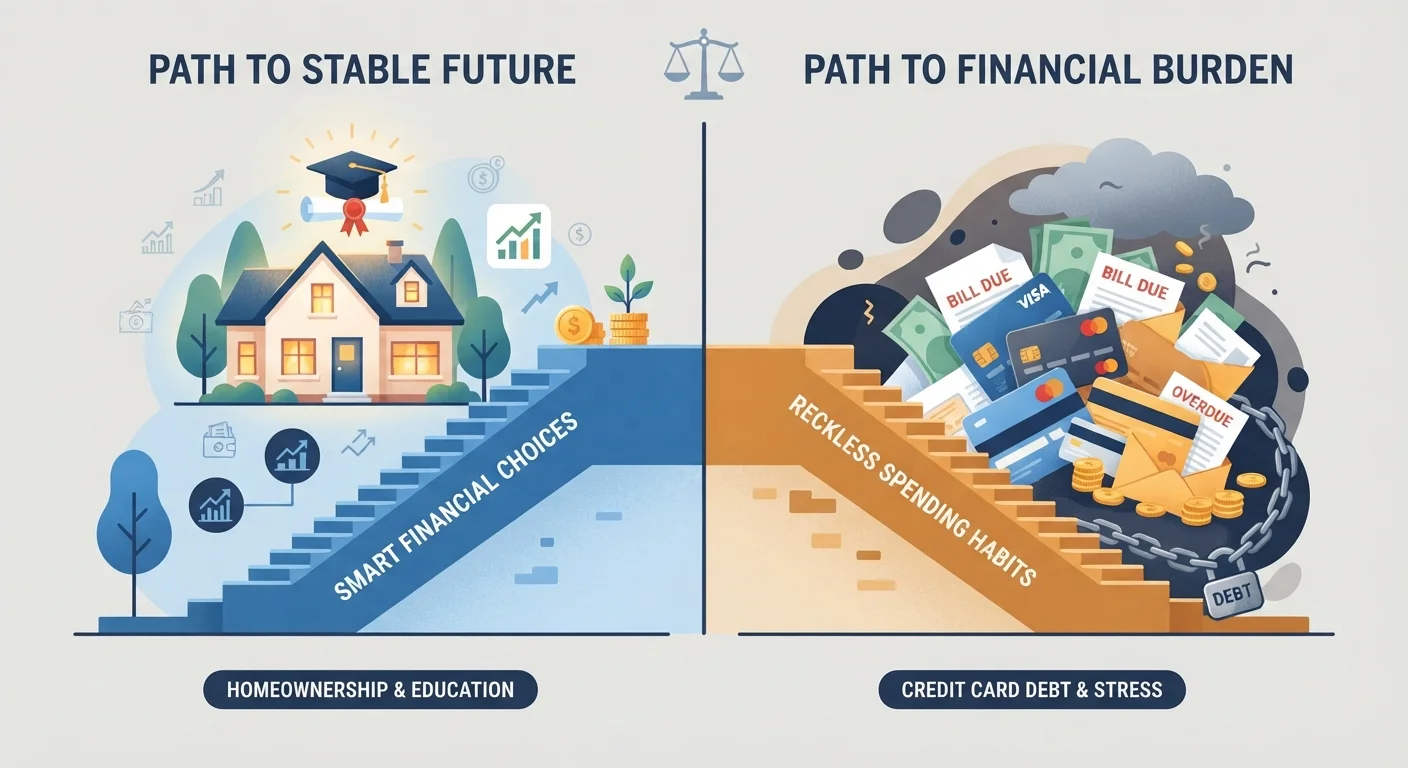
A mortgage, for example, finances an asset that historically tends to appreciate over time and provides housing stability along the way. A federal student loan, in theory, increases earning potential. These are commonly labeled 'good debt.' Credit card balances carrying 20%+ annual interest rates on discretionary purchases - clothing, electronics, dining - are commonly labeled 'bad debt,' because the interest expense almost always exceeds any benefit received.
This framework is genuinely useful as a starting point. But it can mislead readers into treating borrowing as automatically safe if it fits a familiar category. A student loan for a program with poor employment outcomes at a high interest rate is not straightforwardly 'good.' A mortgage taken at an unaffordable payment level carries serious risk regardless of asset appreciation potential. For more on terminology, see the plain-language debt glossary that defines terms like APR and principal clearly.
Can finance assets that grow in value over time
Mortgages allow people to own property that may appreciate over the long term, building equity that renting does not. This is a core reason homeownership is often part of long-term financial planning.
May increase future earning capacity
Education financing, when matched to programs with strong employment outcomes, can raise lifetime income enough to justify the upfront cost. The key word is 'can' - outcomes vary significantly by field and institution.
Enables major purchases without depleting savings
Spreading a large necessary expense like a home or vehicle over time preserves liquid savings for emergencies, reducing the risk of financial disruption from unexpected costs.
Responsible repayment builds a credit history
Consistently repaying debt on time contributes to a stronger credit profile, which can lower borrowing costs in the future. Credit history is one of the key factors used in credit scoring models.
The Disadvantages: Why Even 'Good' Debt Carries Real Risk
No debt is without cost or risk, and treating certain categories as automatically safe is one of the most common borrowing mistakes.
Expected future value is never guaranteed
Home values can decline, degrees don't always lead to higher-paying work, and businesses funded by loans can fail. Labeling debt 'good' based on an assumed outcome that may not materialize is a real financial risk.
Interest compounds and accumulates regardless of intent
Even a 'productive' loan costs money every month in interest. Over a 30-year mortgage, total interest paid can rival or exceed the original purchase price of the home, depending on the rate.
Debt loads limit future financial flexibility
High monthly obligations reduce how much income is available for saving, investing, or managing emergencies. This constraint persists for the full loan term, regardless of how circumstances change.
Variable-rate debt creates payment uncertainty
Some loans - including certain student loans, HELOCs, and adjustable-rate mortgages - carry interest rates that can rise, increasing monthly payments at times that may be financially inconvenient.
Consumer debt typically costs far more than it returns
Credit card balances at high interest rates grow quickly, and the items purchased rarely retain value. Carrying a revolving balance on high-rate consumer credit is widely understood to be one of the most costly borrowing patterns.
For a broader look at how popular beliefs about debt can stall financial progress, the common debt myths article is worth reading alongside this one.
How to Evaluate Any Debt Before You Take It On
Rather than asking 'Is this good debt or bad debt?', more productive questions include:
- What is the total cost? Add up interest paid over the full loan term, not just the monthly payment.
- Does the asset or benefit appreciate? Will this loan finance something likely to grow in value, increase income, or provide lasting utility?
- Is the payment sustainable? General guidance from consumer finance organizations suggests keeping total debt payments well within your monthly take-home income - but your specific situation varies.
- What happens if circumstances change? Job loss, illness, or rate increases on variable-rate loans can turn manageable debt into a crisis quickly.
~$1.14T
U.S. credit card debt outstanding
According to Federal Reserve data, total revolving consumer credit in the United States has exceeded one trillion dollars, reflecting the scale of high-interest consumer borrowing.
20%+
Average credit card interest rate
The Federal Reserve has reported average credit card interest rates exceeding 20% annually in recent periods, making unpaid balances among the most expensive common forms of consumer debt.
The grey area between good and bad debt is also worth examining - many real borrowing decisions don't fit neatly into either category.
This article is for general informational and educational purposes only and does not constitute personalized financial, investment, tax, or legal advice. Readers should consult a qualified financial professional before making borrowing or debt management decisions.
The content on this site is for informational purposes only and is not a substitute for professional advice. Always consult a qualified professional for guidance specific to your situation.