

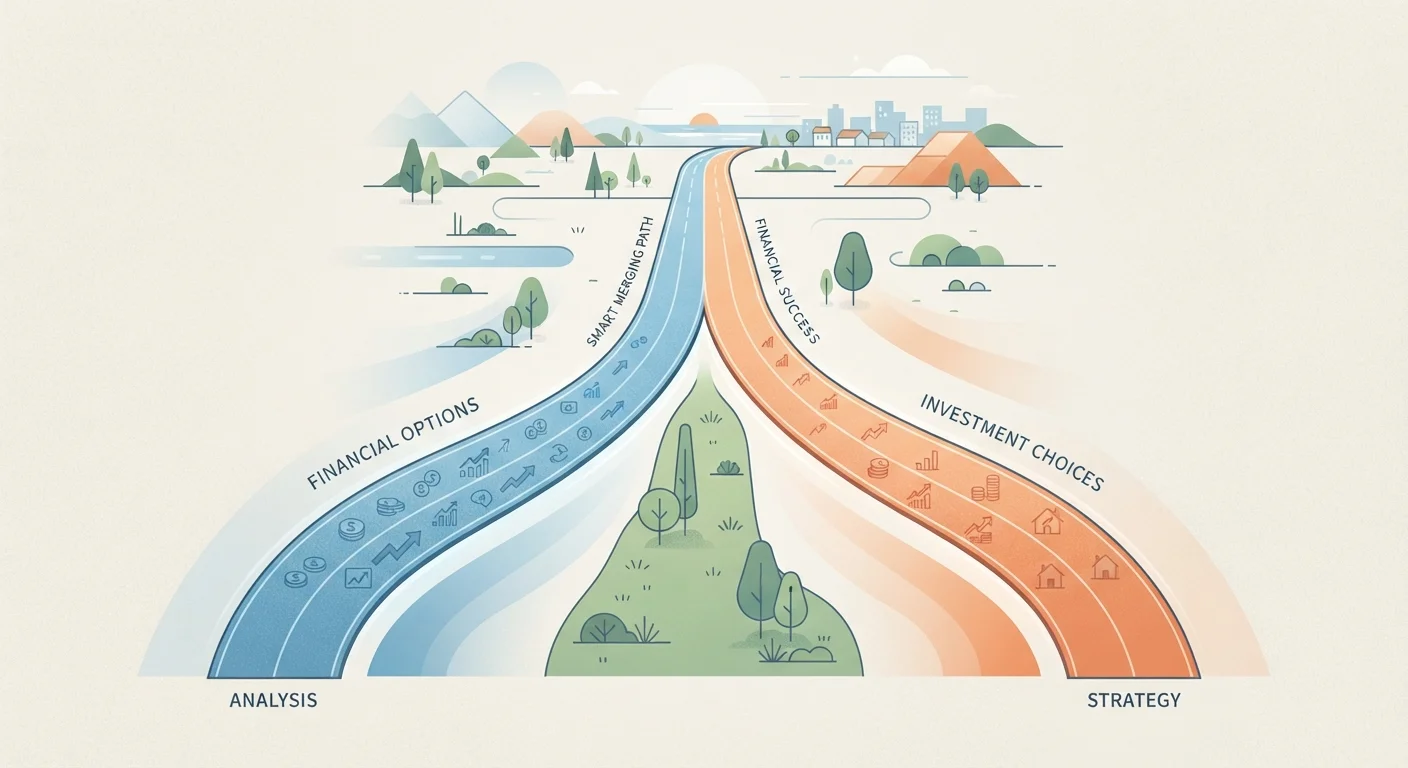
Option A
Debt Snowball
The motivational, momentum-building approach.
Best for: People who need early wins to stay motivated and build consistent repayment habits.
Option B
Debt Avalanche
The mathematically efficient, interest-minimizing strategy.
Best for: People who are disciplined, comfortable with delayed gratification, and want to minimize total interest paid.
How Each Method Works
Both the debt snowball and debt avalanche follow the same foundational structure: list all your debts, make minimum payments on every account, and direct any extra money toward one priority debt at a time. Where they differ is in how that priority debt is chosen.
Debt Snowball: You target the account with the smallest balance first, regardless of its interest rate. Once it's paid off, you roll that freed-up payment toward the next smallest balance - and so on, creating a growing "snowball" of repayment momentum.
Debt Avalanche: You target the account with the highest interest rate first, regardless of its balance size. Once that debt is eliminated, you redirect the payment to the next highest-rate debt. This approach is designed to reduce the overall interest that accumulates across all your accounts.
For a detailed side-by-side of how these two strategies play out across real scenarios, see Debt Avalanche vs. Debt Snowball: Two Paths Out of the Same Hole.
| Criterion | Debt Snowball | Debt Avalanche |
|---|---|---|
| Priority order | Smallest balance first | Highest interest rate first |
| Total interest paid | Typically more overall | Typically less overall |
| Speed of first payoff | Faster (small balances clear quickly) | Can be slower initially |
| Motivational structure | Frequent early wins | Delayed but mathematically rewarding |
| Best psychological fit | Those who need momentum | Those comfortable with delayed gratification |
| Complexity | Simple to understand and start | Requires tracking interest rates carefully |
The Psychology Behind the Choice
Research in behavioral finance consistently shows that psychological friction is one of the biggest reasons debt repayment plans fail. The debt snowball method is designed with that in mind - by delivering faster, more frequent payoffs, it creates positive reinforcement loops that help people remain committed.
The debt avalanche, by contrast, requires patience. If your highest-interest debt also carries a large balance, it may take months or even years before you fully eliminate it. For some people, that delayed payoff feels discouraging, even when they understand the math favors it.
77%
Americans carrying some form of debt
According to Pew Research Center data, a large majority of U.S. households carry at least one form of debt, underscoring the widespread relevance of structured repayment strategies.
20%+
Average APR on credit card accounts assessed interest
The Federal Reserve has reported that average credit card interest rates on accounts assessed interest have exceeded 20% in recent years, making high-rate debt costly to carry long-term.
Neither approach is inherently superior from a pure psychological standpoint - people's responses to motivation and delayed gratification vary widely. The question worth asking is: Which approach am I more likely to stick with? A plan you follow consistently outperforms a theoretically optimal plan you abandon.
If you're also working to build a savings cushion while repaying debt, the Managing Debt and Saving at the Same Time article explores how to balance both goals practically.
Interest Cost: Does It Really Matter Which You Choose?
From a purely mathematical standpoint, the avalanche method will generally result in less total interest paid - sometimes significantly so, depending on the spread of interest rates across your accounts. The difference can range from negligible to hundreds or even thousands of dollars over a multi-year repayment timeline.
However, the snowball method's cost premium is often overstated. In practice, the "extra" interest paid using the snowball approach may be modest, especially if your debts carry similar rates or if the small-balance accounts are cleared quickly. The psychological value of early wins - which can prevent abandonment of the plan altogether - may well offset the additional cost for many people.
When the Difference in Interest Cost Is Smallest
The gap between the snowball and avalanche methods narrows considerably when your debts carry similar interest rates or when the balances are close in size. In those cases, the psychological and practical factors - like which plan keeps you motivated - may be the more meaningful deciding factor. Running a simple calculation with your actual balances and rates can help you estimate the real cost difference before committing to either approach.
If you're carrying multiple types of debt and are unsure whether consolidation might simplify your situation, the Debt Consolidation: How It Works and When It Makes Sense guide offers a clear breakdown of that alternative. Before deciding on any repayment strategy, it's also worth grounding your plan in a solid budget - the Budgeting Basics hub is a practical starting point.
This article is for general informational purposes only and does not constitute personalized financial or legal advice. Consult a qualified financial professional for guidance specific to your situation.
The content on this site is for informational purposes only and is not a substitute for professional advice. Always consult a qualified professional for guidance specific to your situation.