

What an Emergency Fund Is - and Is Not
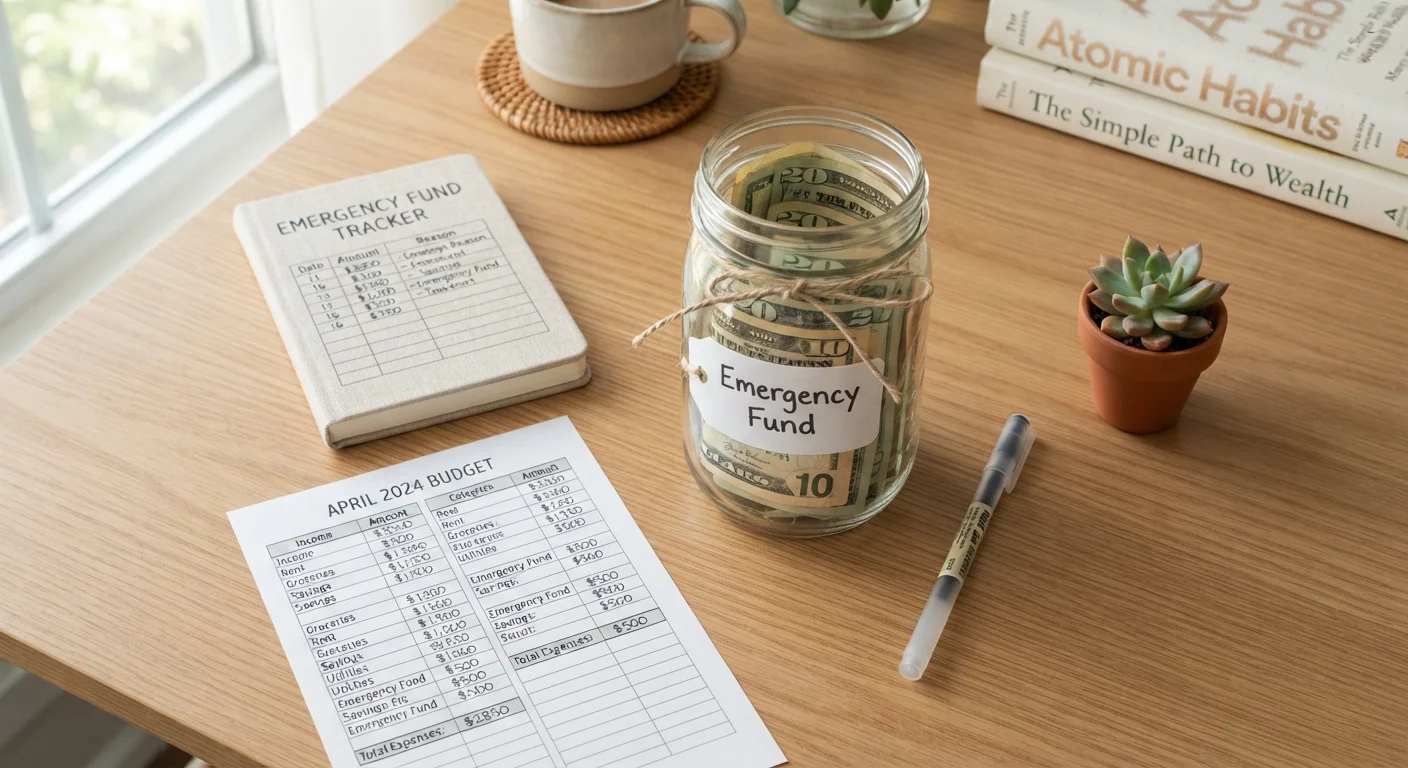
An emergency fund is a reserved amount of money kept aside exclusively for financial surprises that are urgent and unavoidable. It is not a general savings account, a holiday fund, or a buffer for overspending. Its only job is to cover genuine, unplanned disruptions - a job loss, a medical emergency, a failed appliance, or an unexpected car repair.
This distinction matters. Many people have savings but no emergency fund: the money is earmarked for vacations, home improvements, or future purchases. When a crisis hits, those savings get raided, derailing longer-term goals. A true emergency fund is psychologically and practically walled off from other financial goals.
It also differs from a sinking fund, which is money set aside deliberately for known, future expenses - like replacing a car or covering annual insurance premiums. For a clear comparison of how each serves a different role in your financial plan, see how sinking funds work.
Emergency Fund vs. General Savings: A Key Distinction
Having money in savings does not automatically mean you have an emergency fund. An emergency fund is defined by its purpose and accessibility - it is set aside specifically for unplanned urgent needs, kept liquid, and not mixed with savings earmarked for goals like travel, home renovation, or a down payment. Treating it as a distinct category - mentally and sometimes in a separate account - reinforces its protective function.
Why Size Is Not One-Size-Fits-All
The standard guidance - three to six months of essential expenses - is a useful starting point, but your ideal amount depends on several personal factors.
- Income stability: A salaried employee with strong job security may be comfortable at the lower end of the range. A freelancer, contractor, or commission-based worker should generally aim higher, since income gaps can last longer.
- Number of dependents: Supporting a family means a single disruption affects multiple people. More dependents typically means a larger cushion is prudent.
- Fixed monthly obligations: The higher your non-negotiable monthly costs - mortgage, loan payments, childcare - the larger your fund needs to be in absolute dollar terms.
- Access to other resources: If you have no other safety nets (no partner income, no family support, limited credit access), a more robust fund reduces your exposure significantly.
The goal is not to save the maximum possible number, but to save enough that a realistic emergency - job loss lasting two to four months, for example - does not force you into high-interest debt. For a deeper look at how to calculate and build toward your specific target, see the logic and math behind building an emergency fund.
~37%
Americans who cannot cover a $400 emergency with cash
According to Federal Reserve survey data, a significant share of U.S. adults would struggle to cover a $400 unexpected expense without borrowing or selling something.
3-6 months
Recommended essential expenses in an emergency fund
This range is the widely cited standard from financial educators and nonprofit financial counseling organizations as a baseline for household financial resilience.
$500-$1,000
Recommended starter emergency fund goal
Many financial education programs suggest this as a first milestone, providing immediate protection against the most common minor emergencies before building toward the full target.
How an Emergency Fund Reduces Financial Stress
Beyond the numbers, an emergency fund does something harder to quantify: it changes how you relate to financial risk. Research consistently finds that financial insecurity is a significant source of chronic stress. When unexpected expenses can be absorbed without borrowing, the psychological burden of "what if" decreases substantially.
Without a fund, even minor setbacks - a $400 car repair, an unexpected medical co-pay - can trigger a cascade: credit card debt, late fees, and interest charges that compound the original problem. With a fund in place, those same setbacks become manageable inconveniences rather than crises.
This is why financial educators often describe the emergency fund as the foundation of any broader financial plan. As discussed in why the emergency fund is treated as a first priority, it is typically recommended before aggressively paying down debt or investing.
“Before you invest in anything else, make sure you have a financial cushion that gives you options. Without it, every unexpected expense is a potential crisis.”
— Consumer Financial Protection Bureau, U.S. federal agency focused on consumer financial education and protection
Understanding where an emergency fund fits alongside other savings goals - like sinking funds and long-term savings - is equally useful. Our guide to emergency funds, sinking funds, and savings goals can help you build space for each in your monthly budget.
This article is for general informational and educational purposes only and does not constitute personalized financial advice. Consult a qualified financial professional for guidance specific to your situation.
Frequently Asked Questions
Most financial educators suggest three to six months of essential living expenses. If your income is variable, you're self-employed, or you support dependents, aiming for the higher end of that range - or even more - is generally advisable. Your essential expenses include housing, utilities, food, transportation, and minimum debt payments.
An emergency fund should be held in a liquid account you can access quickly without penalty, such as a high-yield savings account or a money market account. It should be separate from your everyday checking account to reduce the temptation to spend it. Investing emergency funds in the stock market is generally not recommended because of the risk of losing value precisely when you need the money.
Not exactly. A savings account is a type of account; an emergency fund is a purpose-defined pool of money that may be held in a savings account. You can learn more about what distinguishes them in our article on <a href="/money-finance/saving-and-debt/the-difference-between-an-emergency-fund-and-a-savings-account">the difference between an emergency fund and a savings account</a>.
True emergencies are unexpected, necessary expenses that cannot be deferred - a sudden layoff, an urgent medical cost, a critical home repair like a burst pipe, or an essential vehicle repair needed to get to work. Planned purchases, vacations, and predictable costs (like annual insurance premiums) are not emergencies. Those are better handled with a sinking fund.
Start smaller. Even a $500 to $1,000 starter fund meaningfully reduces the likelihood you'll need to turn to a credit card or personal loan for common setbacks. Building the fund gradually - through consistent monthly contributions - is more effective than waiting until you can save large amounts all at once.
The content on this site is for informational purposes only and is not a substitute for professional advice. Always consult a qualified professional for guidance specific to your situation.