

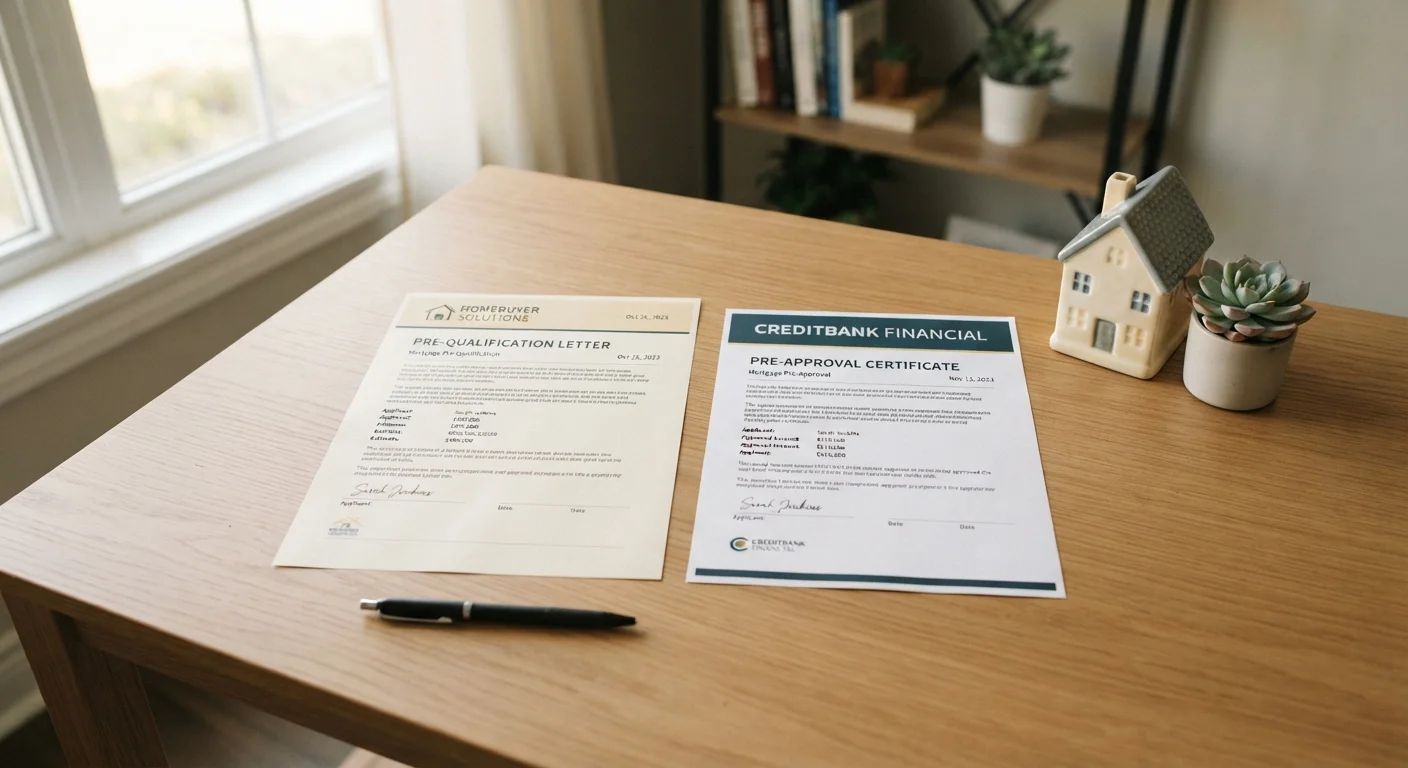
Option A
Mortgage Pre-Qualification
The informal, quick-start estimate.
Best for: Early-stage buyers who want a rough sense of their borrowing range before committing to a lender.
Option B
Mortgage Pre-Approval
The verified, lender-backed commitment.
Best for: Active homebuyers who are ready to make offers and need to demonstrate financial credibility to sellers.
What Pre-Qualification Actually Is
Pre-qualification is essentially a conversation with a lender - often completed online in minutes. You provide basic information about your income, assets, debts, and estimated credit score. The lender uses that self-reported data to give you a rough borrowing estimate.
There's no verification at this stage. The lender takes your word for it. No tax returns are pulled, no pay stubs reviewed, and typically no hard inquiry is made on your credit report. Because of that, the number you receive is an estimate, not a commitment.
Pre-qualification has real value in the early stages of planning. It helps you understand the general price range you might qualify for, spot potential problem areas (like a high debt-to-income ratio) before they become obstacles, and have a more informed conversation with a real estate agent. Think of it as a financial reality check rather than a green light.
Pre-Qualification vs. Prequalification: Same Thing
You may see this term written as one word (prequalification) or hyphenated (pre-qualification) depending on the lender. Both refer to the same informal, unverified estimate process. The terminology isn't standardized across the industry, so always ask your lender exactly what steps their process involves and whether a credit pull is included.
What Pre-Approval Actually Is
Pre-approval is a formal process. You submit a complete mortgage application and provide documentation - W-2s, recent pay stubs, bank statements, and tax returns, among other items. The lender runs a hard credit inquiry, verifies your financial picture, and issues a conditional commitment to lend you a specific amount at a specific interest rate range.
That conditionality matters. Pre-approval doesn't mean the loan is guaranteed. The lender still needs to evaluate the specific property you want to buy, and underwriting can surface new issues closer to closing. But it does mean your finances have been reviewed by a professional using real data - not just your estimates.
For a deeper look at what lenders are actually evaluating, see what a mortgage pre-approval actually means.
| Criterion | Pre-Qualification | Pre-Approval |
|---|---|---|
| Information required | Self-reported income, assets, debts | Verified documents (pay stubs, tax returns, bank statements) |
| Credit inquiry | Typically none (soft or none) | Hard inquiry required |
| Lender commitment | Informal estimate only | Conditional commitment to lend |
| Time to complete | Minutes to a few hours | Several days to over a week |
| Weight with sellers | Limited - not verified | Stronger - financially backed |
| Expiration | Varies; often informal | Typically 60-90 days |
| Best used | Early planning and exploration | Active house-hunting and offers |
Why the Difference Matters to Sellers and Agents
In practice, the distinction between pre-qualification and pre-approval carries real weight in how sellers and their agents evaluate offers. A pre-qualification letter tells a seller that a buyer ran some numbers. A pre-approval letter tells them a lender has reviewed the buyer's finances and is willing to back the purchase.
In competitive markets, some listing agents won't even schedule showings without confirmation that a buyer is pre-approved. Sellers reviewing multiple offers may discount or disregard an offer backed only by pre-qualification, especially if other buyers come with pre-approval letters.
74%
Sellers who prefer pre-approved buyers
According to the National Association of Realtors, a strong majority of sellers prefer or require pre-approval letters before entertaining offers.
60-90 days
Typical pre-approval validity window
Most lenders issue pre-approval letters valid for 60 to 90 days, after which buyers may need to reapply if they haven't found a home.
This doesn't mean pre-qualification is useless - it's a sensible first step. But buyers who are serious about making offers should treat pre-approval as a near-essential part of the process, not an optional upgrade.
Key Limitations to Keep in Mind
Even pre-approval has important limits. Most pre-approval letters expire within 60 to 90 days, which means buyers who take their time searching may need to reapply. A significant change in your financial situation - job loss, taking on new debt, a drop in credit score - can affect the lender's willingness to proceed on the same terms.
The pre-approved amount also represents a ceiling, not a recommendation. Being approved for a particular loan size doesn't mean that payment is comfortable for your budget. It's worth running your own numbers based on monthly costs, not just the maximum loan figure the lender provides.
Once you understand what kind of loan you may qualify for, the next logical step is understanding your loan type options. See our comparison of conventional, FHA, and VA loans for a grounded look at how each program works. You may also want to explore fixed-rate vs. adjustable-rate mortgages once you have a clearer picture of your borrowing range.
This article is for general informational purposes only and does not constitute financial or legal advice. Consult a licensed mortgage professional or financial adviser for guidance specific to your situation.
The content on this site is for informational purposes only and is not a substitute for professional advice. Always consult a qualified professional for guidance specific to your situation.