

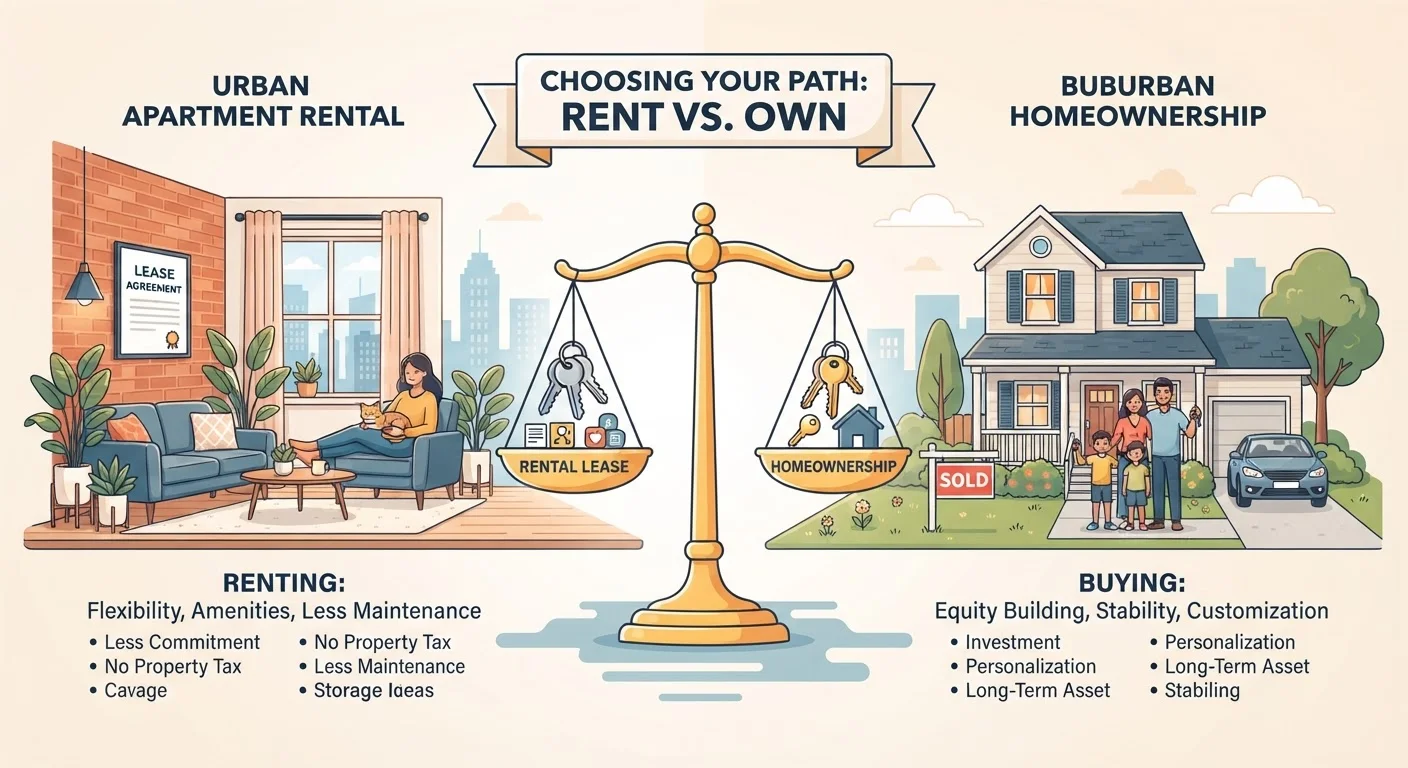
Our Verdict
Homeownership can build long-term wealth, but only when the timing, market, and personal finances align. Renting is not a consolation prize - it is often the more financially sound and flexible choice, particularly in high-cost markets or periods of life transition. The decision deserves honest analysis rather than cultural default.
Buying tends to suit those with stable income, sufficient savings for upfront costs, a multi-year timeline in one location, and access to a market where purchase prices are reasonable relative to rents.
Why This Decision Is Harder Than It Looks
The rent-vs-buy debate is loaded with cultural assumptions - chief among them that buying is always the smarter long-term move. That belief is worth questioning. The right answer depends heavily on where you live, how long you plan to stay, how stable your income is, and what the local housing market actually looks like.
This article walks through the genuine advantages and drawbacks of each path, so you can weigh them against your own situation rather than a one-size-fits-all rule. For a deeper look at how market conditions shift the math, see how volatile markets affect the rent-or-buy trade-off.
Builds equity with each mortgage payment
Unlike rent, mortgage payments gradually transfer ownership of an appreciating asset to the buyer. Over time, this equity can be a significant source of household wealth.
Provides stability and long-term cost predictability
A fixed-rate mortgage locks your principal and interest payment for the life of the loan, protecting against rent increases that can displace tenants in tight markets.
Freedom to customize your living space
Homeowners can renovate, repaint, landscape, and modify their property without landlord approval, allowing the home to genuinely reflect their needs and preferences.
Potential tax considerations for some homeowners
Mortgage interest and property taxes may be deductible for some taxpayers who itemize, though tax laws are complex and benefits vary significantly by individual circumstance.
The Real Costs of Buying (Beyond the Mortgage)
The monthly mortgage payment is only one piece of homeownership's cost picture. Buyers also carry property taxes, homeowner's insurance, private mortgage insurance (PMI) if they put down less than 20%, HOA fees where applicable, and - critically - maintenance. Industry guidance generally suggests budgeting 1-2% of a home's value annually for upkeep, though older homes can run higher.
Closing costs alone typically add 2-5% of the purchase price on top of the down payment. That means buying a $350,000 home could require $70,000 or more in cash before you make your first mortgage payment. These figures don't make buying a bad idea - but they do mean the comparison to renting should account for total costs, not just the headline mortgage number.
2-5%
Typical closing cost range for home buyers
According to the Consumer Financial Protection Bureau, closing costs generally range from 2-5% of the loan amount, adding thousands to the upfront cost of buying.
5-7 years
Minimum stay often needed for buying to break even
Many housing economists suggest buyers need to stay in a home at least five to seven years for purchase and transaction costs to be offset by equity and appreciation gains.
What Renting Actually Offers
Renting is often framed as "throwing money away," but that framing ignores what rent actually buys: housing, flexibility, and freedom from maintenance risk. A renter who would otherwise put $60,000 toward a down payment can keep that capital invested or liquid - and the returns on that capital are a real part of the financial comparison.
Renters also transfer repair and replacement costs to landlords. A broken water heater or failing roof is the landlord's problem. That predictability has real value, especially during financially uncertain periods. The complete picture of renting costs and rights covers what renters are actually responsible for and what protections typically apply.
Large upfront capital requirement
Down payments, closing costs, and immediate repairs can require tens of thousands of dollars before move-in - capital that renters can keep liquid or invested.
Full responsibility for maintenance and repairs
Homeowners absorb the full cost of unexpected repairs - roofing, plumbing, HVAC - with no landlord to call. Annual maintenance costs can be substantial and unpredictable.
Reduced geographic and lifestyle flexibility
Selling a home takes time and costs money. Homeowners who need to relocate quickly for work or personal reasons may face financial losses or logistical complications.
Market risk on home value
Home prices can decline. Buyers who purchase near market peaks or in softening local markets may find their property worth less than they paid, at least in the short term.
The Variables That Actually Drive the Right Answer
Three factors tend to matter most when working through this decision honestly:
- How long you'll stay: Most financial analyses suggest buyers need at least five to seven years in a home for purchase costs to break even against renting. Shorter timelines typically favor renting.
- Your local price-to-rent ratio: This metric compares median home prices to annual rents in a given market. High ratios (above 20) generally indicate renting is more cost-efficient; lower ratios can favor buying. Understanding price-to-rent ratios can sharpen this part of the analysis significantly.
- Your financial cushion: Buying with minimal reserves is risky. Homeownership creates unpredictable expenses; having savings beyond the down payment is important.
How Local Markets Change the Calculation
The rent-vs-buy math looks very different in a high-cost coastal city than in a midsize Midwest market. A home that costs 30 times annual rent to purchase (a price-to-rent ratio of 30) presents a very different case than one that costs 12 times annual rent. Before drawing conclusions, it is worth researching the specific price-to-rent ratio in your target area. The Housing Markets hub offers resources for understanding local and national market trends.
This article provides general educational information and is not personalized financial or legal advice. Consult a qualified financial adviser or housing counselor for guidance specific to your situation.
The content on this site is for informational purposes only and is not a substitute for professional advice. Always consult a qualified professional for guidance specific to your situation.