

How Interest Rates Shape Buyer Behavior
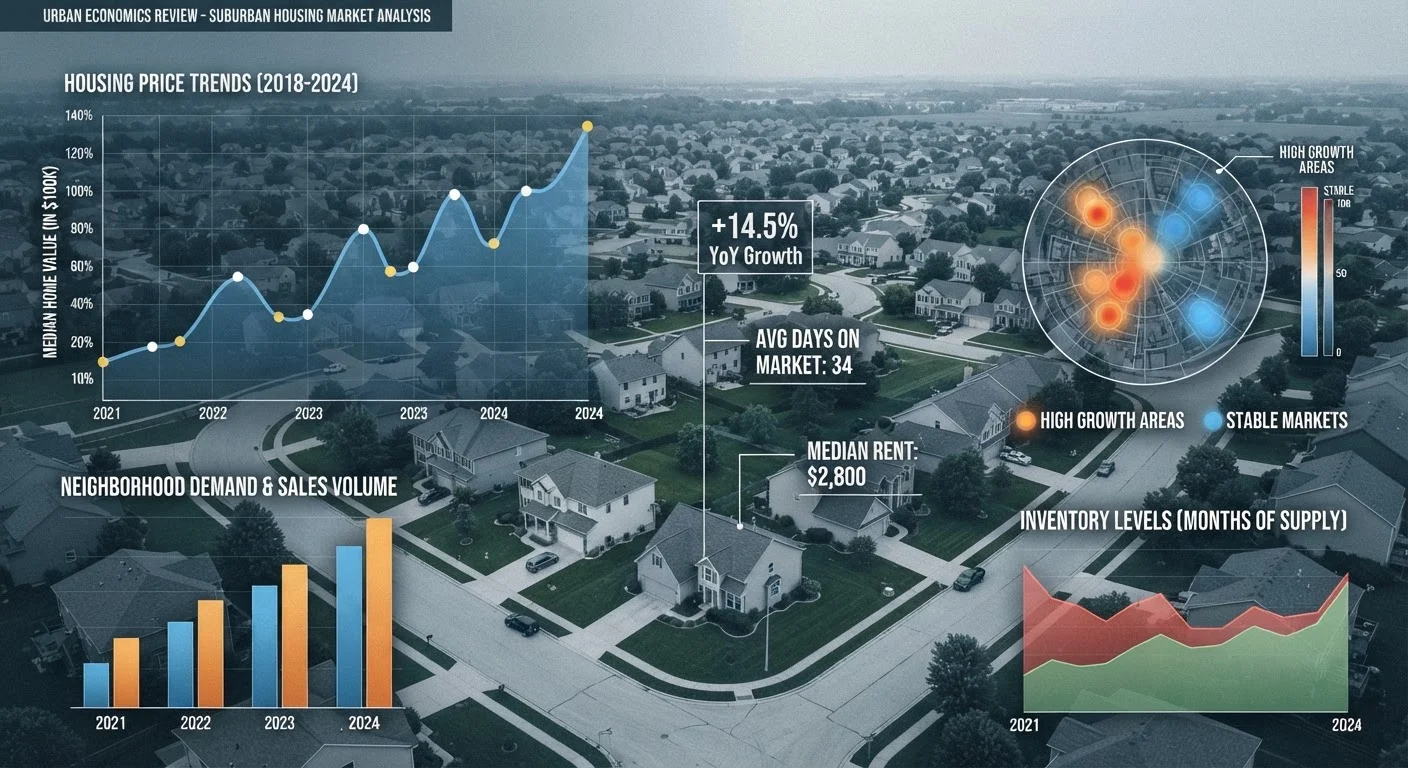
The connection between mortgage interest rates and home prices is one of the most discussed in real estate - and one of the most misunderstood. When interest rates rise, monthly mortgage payments increase for the same loan amount, which reduces how much home a given income can afford. This typically softens demand, which can eventually ease upward pressure on prices.
But the relationship isn't automatic. In markets where housing supply is already very limited, price declines may be shallow even when rates climb sharply. Sellers may simply hold rather than accept lower offers, keeping inventory tight and prices sticky. Conversely, when rates fall, affordability improves and competition among buyers tends to intensify - which can push prices up quickly in supply-constrained areas.
Track Local Employment Alongside Interest Rates
Rather than relying on any single economic signal, watch local employment trends and mortgage rate movements together. A market gaining jobs while rates stabilize or fall is generally one where demand - and prices - are more likely to strengthen. Local business journal reporting and your state's labor department data are practical starting points.
For a closer look at how to read the metrics that matter locally, see which indicators genuinely signal where a local market is going.
Employment, Wages, and Housing Demand
Job market strength is arguably the most direct economic driver of housing demand. When more people are employed and wages are growing, more households can qualify for mortgages and sustain homeownership costs. This supports higher prices over time, particularly in metros gaining jobs faster than housing supply can grow.
The reverse is also true. When layoffs rise or wage growth stalls, some potential buyers pull back from the market and some existing owners may struggle to maintain their homes, which can add inventory and soften prices. This is why economists often watch local employment data - not just national unemployment figures - when assessing a specific housing market.
~1%
Rate change impact on buying power
A 1 percentage point increase in mortgage rates reduces a buyer's purchasing power by roughly 10%, according to analyses published by the National Association of Realtors.
3-6 months
Typical lag between rate shifts and price response
Research from housing economists suggests home prices often take several months to fully reflect changes in mortgage rates, as existing contracts and seller expectations slow the adjustment.
Top 3
Local employment among key price predictors
According to Federal Reserve economic research, local labor market conditions consistently rank among the strongest correlates of housing price changes across U.S. metropolitan areas.
GDP, Consumer Confidence, and the Bigger Picture
Gross Domestic Product (GDP) - the total value of goods and services an economy produces - signals overall economic health. Periods of sustained GDP growth often correlate with rising household incomes and stronger consumer confidence, both of which can support housing demand. Recessions, which are formally defined by significant GDP contraction, have historically been associated with falling home prices in many markets.
However, GDP is a blunt instrument for housing analysis. It's a national average that can mask dramatic regional differences. A city anchored by a growing industry may see robust housing demand during a period of modest national GDP growth, while a region dependent on a declining industry can experience price weakness even during a national boom.
National vs. Local: An Important Distinction
When you see headlines about national home prices rising or falling, remember that those figures are averages across thousands of distinct markets. A neighborhood in a growing Sun Belt city and a rural county losing population can both be included in the same national statistic - even if their price trajectories are moving in opposite directions. Always seek local data when evaluating a specific buying or selling decision.
Where the Signals Break Down
Even well-understood economic signals frequently fail to predict home price movements with precision. Several factors explain why:
- Data lag: Most economic statistics are reported weeks or months after the fact. Markets often move on expectations, not published data.
- Local override: Zoning restrictions, geographic constraints, and local policy decisions can dominate national trends. A city that hasn't permitted enough new housing in a decade may see prices hold even when macro signals turn negative.
- Behavioral factors: Buyer and seller psychology - fear of missing out, reluctance to sell at a loss - can sustain price levels that economic fundamentals alone wouldn't support.
- Policy interventions: Government programs, tax incentives, or changes in lending standards can redirect demand in ways that economic models don't fully anticipate.
For a grounded look at common errors consumers make when interpreting signals, see common housing market myths examined with evidence.
Using Signals Wisely Without Over-Relying on Them
Economic indicators are most useful as context, not as a crystal ball. Tracking interest rates, employment trends, and GDP can help you understand the broad environment you're entering - whether it's a market that favors buyers or sellers, or one that's shifting. But they shouldn't be the primary driver of a major personal financial decision.
Your own financial readiness - stable income, adequate savings for a down payment, manageable debt levels, and a long-enough time horizon - matters far more than waiting for economic conditions to align perfectly. Markets can move against predictions for years.
To build a fuller picture before making any housing decision, review a practical checklist of local and national indicators alongside your personal financial situation. And for foundational context on what housing market data actually measures, see what each housing market metric really tells you.
This article is for general informational and educational purposes only and does not constitute financial, investment, or real estate advice. Consult a licensed financial adviser or real estate professional for guidance tailored to your individual circumstances.
Frequently Asked Questions
Not necessarily. Higher rates reduce purchasing power and can slow demand, but prices also depend heavily on local inventory. In supply-constrained markets, prices can remain elevated even as rates rise. The relationship varies significantly by location and time.
GDP growth reflects broad economic expansion, which can support consumer confidence and income growth - both of which help housing demand. However, GDP is a national average and can mask regional variation where local job markets or housing supply differ sharply from the national picture.
Local employment conditions and wage growth tend to have a stronger and more direct link to housing demand than national indicators like GDP. When more people are employed and earning more, they're better positioned to buy homes. That said, no single signal is a reliable standalone predictor.
Economic signals can inform your understanding of market conditions, but timing the housing market precisely is notoriously difficult - even for professional economists. Most housing experts suggest focusing on your personal financial readiness rather than waiting for a perfect economic moment.
National data provides useful context but can be misleading for local decisions. A city adding major employers may see rising prices even in a cooling national market. Always supplement national signals with local inventory levels, days-on-market data, and area employment trends.
Economic data is typically reported with a delay, and housing markets respond to expectations about the future, not just current conditions. Buyers and sellers act on sentiment, local factors, and policy changes that national indicators don't capture in real time.
The content on this site is for informational purposes only and is not a substitute for professional advice. Always consult a qualified professional for guidance specific to your situation.