

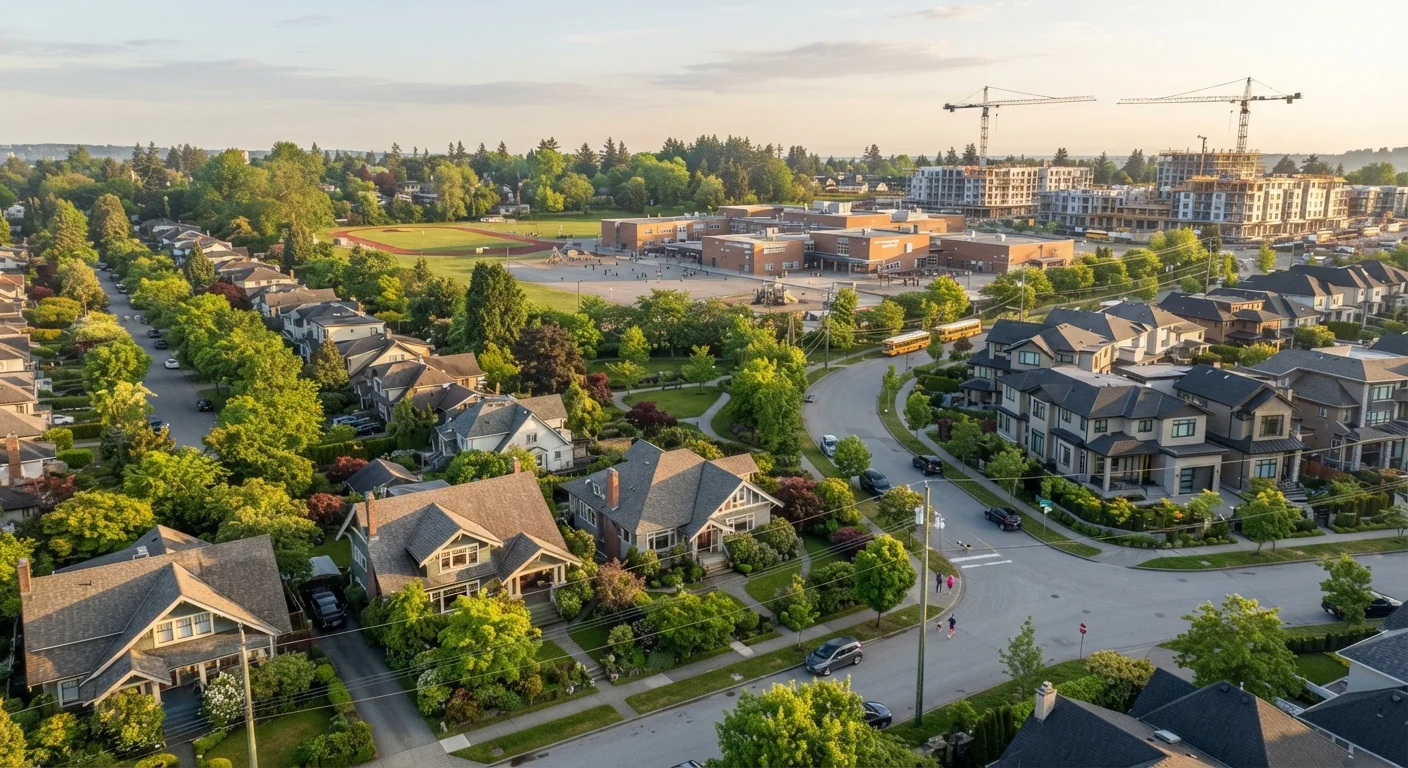
Why Neighbourhood-Level Research Is Different From Market-Level Research
National housing headlines rarely tell you what's happening on a specific block. A metro area can be cooling while one pocket neighbourhood is quietly appreciating - and vice versa. As we explain in our article on the difference between local and national housing markets, the signals that matter most for your decision are hyper-local ones.
Evaluating a neighbourhood's long-term outlook is a research process, not a gut-check. It means identifying the structural, economic, and civic factors that tend to drive sustained demand - and checking how a specific area stacks up against them. The goal is to understand trajectory, not just current conditions.
No Single Signal Is Enough
Strong school ratings, active permit filings, and a planned transit stop are all encouraging - but none individually guarantees long-term appreciation. Neighbourhood outlooks are shaped by an interplay of factors, and conditions can shift with changes in local government priorities, employer decisions, or broader economic cycles. Use multiple data points together and revisit your research periodically rather than treating any one indicator as definitive. This content is educational; consult a licensed real estate professional for guidance tailored to your situation.
The Indicators That Actually Signal Long-Term Strength
Not all neighbourhood data carries the same weight. Focus your research on factors with a documented link to housing demand over multi-year periods.
Check school ratings - and their trend over time, not just their current score.
School quality is one of the most consistently cited drivers of residential demand. Families frequently pay a premium to live within a desirable school district, which sustains long-term buyer interest even in softer markets. A school that is improving year-over-year can signal an incoming wave of demand.
Review the municipality's Capital Improvement Plan (CIP) for infrastructure commitments.
Public infrastructure investment - roads, transit lines, parks, utility upgrades - directly affects liveability and, over time, property values. CIPs are multi-year spending blueprints published by city and county governments, and they reveal where public dollars are flowing before the market responds.
Monitor zoning changes and rezoning applications in the neighbourhood.
Zoning decisions shape what can be built - or demolished - and determine whether a neighbourhood will densify, diversify, or stay the same. Upzoning (allowing higher-density development) can attract new investment but may also change neighbourhood character in ways that affect buyer preferences.
Track building permit activity as a leading indicator of developer confidence.
When developers pull permits to build or renovate in an area, they are making financial bets on that neighbourhood's future. A sustained rise in permit activity - especially for residential and mixed-use construction - tends to precede price appreciation as new supply draws new residents.
Assess employer proximity and job-market health within commuting distance.
Sustained housing demand requires a healthy local employment base. Neighbourhoods within reasonable commuting distance of growing employment centres or anchored by large institutional employers - hospitals, universities, government facilities - tend to maintain more stable demand through economic cycles.
For a broader view of how economic forces interact with these neighbourhood-level signals, see our guide to economic signals worth watching before a housing decision.
Quick Steps You Can Take Right Now
You don't need a data science background to research a neighbourhood. Many of the most revealing sources are publicly available and free.
Once you've gathered this data, cross-reference it with the housing market metrics that predict where prices are heading to build a more complete picture before committing.
~$205K
Average home value premium in high-rated school districts
Research published by the National Bureau of Economic Research has found that homes in districts with above-average school ratings can carry substantial price premiums compared with otherwise similar homes nearby.
1 in 3
Homebuyers who cite schools as a top neighbourhood factor
National Association of Realtors survey data consistently shows school quality ranks among the leading neighbourhood considerations for buyers, particularly those with or planning families.
For a consolidated checklist covering both neighbourhood and broader market signals, see signals worth watching before you decide to buy, sell, or wait. And if you're already thinking about what you'd do to a home once you own it, the Home Improvement hub offers practical renovation guidance worth bookmarking.
This article is for general informational and educational purposes only and does not constitute financial, investment, or legal advice. Consult a qualified real estate professional or financial adviser before making any housing decision.
The content on this site is for informational purposes only and is not a substitute for professional advice. Always consult a qualified professional for guidance specific to your situation.