

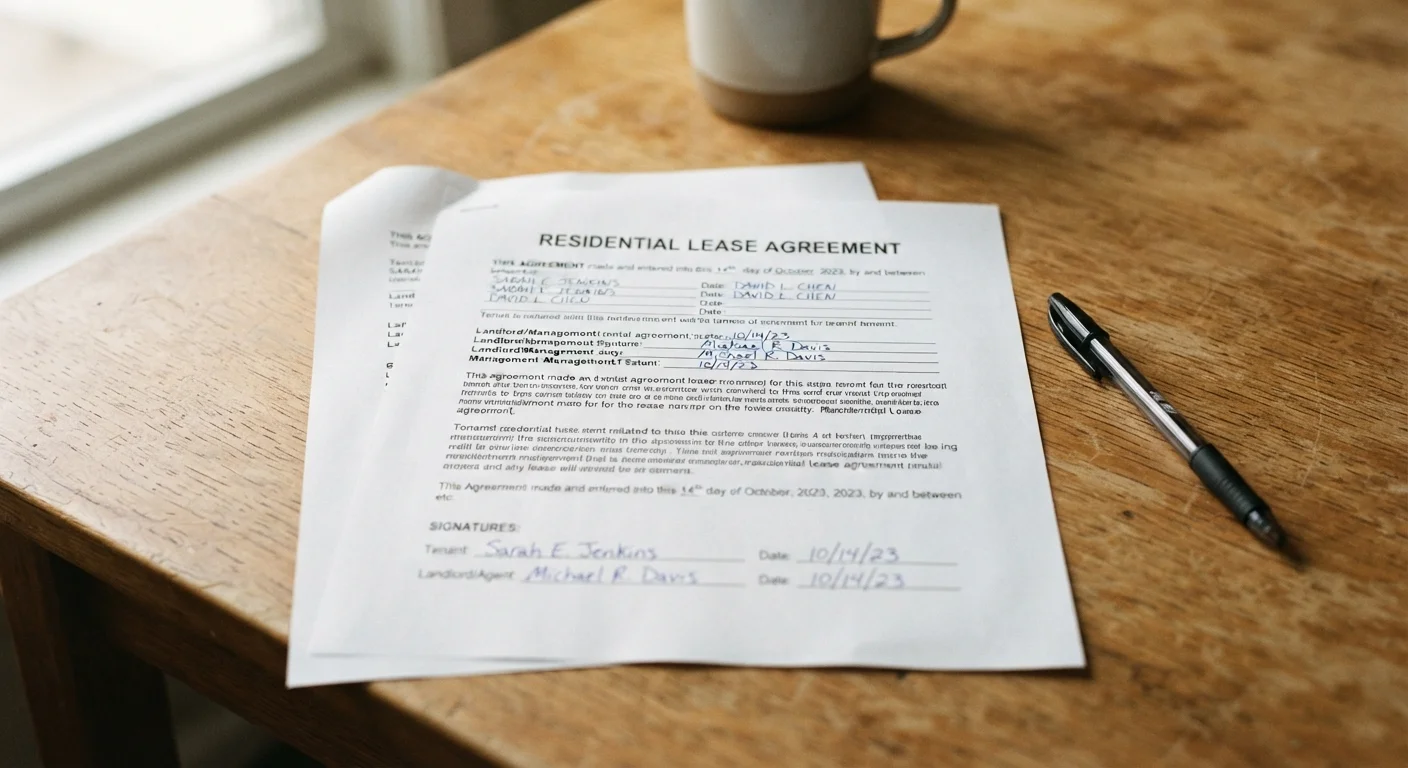
A Lease Is a Contract - Not Just Paperwork
Many renters treat a lease as a formality - a stack of pages to initial quickly before getting the keys. That mindset is costly. A lease is a legally binding contract that defines your rights and obligations for the entire rental period. Every clause you agree to becomes enforceable, whether you read it or not.
At its core, a lease answers four fundamental questions: Who is renting? What are they renting? For how long? And under what conditions? The answers to those questions fill out the document section by section - and each section matters in different, practical ways.
For a deeper look at how legal language in leases translates to daily life, see what a lease agreement actually says.
Before You Sign: Do a Clause-by-Clause Pass
Set aside 30 to 45 minutes to read the lease from start to finish - not just the highlighted sections. Flag anything that surprises you or contradicts what you were told. Bring specific questions to the landlord in writing so the answers are documented.
The Sections That Shape Your Tenancy
Most residential leases in the US follow a recognizable structure, even when the exact language differs by state or landlord.
- Lease term: The start and end dates of your tenancy. Fixed-term leases (typically 12 months) lock in your rate and protections; month-to-month agreements offer flexibility but less stability.
- Rent amount and due date: Specifies what you owe, when it's due, and what grace period (if any) applies before late fees kick in.
- Security deposit: Covers conditions under which the landlord may withhold funds - usually damage beyond normal wear and tear. State law caps how much landlords can collect and how quickly they must return it.
- Occupancy rules: Who is permitted to live in the unit. Unauthorized occupants can trigger lease violations.
- Pet policy: Whether pets are allowed, what fees apply, and any breed or size restrictions.
- Maintenance responsibilities: Which repairs the landlord handles and which fall to the tenant.
- Early termination clause: What you owe if you need to leave before the lease ends.
If unfamiliar terms appear in any of these sections, the lease jargon glossary for renters can help decode the language.
52%
Renters who don't read the full lease
A survey by Apartment List found that roughly half of renters reported not reading their lease agreement in its entirety before signing.
$200-$500
Typical security deposit dispute loss per tenant
Tenant advocacy organizations report that deposit disputes commonly result in renters losing $200 to $500 due to clauses they had agreed to but were unaware of.
Clauses That Often Catch Renters Off Guard
Beyond the standard sections, many leases include clauses that renters overlook - sometimes with significant consequences.
State Law Overrides Unenforceable Clauses
Even if a clause appears in your signed lease, it may not be legally enforceable if it conflicts with your state's landlord-tenant law. For example, a clause waiving your right to proper notice before entry is invalid in states that mandate it. Knowing your state's baseline tenant protections helps you identify which lease terms actually bind you and which don't.
Renewal and holdover terms explain what happens when your lease expires. Some leases automatically renew for another full year unless you give written notice 30 to 60 days in advance. Others shift you to a month-to-month arrangement. Missing a required notice window can lock you into another term you didn't intend to sign up for.
Subletting restrictions commonly prohibit renting your unit to someone else without landlord approval. Violating this clause - even temporarily - can result in eviction.
Entry notice requirements specify how much advance notice a landlord must give before entering. Most states set a minimum (often 24 hours), but some leases attempt to shorten or waive this - provisions that may be unenforceable under local law.
Many of these terms are more negotiable than renters assume. Before signing, it's worth knowing which lease terms landlords commonly adjust.
“The lease is the rulebook for your tenancy. If you haven't read it, you're playing a game without knowing the rules - and the landlord wrote them.”
— Tenant Rights Educator, Housing counselor with a regional tenant assistance nonprofit
Why Reading Every Clause Is Worth Your Time
The most common renter regrets - unexpected fees, disputes over deposits, confusion about move-out procedures - almost always trace back to a lease clause that existed but went unread. The time invested in reading carefully before signing is far less than the time and money spent resolving a dispute later.
If something in the lease doesn't match what you were told verbally, ask for it to be corrected in writing before you sign. Verbal promises from landlords are difficult to enforce. What's in the document is what governs your tenancy.
Understanding your lease fully is a foundational step in renting with confidence - and it positions you to ask better questions, negotiate more effectively, and protect yourself when disagreements arise.
This article is for informational purposes only and does not constitute legal advice. Lease terms and landlord-tenant laws vary by state and locality. Consult a qualified attorney or local tenant's rights organization for guidance specific to your situation.
Frequently Asked Questions
The terms are often used interchangeably, but they can differ. A lease typically locks in terms for a fixed period (commonly 12 months), while a rental agreement is usually month-to-month and more flexible. Both are legally binding contracts.
Generally, no. Once both parties sign, the lease terms are fixed for its duration. Changes typically require a written addendum agreed to by both parties. For month-to-month renters, landlords can usually change terms with proper advance notice as defined by state law.
Early termination clauses vary widely. You may owe a fee, forfeit your security deposit, or be responsible for rent until a new tenant is found. Some states require landlords to make reasonable efforts to re-rent the unit, which can limit your liability.
In many states, verbal agreements for short-term rentals (under one year) can be legally valid, but they're extremely difficult to enforce or dispute. A written lease protects both tenant and landlord by creating a clear record of agreed terms.
No. Lease terms cannot violate federal, state, or local law. Clauses that waive a tenant's legal rights, discriminate based on protected characteristics, or contradict state landlord-tenant statutes are generally unenforceable - even if you signed them.
Read the entire document carefully, including addenda. Ask for clarification on anything unclear. Verify that verbal promises are reflected in writing. If you're uncertain about specific clauses, consulting a local tenant's rights organization or attorney can be worthwhile.
The content on this site is for informational purposes only and is not a substitute for professional advice. Always consult a qualified professional for guidance specific to your situation.