

Summary
18 items · 20-35 minutes
Why the Keys Demand a Different Kind of Planning
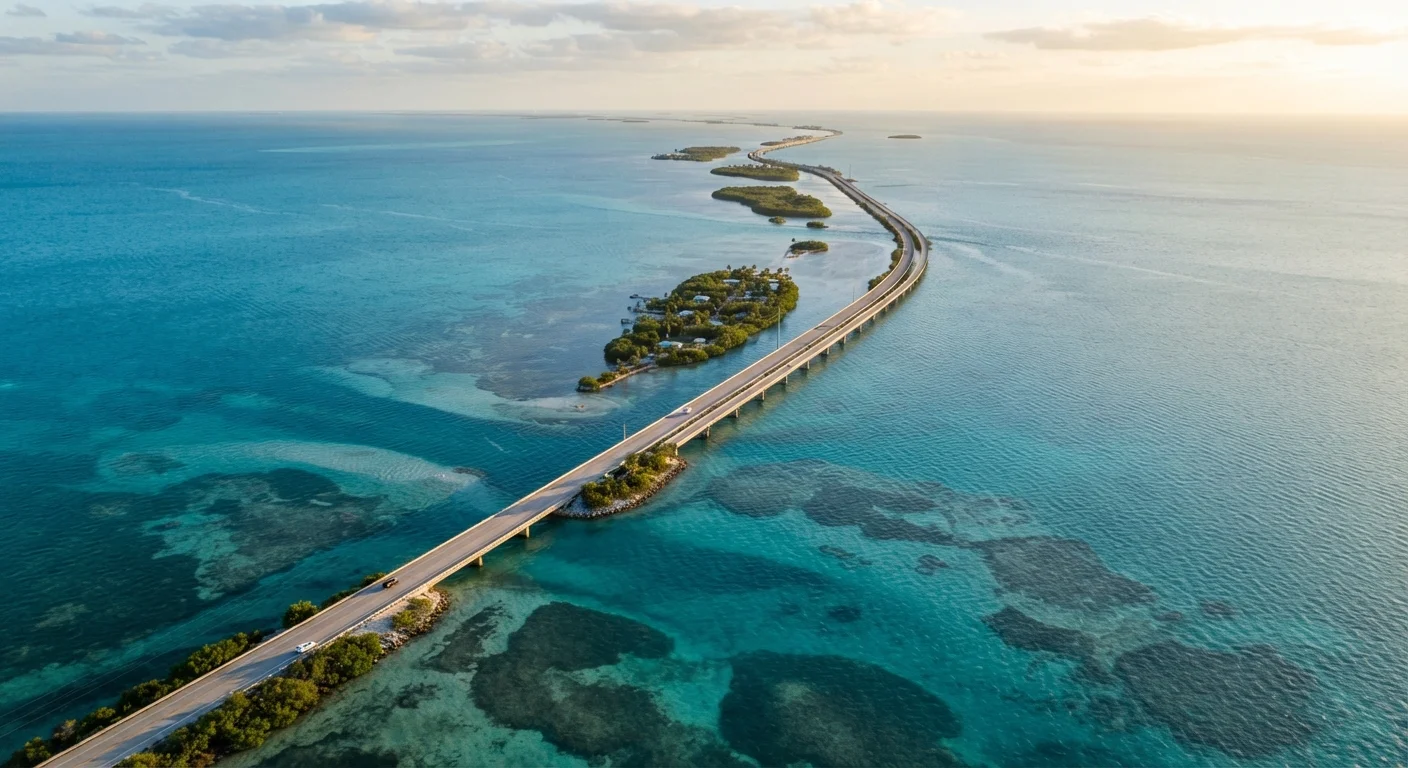
The Florida Keys sit at the end of a 113-mile chain of islands connected by a single road - US Route 1, also called the Overseas Highway. That geographic reality defines almost every logistical challenge visitors face. There's no alternate route, no shortcut, and no way around it if a crash, drawbridge failure, or tropical weather event shuts the road down. Travelers who treat a Keys trip the way they'd plan a beach resort stay in, say, Clearwater often arrive unprepared for what makes this destination genuinely unusual.
That's not a reason to avoid the Keys - it's a reason to plan smarter. The payoff is real: world-class snorkeling and diving at John Pennekamp Coral Reef State Park, a laid-back pace that's hard to find elsewhere in Florida, and a landscape unlike anything else in the continental US. But the logistics have a way of surprising even experienced travelers.
Before you finalize any booking, use this checklist to audit the realities of a Keys trip. You might also want to start with the pre-trip research checklist for broader destination verification steps.
Transportation & Access
Weather & Hurricane Preparedness
Costs & Budget Reality
Location & Accommodation Fit
What to Budget Beyond the Room Rate
Sticker shock is common in the Keys. Because almost everything - including freshwater - is imported or transported down a single highway, the cost of goods and services is structurally higher than on the mainland. Groceries can run 20-40% more than you'd pay at a mainland supermarket. Fuel prices at Keys gas stations are consistently among the highest in Florida. And resort or destination fees attached to lodging are widespread, often adding $30-$60 per night beyond the advertised rate.
Dining out adds up fast too, particularly in Key West and Islamorada, where waterfront restaurants command premium prices. The hidden costs of travel guide breaks down how resort fees and local surcharges erode travel budgets across many destinations - and the Keys are a textbook example of that pattern.
Freshwater Is a Finite Resource Here
The Florida Keys receive all their freshwater via a single pipeline running down from the mainland. During high-demand periods or if the pipeline is disrupted, water restrictions can be put in place quickly. Some smaller properties manage their own cisterns and may ask guests to conserve. This isn't a dealbreaker, but it's a reality worth knowing - and it partly explains why everything from a hotel room to a restaurant meal costs more than you'd expect.
Finally, consider what happens if your trip gets disrupted. Hurricane season (June through November) overlaps with the Keys' shoulder and off-season travel windows, when prices drop. Travel insurance that covers trip cancellation for named storms is worth evaluating before booking during those months - not as a guarantee of reimbursement, but as a financial buffer if conditions change. Always review policy terms carefully and consult with a licensed insurance professional if you have questions about coverage.
NOAA National Hurricane Center
Track tropical storm and hurricane forecasts during hurricane season when planning or traveling to the Keys.
Florida 511 Traffic System
Monitor real-time road conditions and incidents on US Route 1 before and during your drive through the Keys.
Florida Division of Emergency Management
Check official evacuation zone maps and emergency orders affecting Monroe County and the Keys.
Travel insurance comparison resources
Research policies that include named-storm trip cancellation coverage for Keys travel during hurricane season.
Choosing Where to Stay - It Changes Everything
The Keys span roughly 125 miles from Key Largo to Key West, and each zone has its own distinct personality. Key Largo skews toward dive culture and eco-tourism. Islamorada is known for sport fishing and a slightly more upscale dining scene. Marathon sits in the middle with a quieter, more residential feel. The Lower Keys near Big Pine Key offer solitude and wildlife. Key West is an urban destination by Keys standards - dense, loud, and very different from the rest of the chain.
Staying in Key West and expecting the calm of Islamorada, or booking in Key Largo expecting Key West nightlife, leads to genuine disappointment. The honest breakdown of what each Keys island offers can help you match your expectations to the right location before you commit to a booking.
Also consider that driving between islands is slower than it looks on a map. What appears to be a 30-minute drive from Marathon to Key West often takes 60-75 minutes with traffic, especially on weekends and during holidays. If you're planning to island-hop daily, factor that driving time into your itinerary realistically.
Mandatory Evacuations Are Legally Binding
Monroe County (which governs the Keys) issues mandatory evacuation orders when significant storms approach, and compliance is required by law. If you're in the Keys when an order is issued, you must leave - and US-1 will be converted to contraflow (outbound only) to move traffic north. Properties do not always offer refunds in these situations unless their cancellation policy explicitly covers it. Verify this before you book, not after.
The content on this site is for informational purposes only and is not a substitute for professional advice. Always consult a qualified professional for guidance specific to your situation.