

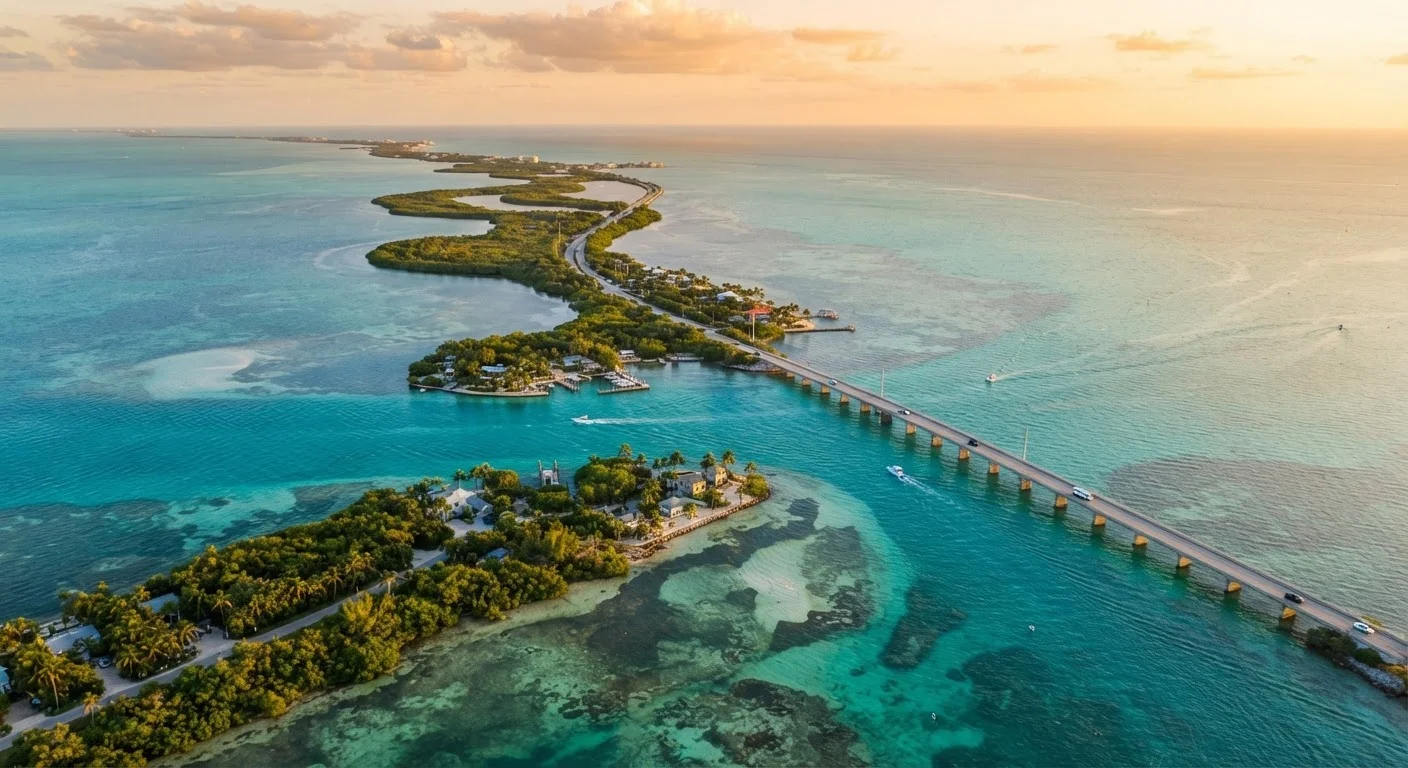
The Keys Are Not One Place
Most travelers picture Key West when they think of the Florida Keys - the sunset celebrations, the literary history, the crowded Duval Street bars. But the archipelago stretches more than 100 miles from the mainland, and the islands you pass through to get there are worth slowing down for. Key Largo, Islamorada, Marathon, and the Lower Keys each attract a different type of traveler, and choosing where to base yourself shapes the entire trip.
If you're still sorting out the logistics of getting there, see our companion piece on the realities of visiting the Florida Keys - it covers the one-road infrastructure, seasonal weather, and supply considerations that catch many visitors off guard.
| Total length of the Keys | Approximately 125 miles (US-1 from Florida City to Key West) |
| Key Largo's main draw | Coral reef diving and snorkeling (John Pennekamp State Park) |
| Islamorada's reputation | Sport fishing, especially flats fishing for tarpon and bonefish |
| Marathon's best free beach | Sombrero Beach - open to the public, maintained by the city |
| Big Pine Key's wildlife anchor | National Key Deer Refuge - habitat for the endemic Key deer |
| Primary access road | US Highway 1 - the only land route through the entire island chain |
Key Largo: Diving, Not Lounging
Key Largo sits closest to the mainland and tends to attract visitors who come specifically for the water - not the beach. The island is the gateway to John Pennekamp Coral Reef State Park, one of the first underwater parks in the United States and a genuine draw for snorkelers and scuba divers. The reefs here are among the most accessible in the continental US, which means the infrastructure around dive charters and equipment rental is well-developed.
What Key Largo lacks is a traditional beach scene. The island's shoreline is mostly mangrove and shallow grass flat rather than open sand, so travelers seeking a classic Caribbean-style beach experience often find it underwhelming on that front. The strip along US-1 is commercial and car-dependent. Its appeal is specific but real: if underwater ecosystems are your priority, few places on the East Coast compete.
1st
Underwater park established in the continental US
John Pennekamp Coral Reef State Park in Key Largo was designated as one of the nation's first protected underwater areas.
~800
Estimated Key deer remaining in the wild
The US Fish & Wildlife Service monitors the Key deer population, which is endemic to the Lower Florida Keys and listed as threatened.
7 miles
Length of the Seven Mile Bridge near Marathon
One of the longest bridges in the world when completed, it connects the Middle and Lower Keys and is a landmark of the Overseas Highway.
Islamorada and Marathon: Two Different Paces
Islamorada - technically a collection of several small islands - bills itself as the "Sport Fishing Capital of the World," and the claim has genuine backing. The flats fishing here, targeting bonefish, tarpon, and permit, draws serious anglers from across the country. But Islamorada has also evolved into a more upscale destination overall, with waterfront dining and a slightly more curated atmosphere than Key Largo. It's a good base for travelers who want outdoor activity paired with some comfort.
Marathon sits roughly in the geographic middle of the Keys and has a more workaday feel. It's home to the Florida Keys Marathon Airport, a handful of actual sandy beaches - including Sombrero Beach, which is free and well-maintained - and the Turtle Hospital, a working rehabilitation facility that offers public tours. Marathon tends to attract families and those who want a quieter, less resort-packaged experience. It also serves as a practical resupply point for those road-tripping the full length of the Keys.
The Lower Keys and Big Pine Key: Wildlife Over Nightlife
Past Marathon and the famous Seven Mile Bridge, the atmosphere shifts noticeably. The Lower Keys - anchored by Big Pine Key - are less developed, quieter, and oriented around natural habitat rather than tourism infrastructure. The National Key Deer Refuge protects the tiny Key deer, a subspecies of white-tailed deer found nowhere else on Earth, and sightings are common around Big Pine Key, particularly at dawn and dusk.
Looe Key National Marine Sanctuary offers excellent snorkeling and diving, and the general absence of crowds makes it appealing to travelers who find the Upper Keys too busy. The tradeoff is limited dining, lodging, and nightlife options. This stretch suits nature-focused travelers and those who genuinely want to decompress rather than be entertained.
Travelers who enjoy comparing island ecosystems and character across destinations may find similar decisions arising in other archipelagoes - our article on how the main Hawaiian islands differ from each other explores comparable choices in a very different Pacific context.
Flats fishing
Fishing in very shallow, clear coastal waters - typically wading or from a shallow-draft boat - targeting species like bonefish, tarpon, and permit. The Florida Keys are considered one of the premier flats fishing destinations in the world.
Mangrove shoreline
A coastline dominated by mangrove trees, whose tangled root systems grow in saltwater. Mangrove shores support rich marine ecosystems but offer no sandy beach access.
Endemic species
A plant or animal species native to and found only in a specific, limited geographic area. The Key deer is endemic to the Lower Florida Keys.
Overseas Highway
The colloquial name for the stretch of US-1 that runs through the Florida Keys, built partly over the route of the old Florida East Coast Railway. It is the only road connecting the Keys to the mainland.
The content on this site is for informational purposes only and is not a substitute for professional advice. Always consult a qualified professional for guidance specific to your situation.