

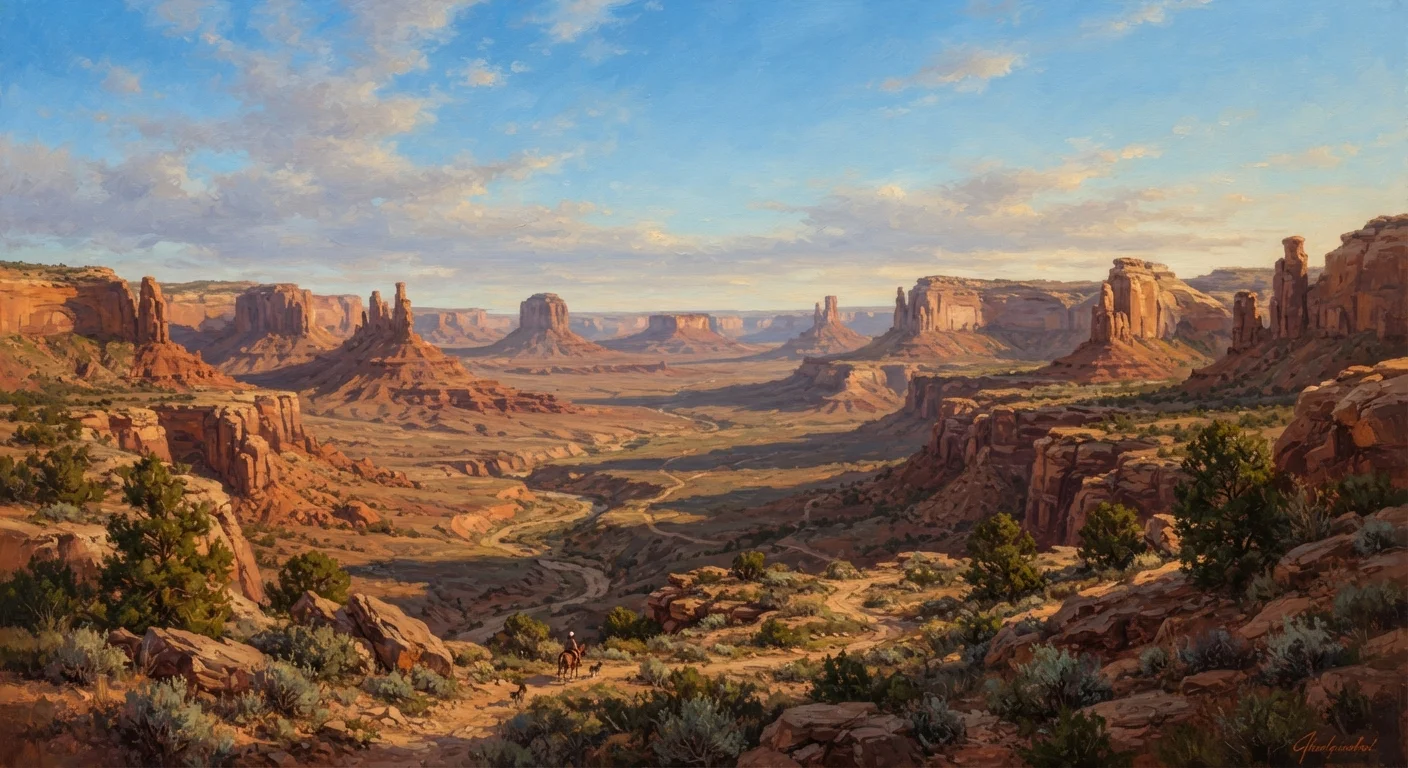
The West Has More Than the Headliners
Anyone who has waited two hours for a parking spot at Zion's Angels Landing trailhead knows the feeling - that specific mix of awe and frustration that comes from sharing one of the world's most spectacular places with thousands of strangers. The Grand Canyon, Arches, Bryce Canyon: these parks earn their reputations, but their popularity has a cost that shows up in shuttle lines, campsite lotteries, and noise at sunrise.
The American West is enormous, and the National Park Service manages dozens of sites across it that most travelers never seriously consider. Some are geologically as striking as anything you'd find on a postcard. Others offer wildlife encounters, canyon hiking, or coastal drama that rivals better-known destinations - just without the infrastructure (or the crowds) that come with fame.
If you're the kind of traveler willing to do a little more planning and drive a few extra hours off the interstate, these parks are worth building a trip around. For anyone newer to navigating the park system, it's also worth reading up on how national parks actually work - entry fees, permit systems, and cell service gaps can catch first-timers off guard regardless of which park they're visiting.
Check the America the Beautiful Pass
If you're planning visits to multiple national parks in a single year, the America the Beautiful Annual Pass covers entrance fees at all NPS-managed sites. It's available at any park entrance or through the NPS website. Many lesser-known parks - including Great Basin and Guadalupe Mountains - have no entrance fee at all, though donations support park operations.
Seven Parks That Earn the Drive
Great Basin National Park, Nevada
Nevada is not the first state most people associate with national parks, which is exactly why Great Basin rewards those who make the effort. The park rises from the desert floor to over 13,000 feet at Wheeler Peak, offering an alpine environment that feels genuinely unexpected in the basin country. Ancient bristlecone pine trees - some among the oldest living organisms on Earth - grow near the summit. Lehman Caves, a marble cavern system near the park entrance, can only be explored on a ranger-led tour, making reservations worthwhile.
The nearest town is over 60 miles away, so fuel and groceries need to be planned around. What Great Basin offers in return is one of the darkest night skies in the continental United States - the park holds an International Dark Sky designation - and a quiet that's become genuinely rare in the West.
Great Basin's night skies rank among the darkest in the continental United States.
Guadalupe Mountains National Park, Texas
Straddling the Texas-New Mexico border, Guadalupe Mountains contains the highest peak in Texas and the world's most extensive exposed Permian-era fossil reef - a reminder that this desert was once a shallow tropical sea. The park sees a fraction of the visitors that nearby Carlsbad Caverns (New Mexico) draws, even though it's equally striking in its own right.
Hiking here is genuinely strenuous. The Guadalupe Peak trail gains over 3,000 feet in elevation and should not be underestimated in summer heat. Wind is a near-constant feature of the landscape - the park averages some of the highest sustained winds of any national park in the country. Come prepared for both.
Guadalupe Mountains contains Texas's highest peak and one of Earth's largest exposed fossil reefs.
Lassen Volcanic National Park, California
California's national park conversation tends to center on Yosemite and Sequoia. Lassen, in the far north of the state, sits quietly at the southern end of the Cascade Range and offers something neither of those parks can: active volcanic hydrothermal features, boiling mudpots, and steaming fumaroles that feel genuinely otherworldly. Lassen Peak itself last erupted in the early twentieth century and remains an active volcano.
The park is accessible by car in summer via the Lassen Volcanic National Park Highway, which bisects the park but closes under snow for much of the year - typically from November through June, though dates vary. Snowpack conditions are worth verifying through the NPS before planning a shoulder-season visit.
Lassen offers active hydrothermal features that no other California national park can match.
Black Canyon of the Gunnison National Park, Colorado
The Gunnison River has spent millions of years cutting one of the most dramatic gorges in North America. At its narrowest, the Black Canyon is 1,100 feet wide at the rim but drops 2,722 feet to the river - a ratio that produces a canyon so sheer that parts of it receive less than an hour of direct sunlight per day. The dark Precambrian rock that gives the canyon its name amplifies that sense of depth.
Unlike Grand Canyon, Black Canyon of the Gunnison offers almost no inner-canyon infrastructure. Rim drives on both the South and North Rims provide overlooks, and inner-canyon routes exist, but they are unmaintained, very steep, and require a wilderness permit. This is a park where the rim itself is spectacular enough to justify the trip, even if you never go below it.
Parts of the Black Canyon receive less than an hour of direct sunlight per day.
Great Sand Dunes National Park, Colorado
The tallest sand dunes in North America sit at the foot of the Sangre de Cristo Mountains in southern Colorado - a juxtaposition that feels almost impossible until you're standing in front of it. Star Dune reaches over 750 feet, and the dunefield covers more than 30 square miles. Medano Creek, which flows seasonally along the dunes' base, creates a shallow wading experience that draws families in late spring before it dries up by midsummer.
Hiking on sand is physically demanding; distances are deceptive. Sand temperatures on the dune surface can exceed 150°F on summer afternoons. Morning and evening visits are strongly advisable, and the high-altitude location (the park sits above 8,000 feet) means sun exposure is more intense than it appears. The combination of alpine backdrop and desert dunefield makes this one of the most visually distinctive landscapes in the entire park system.
Star Dune tops 750 feet - the tallest sand dune in North America.
Pinnacles National Park, California
Pinnacles is one of the newer entries in the national park system, designated in 2013, and remains among the least visited in California despite being roughly two hours south of San Francisco. The park protects the remnants of an ancient volcano that split apart over millions of years - one half now sits in the Mojave Desert, moved by tectonic forces along the San Andreas Fault. What remains is a dramatic jumble of spires, talus caves, and volcanic rock that climbers and hikers find genuinely compelling.
Pinnacles is also one of the key sites for California condor recovery. Spotting these enormous birds - with wingspans of nearly ten feet - soaring overhead is a realistic prospect here, though never guaranteed. The talus caves require a headlamp and are occasionally closed during condor nesting; checking ahead with the visitor center is advisable.
Pinnacles is one of the few reliable places to spot California condors in the wild.
North Cascades National Park, Washington
Washington State's North Cascades is often called the American Alps - a label that undersells the complexity of a park with more glaciers than any other in the contiguous United States, a dense network of backcountry trails, and wilderness that genuinely challenges the prepared hiker. The Ross Lake and Lake Chelan National Recreation Areas flank the park complex, and the North Cascades Highway provides a spectacular drive-through corridor.
The park sees relatively few visitors in part because so much of what makes it extraordinary requires backcountry permits and multi-day commitments. Day visitors driving Highway 20 will still encounter dramatic scenery, but the deeper rewards here belong to those who plan ahead. For context on how logistically complex demanding parks can get, the approach used at Glacier National Park offers useful parallel thinking for North Cascades.
North Cascades contains more glaciers than any other park in the contiguous United States.
A Note on Road Access and Seasonality
Several parks on this list have roads or facilities that close seasonally due to snow, flooding, or resource protection - sometimes well into what feels like spring. Conditions vary significantly year to year. Always verify current access and road status through each park's official NPS page before finalizing travel dates. What was open last June may not be open the same week this year.
Making the Most of Where You're Going
Lesser-known parks tend to be more logistically demanding than their famous counterparts - that's partly why they stay lesser-known. Services thin out quickly beyond the visitor center. Cell coverage disappears. Campground options may require advance reservations or, conversely, operate on a first-come basis that rewards early arrivals. Download offline maps before you leave, carry more water than you think you need, and verify road conditions through the park's official NPS page before setting out.
Timing matters here more than at heavily managed parks. Visiting in the shoulder season - late spring or early fall at most Western parks - tends to offer the best balance of accessibility and solitude. What changes when you visit in the off-season is worth thinking through carefully; quieter conditions come with real limitations, from closed roads to reduced ranger programming. Going in prepared, rather than surprised, is what separates a memorable trip from a frustrating one.
The content on this site is for informational purposes only and is not a substitute for professional advice. Always consult a qualified professional for guidance specific to your situation.